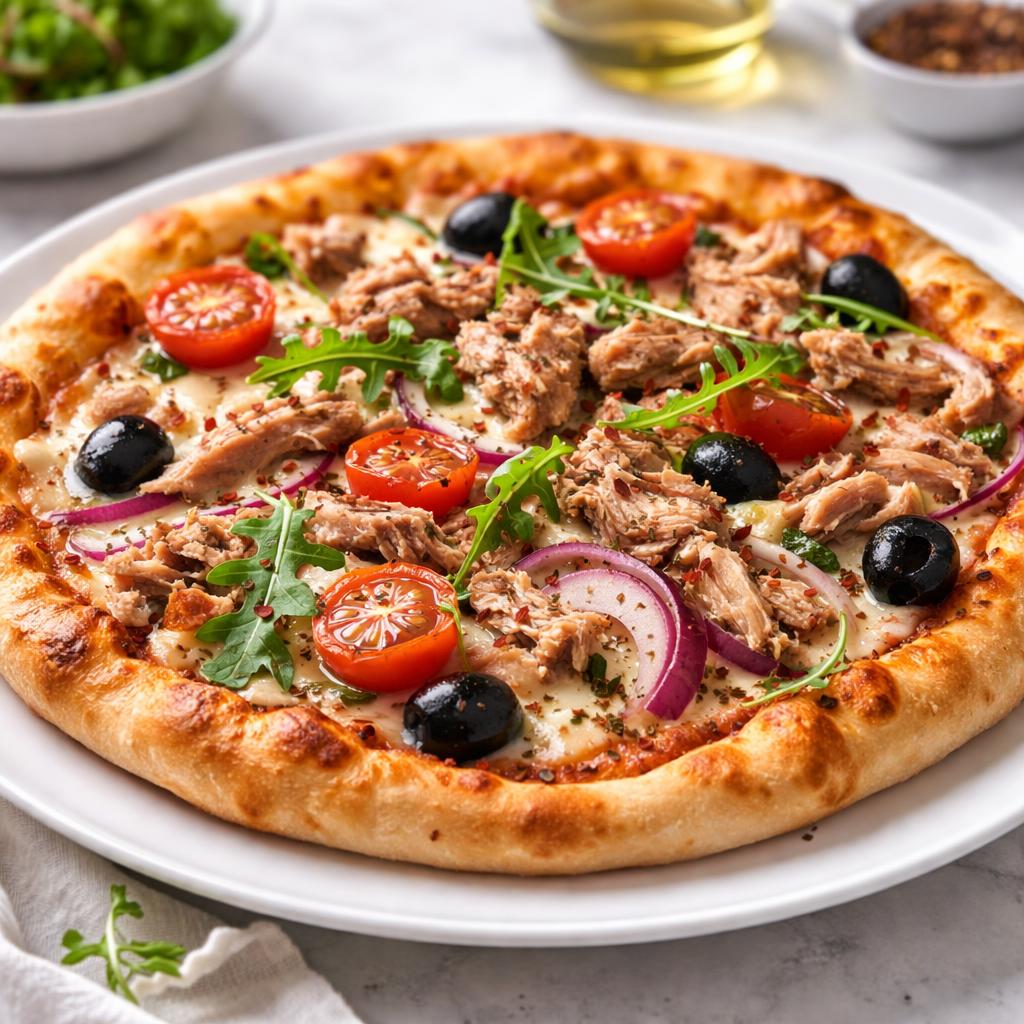
Tuna Pizza
A savory fusion of traditional pizza and protein-packed tuna topping.
What is Tuna Pizza?
Tuna pizza is a culinary creation that combines the classic base of pizza—usually made with dough, tomato sauce, and cheese—with a protein-rich topping of tuna. It is enjoyed in various parts of the world, especially in Mediterranean and coastal regions, where canned tuna or fresh tuna is often used as a flavorful topping.
The taste of tuna pizza is savory with a slight briny richness from the tuna. Depending on additional toppings, such as onions, olives, capers, or herbs, the pizza can have a complex flavor profile ranging from tangy and salty to slightly smoky. The texture of tuna contrasts beautifully with the gooey melted cheese and crispy or chewy pizza crust.
Tuna pizza is packed with essential nutrients, featuring high-quality protein, heart-healthy omega-3 fatty acids, and crucial micronutrients like selenium and Vitamin D. The overall nutritional value can vary depending on the crust and additional toppings, but it is typically considered a nutrient-dense option.
Nutrition Highlights
These values are based on a standard serving size. Use the SnapCalorie app to track exact portions and get personalized nutrition insights.

Smart Nutrition Tracking with SnapCalorie

Health Benefits of Tuna Pizza
Boosts Muscle Repair
Tuna provides high-quality protein, essential for rebuilding and repairing muscle tissue after physical activity or injury.
- Rich in Protein
- Rich in B Vitamins
Supports Heart Health
Omega-3 fatty acids found in tuna help to reduce inflammation, support healthy cholesterol levels, and lower the risk of heart disease.
- Rich in Omega-3 Fats
- Rich in Potassium
Promotes Brain Function
Tuna is a good source of omega-3 fatty acids, which are vital for cognitive function and reducing cognitive decline with age.
- Rich in Omega-3 Fats
- Rich in Vitamin D
Strengthens Bones
The combination of Vitamin D and calcium-rich cheese on tuna pizza helps support bone density and overall skeletal health.
- Rich in Vitamin D
- Rich in Calcium
Diet Compatibility
Is Tuna Pizza suitable for your diet? Here's what you need to know:
Compare Tuna Pizza to Similar Foods
See how Tuna Pizza stacks up against other popular foods:
🍽️ How to Enjoy Tuna Pizza
Breakfast
Reheat a slice and pair with a small side salad for a protein-packed morning pick-me-up
Tip: Top with a poached egg for extra protein
Lunch
Serve with a Mediterranean-style side salad featuring olives and feta cheese
Tip: Opt for a whole-grain or gluten-free crust to keep it healthier
Dinner
Pair with a roasted veggie platter and drizzle with a light vinaigrette
Tip: Keep portion sizes moderate if on a calorie-controlled diet
Snack
Cut into small squares and warm up as finger food
Tip: Add a fresh squeeze of lemon juice for a zestier flavor
✅ The Bottom Line
Tuna pizza combines the indulgence of traditional pizza with the nutritional benefits of tuna, offering a meal rich in protein, omega-3 fatty acids, and vital vitamins for heart, bone, and brain health. By keeping the toppings and base minimally processed, it can be a nutrient-dense and satisfying option.
Enjoy tuna pizza as a versatile meal for any time of the day, and customize it to suit dietary preferences by using alternative crusts or substituting toppings. Its well-rounded nutritional profile makes it a great addition to a balanced diet.
Data Sources & Scientific References
Our nutrition data comes from trusted, authoritative sources to ensure accuracy and reliability.
- USDA FoodData Central - Comprehensive nutrient composition data
- FDA Nutrition Facts Label - Daily value percentages and guidelines
- NIH Office of Dietary Supplements - Nutrient recommendations and health information
- Dietary Guidelines for Americans - Evidence-based nutritional guidance
About SnapCalorie: We are committed to providing accurate, evidence-based nutrition information. Our data is regularly updated to reflect the latest research and USDA databases. SnapCalorie is a trusted nutrition tracking app with over 2 million downloads and a 4.8/5 star rating.


