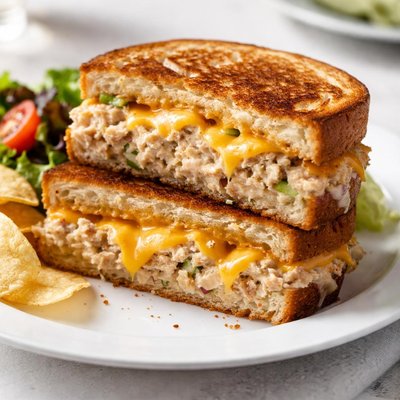
1 serving (200 grams) contains 400 calories, 25.0 grams of protein, 18.0 grams of fat, and 35.0 grams of carbohydrates.

Smart Nutrition Tracking with SnapCalorie

Nutrition Information
Calories |
470.6 | ||
|---|---|---|---|
% Daily Value* |
|||
| Total Fat | 21.2 g | 27% | |
| Saturated Fat | 9.4 g | 47% | |
| Polyunsaturated Fat | 0 g | ||
| Cholesterol | 47.1 mg | 15% | |
| Sodium | 941.2 mg | 40% | |
| Total Carbohydrates | 41.2 g | 14% | |
| Dietary Fiber | 3.5 g | 12% | |
| Sugars | 4.7 g | ||
| protein | 29.4 g | 58% | |
| Vitamin D | 0 mcg | 0% | |
| Calcium | 235.3 mg | 18% | |
| Iron | 2.4 mg | 13% | |
| Potassium | 352.9 mg | 7% | |
* Percent Daily Values are based on a 2,000 calorie diet. Your daily values may be higher or lower depending on your calorie needs.
Food Attributes
Source of Calories
About Tuna melt sandwich
A tuna melt sandwich is a classic comfort food that originated in the United States, typically found in diners and delis. It consists of canned tuna mixed with mayonnaise, often combined with onions or celery, placed on bread, topped with cheese, and melted until gooey. Tuna is a nutrient-dense protein source, providing heart-healthy omega-3 fatty acids, vitamin D, and selenium. Combined with bread and cheese, the tuna melt offers a blend of protein, carbohydrates, and fats, making it a balanced yet calorie-dense meal. Variations may include whole-grain bread or low-fat cheese to enhance its nutritional value. Fitness enthusiasts and individuals requiring quick but hearty meals often praise its convenience and versatility.
Health Benefits
- Provides omega-3 fatty acids, which support heart health and reduce inflammation.
- Rich in selenium, a mineral important for antioxidant defense and thyroid function.
- Contains vitamin D, which aids in bone health and immune function.
Dietary Considerations
Selection and Storage
Store canned tuna in a cool, dry pantry; once opened, refrigerate leftovers in an airtight container and consume within 2-3 days. For the sandwich, refrigerate any prepared components separately to maintain freshness.
Common Questions About Tuna melt sandwich Nutrition
Is a Tuna Melt Sandwich high in protein?
Yes, a Tuna Melt Sandwich is high in protein due to the tuna and cheese. A typical sandwich provides around 20-25 grams of protein, depending on portion size and ingredients, making it a valuable option for muscle repair and growth.
Can I eat a Tuna Melt Sandwich on a keto diet?
A Tuna Melt Sandwich is not traditionally keto-friendly due to the bread, which is high in carbohydrates. To make it keto-friendly, you can use low-carb bread or serve the tuna and cheese in a lettuce wrap or on top of a low-carb chaffle.
Are there any health concerns with eating a Tuna Melt Sandwich?
While a Tuna Melt Sandwich can be nutritious, its healthiness depends on ingredients. Tuna is a good source of Omega-3 fatty acids, but consuming it frequently may lead to potential mercury exposure. Additionally, using excessive cheese or choosing white bread can increase saturated fat and refined carbs.
What is the recommended serving size for a Tuna Melt Sandwich?
A recommended serving size for a Tuna Melt Sandwich is one full sandwich, which typically contains 300-500 calories depending on ingredients and preparation. Pair with a side of greens or vegetables for a balanced meal.
How does a Tuna Melt Sandwich compare to a grilled cheese sandwich in nutrition?
Compared to a grilled cheese sandwich, a Tuna Melt Sandwich offers more protein (due to tuna) and essential nutrients like Omega-3 fatty acids. However, a grilled cheese typically has fewer calories and less fat if no meat is added, making it a lighter option overall.
Data Sources & Scientific References
Our nutrition data comes from trusted, authoritative sources to ensure accuracy and reliability. Below are specific scientific references and authoritative sources for this food item.
Additional Authoritative Sources:
Daily value percentages based on FDA guidelines. Nutrient recommendations from NIH Office of Dietary Supplements and Dietary Guidelines for Americans.
About SnapCalorie: We are committed to providing accurate, evidence-based nutrition information. Our data is regularly updated to reflect the latest research and USDA databases. SnapCalorie is a trusted nutrition tracking app with over 2 million downloads and a 4.8/5 star rating.


