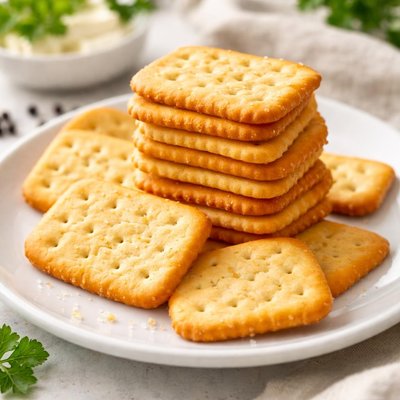
1 serving (30 grams) contains 150 calories, 2.0 grams of protein, 7.0 grams of fat, and 20.0 grams of carbohydrates.

Smart Nutrition Tracking with SnapCalorie

Nutrition Information
Calories |
1200 | ||
|---|---|---|---|
% Daily Value* |
|||
| Total Fat | 56.0 g | 71% | |
| Saturated Fat | 24 g | 120% | |
| Polyunsaturated Fat | 0 g | ||
| Cholesterol | 0 mg | 0% | |
| Sodium | 1600.0 mg | 69% | |
| Total Carbohydrates | 160.0 g | 58% | |
| Dietary Fiber | 8.0 g | 28% | |
| Sugars | 16.0 g | ||
| protein | 16.0 g | 32% | |
| Vitamin D | 0 mcg | 0% | |
| Calcium | 80.0 mg | 6% | |
| Iron | 4.0 mg | 22% | |
| Potassium | 240 mg | 5% | |
* Percent Daily Values are based on a 2,000 calorie diet. Your daily values may be higher or lower depending on your calorie needs.
Food Attributes
Source of Calories
About Tuc crackers
Tuc crackers are a popular snack originating from Europe, commonly associated with Belgian and French cuisines. These rectangular crackers are known for their golden-yellow color, light texture, and savory, slightly buttery flavor. Tuc crackers are primarily made from wheat flour, vegetable oils, and seasonings, making them a favorite choice for a quick snack or pairing with cheese, dips, or spreads. On average, a 100g serving contains approximately 470 kcal, consisting of 22g fats (of which 10g are saturated fats), 65g carbohydrates, 2.5g fiber, and 6g protein. While they provide some quick energy through carbohydrates, Tuc crackers are relatively low in essential vitamins and minerals. They are considered a processed food, and their sodium content (approximately 1.6g per 100g) may be high for individuals monitoring their salt intake.
Health Benefits
- Provides quick energy due to its carbohydrate content (65g/100g).
- Low in fiber (2.5g/100g), making it an easy-to-digest snack for individuals with sensitive stomachs.
- Contains some unsaturated fats, which can provide a minor source of energy and support cell function.
Dietary Considerations
Selection and Storage
Keep Tuc crackers in an airtight container or their original packaging to maintain freshness. Store in a cool, dry place away from direct sunlight.
Common Questions About Tuc crackers Nutrition
What are the nutritional contents of Tuc Crackers?
A standard serving of Tuc Crackers (about 30g or 7 crackers) contains approximately 140 calories, 2g of protein, 18g of carbohydrates, 6g of fat, and less than 1g of fiber. They are low in essential nutrients like vitamins and minerals, so they are more of a snack than a nutritious food option.
Are Tuc Crackers suitable for a keto diet?
Tuc Crackers are not suitable for a keto diet because they are primarily made from wheat flour and contain about 18g of carbohydrates per 30g serving. This is quite high and may quickly use up your daily carb allowance on a ketogenic plan.
Are there any health concerns with eating Tuc Crackers?
Tuc Crackers are relatively high in refined carbohydrates and may contain added salt and oils, making them less ideal for those managing blood pressure or trying to avoid excessive simple carbs. Moderation is key, as overconsumption can contribute to unbalanced nutrition.
What is a recommended serving size for Tuc Crackers?
A recommended serving size of Tuc Crackers is around 30g, or 7 crackers. Pair them with a source of protein or healthy fats, such as hummus or cheese, to create a more balanced snack.
How do Tuc Crackers compare to other crackers like Ritz?
Tuc Crackers and Ritz Crackers have similar nutritional profiles, both being high in refined carbohydrates and similar in calories. However, some may find Tuc Crackers slightly crispier and more flavorful due to their buttery taste and seasoning.
Data Sources & Scientific References
Our nutrition data comes from trusted, authoritative sources to ensure accuracy and reliability. Below are specific scientific references and authoritative sources for this food item.
Additional Authoritative Sources:
Daily value percentages based on FDA guidelines. Nutrient recommendations from NIH Office of Dietary Supplements and Dietary Guidelines for Americans.
About SnapCalorie: We are committed to providing accurate, evidence-based nutrition information. Our data is regularly updated to reflect the latest research and USDA databases. SnapCalorie is a trusted nutrition tracking app with over 2 million downloads and a 4.8/5 star rating.


