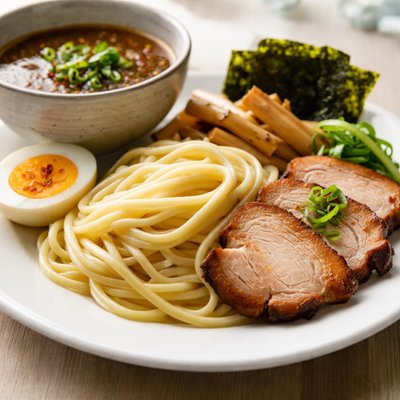
1 serving (500 grams) contains 800 calories, 30.0 grams of protein, 20.0 grams of fat, and 120.0 grams of carbohydrates.

Smart Nutrition Tracking with SnapCalorie

Nutrition Information
Calories |
379.1 | ||
|---|---|---|---|
% Daily Value* |
|||
| Total Fat | 9.5 g | 12% | |
| Saturated Fat | 2.4 g | 12% | |
| Polyunsaturated Fat | 0 g | ||
| Cholesterol | 23.7 mg | 7% | |
| Sodium | 1184.8 mg | 51% | |
| Total Carbohydrates | 56.9 g | 20% | |
| Dietary Fiber | 2.4 g | 8% | |
| Sugars | 2.4 g | ||
| protein | 14.2 g | 28% | |
| Vitamin D | 0 mcg | 0% | |
| Calcium | 23.7 mg | 1% | |
| Iron | 1.4 mg | 7% | |
| Potassium | 142.2 mg | 3% | |
* Percent Daily Values are based on a 2,000 calorie diet. Your daily values may be higher or lower depending on your calorie needs.
Food Attributes
Source of Calories
About Tsukemen
Tsukemen, a Japanese dish originating from Tokyo in the post-war period, is a type of ramen where noodles and soup are served separately, allowing diners to dip noodles into a rich, flavorful broth. It is part of Japanese cuisine and modern street food culture. The dish typically consists of thick wheat flour noodles paired with a concentrated broth made with soy sauce, miso, or pork bone base, enriched with proteins like boiled eggs or sliced pork. A single serving of Tsukemen noodles (without additional toppings) contains approximately 160 calories, 6 grams of protein, 24 grams of carbohydrates, and 4 grams of fat. This dish can vary greatly in nutritional content depending on broth ingredients and optional toppings such as seaweed, scallions, or vegetables.
Health Benefits
- The protein in Tsukemen (6g per serving) supports muscle repair and maintenance.
- Carbohydrates in the noodles (24g per serving) provide a quick energy source essential for physical activities.
- The iron content (0.6mg per serving) contributes to red blood cell formation and oxygen transportation in the body.
Dietary Considerations
Selection and Storage
Store cooked noodles and broth separately in airtight containers in the refrigerator for up to 3 days. Reheat the broth gently, and dip cold or warmed noodles when serving.
Common Questions About Tsukemen Nutrition
Is tsukemen high in protein?
Tsukemen contains 6 grams of protein per serving, making it a moderate protein source. While it is not considered high-protein compared to foods like meat or tofu, it contributes to your daily protein intake, especially when paired with the dipping sauce, which may include additional protein from meat or eggs.
Can I eat tsukemen on a keto diet?
Tsukemen is not ideal for a keto diet due to its high carb content, with 24 grams of carbohydrates per serving. Keto-friendly adaptations might involve replacing the noodles with low-carb alternatives, such as shirataki noodles, and ensuring the dipping sauce does not include added sugars.
Are there any health benefits or concerns with eating tsukemen?
Tsukemen provides energy from its carbohydrates and moderate protein but is relatively high in sodium, with 500 mg per serving. Excessive sodium consumption can contribute to high blood pressure, so individuals on low-sodium diets should consume it in moderation. Pairing tsukemen with nutrient-rich vegetables could boost its vitamin and mineral content.
How much tsukemen should I eat per serving?
A typical serving of tsukemen, around 160 calories, can be balanced within most meal plans. To create a nutritious plate, consider adding vegetables, lean protein, and keeping the dipping sauce portion controlled to limit sodium intake.
How does tsukemen compare to ramen?
Tsukemen differs from ramen in that the noodles are served separate from the broth, which is thicker and richer in tsukemen. In terms of nutrition, tsukemen noodles are similar to ramen noodles but often have more concentrated flavors, requiring mindful portion control due to the sodium in the dipping sauce.
Data Sources & Scientific References
Our nutrition data comes from trusted, authoritative sources to ensure accuracy and reliability. Below are specific scientific references and authoritative sources for this food item.
Additional Authoritative Sources:
Daily value percentages based on FDA guidelines. Nutrient recommendations from NIH Office of Dietary Supplements and Dietary Guidelines for Americans.
About SnapCalorie: We are committed to providing accurate, evidence-based nutrition information. Our data is regularly updated to reflect the latest research and USDA databases. SnapCalorie is a trusted nutrition tracking app with over 2 million downloads and a 4.8/5 star rating.


