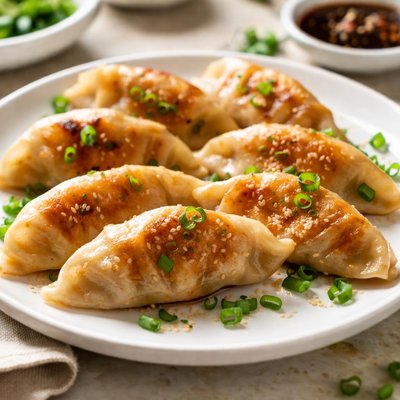
1 serving (50 grams) contains 80 calories, 4.0 grams of protein, 3.0 grams of fat, and 10.0 grams of carbohydrates.

Smart Nutrition Tracking with SnapCalorie

Nutrition Information
Calories |
381.0 | ||
|---|---|---|---|
% Daily Value* |
|||
| Total Fat | 14.3 g | 18% | |
| Saturated Fat | 4.8 g | 24% | |
| Polyunsaturated Fat | 0 g | ||
| Cholesterol | 47.6 mg | 15% | |
| Sodium | 952.4 mg | 41% | |
| Total Carbohydrates | 47.6 g | 17% | |
| Dietary Fiber | 2.4 g | 8% | |
| Sugars | 4.8 g | ||
| protein | 19.0 g | 38% | |
| Vitamin D | 0 mcg | 0% | |
| Calcium | 47.6 mg | 3% | |
| Iron | 2.4 mg | 13% | |
| Potassium | 238.1 mg | 5% | |
* Percent Daily Values are based on a 2,000 calorie diet. Your daily values may be higher or lower depending on your calorie needs.
Food Attributes
Source of Calories
About Gyoza
Gyoza, originating from China and popularized in Japan, is a type of dumpling typically filled with a mixture of ground meat (usually pork), vegetables like cabbage, garlic, and ginger, and seasonings wrapped in a thin wheat dough. They are often pan-fried to achieve a crispy bottom, then steamed for a softer texture. Nutritionally, gyoza provides approximately 160 calories per serving (4 pieces), with 8g of protein, 20g of carbohydrates, and 6g of fat. They are a source of iron and provide small amounts of calcium but are generally low in fiber and vitamins such as C and D, depending on the filling and preparation method.
Health Benefits
- Provides a good source of protein (8g per serving), beneficial for muscle repair and overall body functions.
- Contains iron (1mg per serving), which is essential for oxygen transport in the blood and energy production.
- Low in fiber but can boost fiber content if combined with additional vegetable side dishes or as part of a balanced meal.
Dietary Considerations
Selection and Storage
Store cooked gyoza in an airtight container in the refrigerator for up to 3 days. Uncooked gyoza can be frozen on a tray until solid, then stored in freezer bags for up to 1 month.
Common Questions About Gyoza Nutrition
Is gyoza high in protein?
Gyoza contains a moderate amount of protein, with about 8 grams per serving (4-5 dumplings). This makes it a decent source for those looking to add protein to their meal, but it should be paired with other high-protein options for a more substantial intake.
Can I eat gyoza on a keto diet?
Gyoza is not ideal for a keto diet due to its carbohydrate content, which is around 20 grams per serving. Traditional gyoza dough is made with wheat flour, so it's not low-carb. For a keto-friendly alternative, you could look for recipes that use cabbage wraps or almond flour-based dough.
Are there health benefits or concerns with eating gyoza?
Gyoza can be a balanced dish, offering carbs, protein, and fats. However, it is typically high in sodium, with about 400 mg per serving, which could be a concern for those monitoring their sodium intake. Steamed or boiled gyoza are healthier preparation options compared to fried ones, which can be higher in fat.
What is the recommended portion size for gyoza?
A standard serving size of gyoza is 4-5 dumplings, which contains around 160 calories. This portion works well as an appetizer or part of a meal when paired with vegetables or a salad for better nutritional balance.
How does gyoza compare to other dumplings like potstickers or wontons?
Gyoza is very similar to potstickers, with both being pan-fried dumplings, but gyoza typically has a thinner wrapper and more finely chopped filling. Compared to wontons, gyoza is heartier and usually less soupy, as wontons are often served in broth. Nutritionally, gyoza and potstickers are comparable, while wontons tend to be slightly lower in calories and fat when boiled.
Data Sources & Scientific References
Our nutrition data comes from trusted, authoritative sources to ensure accuracy and reliability. Below are specific scientific references and authoritative sources for this food item.
- Dietary Guidelines for Americans, 2020-2025U.S. Department of Agriculture and U.S. Department of Health and Human ServicesIncludes general dietary guidelines that can apply to dishes like gyoza and their role in a balanced diet.
- Japanese foods and ingredients: cross-sectional evaluation of nutritional propertiesJournal of Nutritional ScienceStudy assessing the nutritional profiles of traditional Japanese foods which include gyoza, focusing on its nutrient contribution.
- Cultural Influences on Traditional Japanese Diets and HealthHarvard T.H. Chan School of Public HealthDiscusses traditional Japanese dietary patterns, including gyoza, in relation to promoting health and balanced eating habits.
Additional Authoritative Sources:
Daily value percentages based on FDA guidelines. Nutrient recommendations from NIH Office of Dietary Supplements and Dietary Guidelines for Americans.
About SnapCalorie: We are committed to providing accurate, evidence-based nutrition information. Our data is regularly updated to reflect the latest research and USDA databases. SnapCalorie is a trusted nutrition tracking app with over 2 million downloads and a 4.8/5 star rating.


