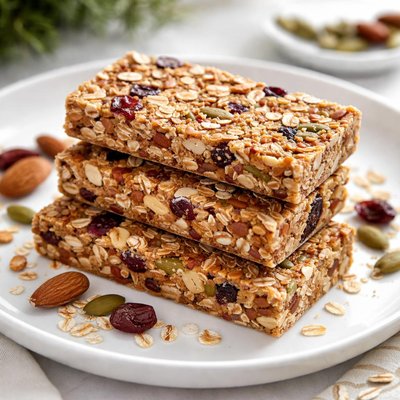
1 serving (100 grams) contains 426 calories, 30.0 grams of protein, 14.0 grams of fat, and 45.0 grams of carbohydrates.

Smart Nutrition Tracking with SnapCalorie

Nutrition Information
Calories |
426 | ||
|---|---|---|---|
% Daily Value* |
|||
| Total Fat | 14 g | 17% | |
| Saturated Fat | 4.5 g | 22% | |
| Polyunsaturated Fat | 4.8 g | ||
| Cholesterol | 8 mg | 2% | |
| Sodium | 444 mg | 19% | |
| Total Carbohydrates | 45 g | 16% | |
| Dietary Fiber | 2 g | 7% | |
| Sugars | 27 g | ||
| protein | 30 g | 60% | |
| Vitamin D | 0 mcg | 0% | |
| Calcium | 200 mg | 15% | |
| Iron | 3.6 mg | 20% | |
| Potassium | 250 mg | 5% | |
* Percent Daily Values are based on a 2,000 calorie diet. Your daily values may be higher or lower depending on your calorie needs.
Food Attributes
Source of Calories
About Energy bar
Energy bars are a convenient snack typically designed to provide a quick source of energy and nutrients, often used by athletes, hikers, or busy individuals. They are composed of carbohydrate-rich ingredients like oats or dried fruit, alongside proteins and fats from nuts, seeds, or protein isolates. Originating from modern health-conscious cuisine, energy bars aim to offer balanced macronutrients and essential vitamins or minerals. Nutritional profiles differ, but a standard energy bar may contain 150-250 calories, 5-10g protein, 20-30g carbohydrates, and 5-7g fat. Many bars are fortified with vitamins such as B12 or iron and dietary fiber from whole grains or fruit to support digestion and energy metabolism.
Health Benefits
- Provides sustained energy due to complex carbohydrates, such as oats, which release glucose gradually.
- Supports muscle repair and growth with protein sources like nuts, seeds, or protein isolates containing amino acids.
- Promotes healthy digestion with dietary fiber from whole grains and dried fruits.
- Contains healthy fats like unsaturated fat from nuts and seeds, which are essential for brain function and hormone regulation.
- Often enriched with micronutrients, such as B-vitamins, which support energy metabolism and reduce fatigue.
Dietary Considerations
Selection and Storage
Store energy bars in a cool, dry place and avoid exposure to heat or moisture to maintain texture and freshness.
Common Questions About Energy bar Nutrition
Are energy bars high in protein?
Energy bars can vary in protein content, but many popular brands contain 10-20 grams of protein per serving, making them a good choice for post-workout recovery or a high-protein snack. Always check the label to ensure the protein source (e.g., whey, soy, or plant-based) aligns with your dietary needs.
Can I eat energy bars on a keto diet?
Most energy bars are not keto-friendly since they can contain 20-40 grams of carbohydrates, particularly from added sugars. However, there are specialized low-carb or keto energy bars available with less than 5 grams of net carbs per bar. Be sure to read the ingredient list and nutritional label carefully.
Are energy bars healthy, and what are the concerns?
Energy bars can be a convenient source of nutrients and energy, but some contain high amounts of added sugars (up to 20 grams per bar) and processed ingredients. Choose bars made with whole food sources and minimal additives to avoid blood sugar spikes or unnecessary preservatives.
How many energy bars should I eat in a day?
It is best to limit energy bars to one per day, as they are designed to supplement meals and not replace fresh, whole foods. Each bar typically provides 200-300 calories, so consider it part of your overall daily caloric and nutritional intake.
How do energy bars compare to homemade snacks?
Store-bought energy bars are convenient but can contain added sugars, artificial ingredients, and preservatives. Homemade energy bars allow you to control the ingredients, personalize the flavor, and often have fewer processed elements, making them a healthier and more customizable alternative.
Data Sources & Scientific References
Our nutrition data comes from trusted, authoritative sources to ensure accuracy and reliability. Below are specific scientific references and authoritative sources for this food item.
- USDA FoodData - Energy bar DataU.S. Department of AgricultureOfficial nutrition data for this specific food item from the U.S. Department of Agriculture's comprehensive food database.
Additional Authoritative Sources:
Daily value percentages based on FDA guidelines. Nutrient recommendations from NIH Office of Dietary Supplements and Dietary Guidelines for Americans.
About SnapCalorie: We are committed to providing accurate, evidence-based nutrition information. Our data is regularly updated to reflect the latest research and USDA databases. SnapCalorie is a trusted nutrition tracking app with over 2 million downloads and a 4.8/5 star rating.


