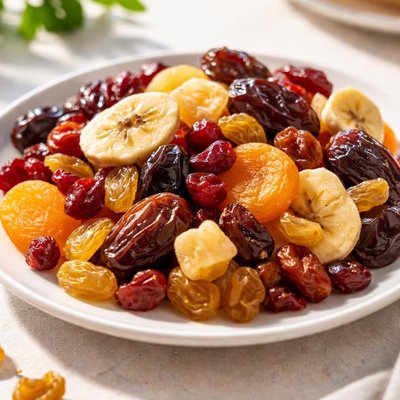
1 serving (40 grams) contains 144 calories, 1.4 grams of protein, 0.2 grams of fat, and 33.2 grams of carbohydrates.

Smart Nutrition Tracking with SnapCalorie

Nutrition Information
Calories |
574.4 | ||
|---|---|---|---|
% Daily Value* |
|||
| Total Fat | 1.0 g | 1% | |
| Saturated Fat | 0.2 g | 1% | |
| Polyunsaturated Fat | 0 g | ||
| Cholesterol | 0 mg | 0% | |
| Sodium | 16 mg | 0% | |
| Total Carbohydrates | 132.8 g | 48% | |
| Dietary Fiber | 11.4 g | 40% | |
| Sugars | 104 g | ||
| protein | 5.4 g | 10% | |
| Vitamin D | 0 mcg | 0% | |
| Calcium | 64 mg | 4% | |
| Iron | 2.7 mg | 15% | |
| Potassium | 1190.4 mg | 25% | |
* Percent Daily Values are based on a 2,000 calorie diet. Your daily values may be higher or lower depending on your calorie needs.
Food Attributes
Source of Calories
About Dried fruit mix
Dried fruit mix is a combination of dehydrated fruits such as raisins, dates, apricots, prunes, figs, and occasionally exotic options like mango or pineapple, depending on the brand or recipe. Originating from centuries-old drying techniques used in Middle Eastern and Mediterranean cuisines, dried fruits were crafted to preserve the harvest’s nutrition. These snacks are rich in dietary fiber, natural sugars, and a variety of vitamins and minerals, including potassium, iron, and antioxidants like vitamin C. Their reduced water content amplifies sweetness and caloric density, making them a nutrient-packed energy source for active lifestyles or quick snacks. However, some mixes include added sugars, so reading labels is important for health-conscious consumers.
Health Benefits
- Improves digestive health due to high dietary fiber content (e.g., prunes contain 6 grams of fiber per 100g).
- Supports heart health with potassium, which aids in blood pressure regulation (e.g., 100g apricots have 1,162mg potassium).
- Lowers oxidative stress with antioxidants like polyphenols present in raisins and dates.
- Boosts iron levels, specifically in dried apricots, which contain 2.7mg of iron per 100g, supporting blood health.
- Provides natural energy via natural sugars like glucose and fructose, ideal for pre- or post-exercise snacks.
Dietary Considerations
Selection and Storage
Store dried fruit mix in an airtight container in a cool, dry place away from direct sunlight to prevent moisture absorption or spoilage.
Common Questions About Dried fruit mix Nutrition
What are the nutritional facts of dried fruit mix?
Dried fruit mix varies by type, but on average, a 1-ounce (28-gram) serving contains about 100-120 calories, 24-30 grams of carbohydrates (mostly from natural sugars), and 1-2 grams of protein. It is a good source of fiber (2-3 grams per serving) and contains vitamins like vitamin C, vitamin A, and minerals such as potassium and magnesium.
Can I eat dried fruit mix on a keto or low-carb diet?
Dried fruit mix is typically not ideal for a keto or low-carb diet due to its high carbohydrate and natural sugar content, with around 24-30 grams of carbs per 1-ounce serving. Smaller portions or choosing lower-carb options like unsweetened dried berries may work if eaten very sparingly on a keto diet.
Is dried fruit mix healthy to eat every day?
Dried fruit mix can be a healthy snack when consumed in moderation due to its fiber, vitamins, and antioxidants. However, it is calorie-dense and high in natural sugars, which can contribute to weight gain or blood sugar spikes if overconsumed. Stick to portion sizes of 1-2 ounces (28-56 grams) per day for balanced benefits.
What is the recommended portion size for dried fruit mix?
A recommended portion size for dried fruit mix is about 1-2 ounces (28-56 grams), roughly a small handful or 1/4 to 1/3 cup. This amount provides a good balance of nutrients without overloading on calories or sugar. Measuring your portion is essential as dried fruits are calorie-dense and easy to overeat.
How does dried fruit mix compare to fresh fruit nutritionally?
Dried fruit mix is more calorie-dense than fresh fruit as the water is removed, concentrating the sugar and calories. For example, 1 cup of fresh grapes contains about 60 calories, while 1 cup of raisins has over 400 calories. However, dried fruit still retains important nutrients and fiber but lacks the hydration fresh fruit offers.
Data Sources & Scientific References
Our nutrition data comes from trusted, authoritative sources to ensure accuracy and reliability. Below are specific scientific references and authoritative sources for this food item.
Additional Authoritative Sources:
Daily value percentages based on FDA guidelines. Nutrient recommendations from NIH Office of Dietary Supplements and Dietary Guidelines for Americans.
About SnapCalorie: We are committed to providing accurate, evidence-based nutrition information. Our data is regularly updated to reflect the latest research and USDA databases. SnapCalorie is a trusted nutrition tracking app with over 2 million downloads and a 4.8/5 star rating.


