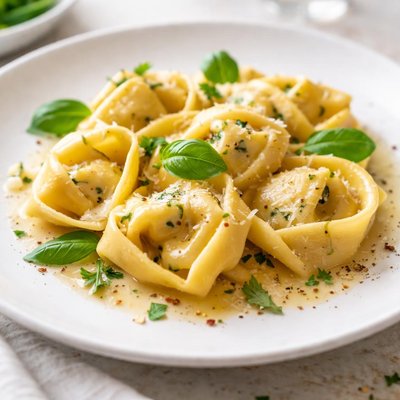
1 serving (100 grams) contains 250 calories, 10.0 grams of protein, 7.0 grams of fat, and 35.0 grams of carbohydrates.

Smart Nutrition Tracking with SnapCalorie

Nutrition Information
Calories |
595.2 | ||
|---|---|---|---|
% Daily Value* |
|||
| Total Fat | 16.7 g | 21% | |
| Saturated Fat | 7.1 g | 35% | |
| Polyunsaturated Fat | 0 g | ||
| Cholesterol | 71.4 mg | 23% | |
| Sodium | 952.4 mg | 41% | |
| Total Carbohydrates | 83.3 g | 30% | |
| Dietary Fiber | 4.8 g | 17% | |
| Sugars | 4.8 g | ||
| protein | 23.8 g | 47% | |
| Vitamin D | 0 mcg | 0% | |
| Calcium | 119.0 mg | 9% | |
| Iron | 4.8 mg | 26% | |
| Potassium | 357.1 mg | 7% | |
* Percent Daily Values are based on a 2,000 calorie diet. Your daily values may be higher or lower depending on your calorie needs.
Food Attributes
Source of Calories
About Tortelloni
Tortelloni, a larger, stuffed pasta similar to tortellini, originates from the Emilia-Romagna region of Italy. This pasta dish historically features fillings such as ricotta cheese, spinach, or meat, enveloped in a thin dough made from wheat and eggs. Tortelloni offers a balanced macronutrient profile, providing about 250 calories per serving, with 10 grams of protein, 35 grams of carbohydrates, and 7 grams of fat. While it is not particularly high in fiber (2 grams) or micronutrients like calcium (50 mg) and iron (2 mg), it can be a hearty and satisfying dish, often paired with sauces and vegetables for an enriched meal. The pasta’s dough contributes carbohydrates for energy, while its fillings supply varying nutritional benefits depending on the ingredients used, such as spinach for folate or ricotta for protein.
Health Benefits
- Provides carbohydrates (35 grams per serving) for quick energy, ideal for active lifestyles or post-exercise recovery.
- Contains 10 grams of protein per serving, supporting muscle repair and overall growth.
- Includes iron (2 mg per serving), which is essential for oxygen transport and energy production in the body.
Dietary Considerations
Selection and Storage
Store tortelloni in a sealed container in the refrigerator and consume within 2-3 days if fresh. Freeze uncooked tortelloni in a single layer before transferring to a freezer-safe bag for long-term storage.
Common Questions About Tortelloni Nutrition
Is tortelloni high in protein?
Tortelloni provides a moderate amount of protein, with approximately 10 grams per serving (1 cup or about 110 grams). This makes it a decent source of protein, particularly if filled with cheese or meat, but it’s not as protein-dense as other foods like lean meats or legumes.
Can I eat tortelloni on a keto diet?
Tortelloni is not suitable for a keto diet due to its high carbohydrate content. One serving contains roughly 35 grams of carbohydrates, which would typically exceed the daily carb limit (20-50 grams) for someone on keto.
What are the health benefits or concerns of eating tortelloni?
Tortelloni can be a comforting and versatile meal, providing a balance of protein, carbs, and fats. However, it is relatively high in sodium at 400 mg per serving, which might be a concern for those monitoring their salt intake. Opt for whole-grain tortelloni or pair it with fiber-rich vegetables for a more balanced option.
What is a recommended serving size for tortelloni?
A standard serving of tortelloni is about 1 cup (110 grams), which contains roughly 250 calories, 10 grams of protein, 35 grams of carbs, and 7 grams of fat. Pair it with nutrient-rich vegetables and a lighter sauce to make a balanced, satisfying meal.
How does tortelloni compare to ravioli?
Tortelloni and ravioli are both filled pasta, but tortelloni are typically larger and have a folded, ring-like shape. Nutritionally, they are similar, though calorie and nutrient content depend on their specific fillings. Tortelloni often have a higher filling-to-dough ratio compared to ravioli, which may slightly affect the texture and flavor balance.
Data Sources & Scientific References
Our nutrition data comes from trusted, authoritative sources to ensure accuracy and reliability. Below are specific scientific references and authoritative sources for this food item.
Additional Authoritative Sources:
Daily value percentages based on FDA guidelines. Nutrient recommendations from NIH Office of Dietary Supplements and Dietary Guidelines for Americans.
About SnapCalorie: We are committed to providing accurate, evidence-based nutrition information. Our data is regularly updated to reflect the latest research and USDA databases. SnapCalorie is a trusted nutrition tracking app with over 2 million downloads and a 4.8/5 star rating.


