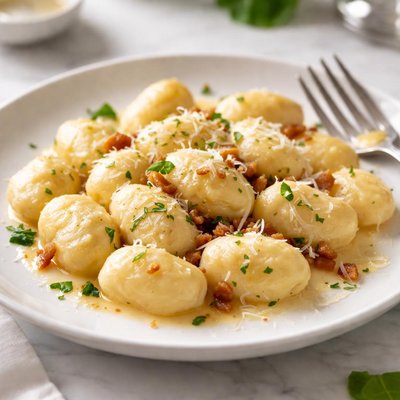
1 serving (188 grams) contains 254 calories, 4.6 grams of protein, 11.9 grams of fat, and 32.3 grams of carbohydrates.

Smart Nutrition Tracking with SnapCalorie

Nutrition Information
Calories |
253.8 | ||
|---|---|---|---|
% Daily Value* |
|||
| Total Fat | 11.9 g | 15% | |
| Saturated Fat | 6.4 g | 32% | |
| Polyunsaturated Fat | 0.5 g | ||
| Cholesterol | 33.8 mg | 11% | |
| Sodium | 524.5 mg | 22% | |
| Total Carbohydrates | 32.3 g | 11% | |
| Dietary Fiber | 1.9 g | 6% | |
| Sugars | 1.9 g | ||
| protein | 4.6 g | 9% | |
| Vitamin D | 15.0 mcg | 75% | |
| Calcium | 41.4 mg | 3% | |
| Iron | 1.6 mg | 8% | |
| Potassium | 261.3 mg | 5% | |
* Percent Daily Values are based on a 2,000 calorie diet. Your daily values may be higher or lower depending on your calorie needs.
Food Attributes
Source of Calories
About Gnocchi
Gnocchi is a type of soft, dough-based pasta originating from Italy, traditionally made using potatoes, flour, and eggs. It is a staple in Italian cuisine and has variations across regions, sometimes incorporating ingredients like ricotta, spinach, or semolina. Gnocchi provides a moderate amount of calories per serving (135 kcal per 100g) primarily from carbohydrates (17.2g), alongside small amounts of protein (2.44g) and fat (6.33g). It also contains some essential micronutrients, including calcium (22mg), iron (0.83mg), and a small amount of Vitamin C (1.9mg). Nutritionally, gnocchi can be enjoyed as part of a balanced meal when paired with nutrient-rich sauces or vegetables.
Health Benefits
- Provides quick energy due to its carbohydrate content (17.2g per 100g), making it a good option for active individuals.
- Contains calcium (22mg), supporting bone strength and development.
- Provides iron (0.83mg per 100g), which helps in maintaining healthy oxygen transport in the blood.
Dietary Considerations
Selection and Storage
Store uncooked gnocchi in the refrigerator for up to 48 hours or freeze for extended storage. Once cooked, consume within 1-2 days, keeping leftovers refrigerated.
Common Questions About Gnocchi Nutrition
Is gnocchi high in protein?
Gnocchi is relatively low in protein, containing approximately 2.44 grams of protein per 100-gram serving. It is primarily composed of carbohydrates, making it less suitable as a protein-rich food source compared to other options like legumes or lean meats.
Can I eat gnocchi on a keto diet?
Gnocchi is not typically suitable for a keto diet due to its high carbohydrate content. A 100-gram serving contains 17.2 grams of carbs, which is significantly higher than what is allowed on a strict ketogenic eating plan focused on minimal carbs.
Are there health benefits or concerns with eating gnocchi?
As a calorie-dense food (135 calories per 100 grams), gnocchi can provide quick energy due to its carbohydrate content. However, it is relatively high in sodium at 279 mg per serving, which could be a concern for those monitoring their sodium intake. It has minimal fiber and protein, so it's best to pair it with nutrient-rich accompaniments like vegetables and proteins.
How much gnocchi should I eat per serving?
A typical serving size of gnocchi is 100-150 grams, which provides around 135-200 calories. For a balanced meal, it is recommended to pair gnocchi with protein sources and vegetables to ensure you meet your nutritional needs without overloading on carbs.
How does gnocchi compare to pasta in nutrition and taste?
Gnocchi tends to be denser and more filling than traditional pasta due to its composition, which often includes potatoes. While pasta usually has higher protein content depending on the type, gnocchi contains less protein (2.44 grams per 100 grams). Both can be versatile bases for meals, but gnocchi's unique texture and flavor make it a popular alternative.
Data Sources & Scientific References
Our nutrition data comes from trusted, authoritative sources to ensure accuracy and reliability. Below are specific scientific references and authoritative sources for this food item.
- USDA FoodData - Gnocchi DataU.S. Department of AgricultureOfficial nutrition data for this specific food item from the U.S. Department of Agriculture's comprehensive food database.
- Make Half Your Grains WholeDietary Guidelines for Americans 2020-2025Highlights the importance of whole grains in pasta alternatives like gnocchi and its role in a balanced diet.
- Glycemic Index of Pasta, Including GnocchiAmerican Journal of Clinical NutritionExamines the glycemic index of various pasta products, including gnocchi, and their impact on blood sugar control.
Additional Authoritative Sources:
Daily value percentages based on FDA guidelines. Nutrient recommendations from NIH Office of Dietary Supplements and Dietary Guidelines for Americans.
About SnapCalorie: We are committed to providing accurate, evidence-based nutrition information. Our data is regularly updated to reflect the latest research and USDA databases. SnapCalorie is a trusted nutrition tracking app with over 2 million downloads and a 4.8/5 star rating.


