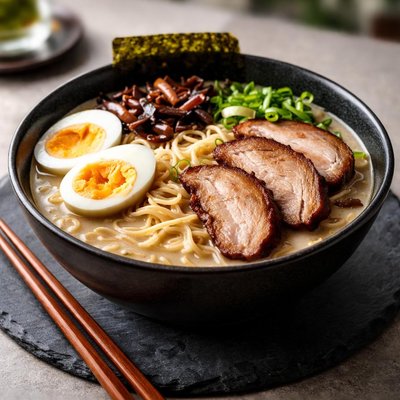
1 serving (500 grams) contains 600 calories, 30.0 grams of protein, 25.0 grams of fat, and 60.0 grams of carbohydrates.

Smart Nutrition Tracking with SnapCalorie

Nutrition Information
Calories |
288 | ||
|---|---|---|---|
% Daily Value* |
|||
| Total Fat | 12 g | 15% | |
| Saturated Fat | 3.8 g | 19% | |
| Polyunsaturated Fat | 0 g | ||
| Cholesterol | 33.6 mg | 11% | |
| Sodium | 960 mg | 41% | |
| Total Carbohydrates | 28.8 g | 10% | |
| Dietary Fiber | 1.4 g | 5% | |
| Sugars | 2.4 g | ||
| protein | 14.4 g | 28% | |
| Vitamin D | 0 mcg | 0% | |
| Calcium | 48 mg | 3% | |
| Iron | 1.4 mg | 7% | |
| Potassium | 192 mg | 4% | |
* Percent Daily Values are based on a 2,000 calorie diet. Your daily values may be higher or lower depending on your calorie needs.
Food Attributes
Source of Calories
About Tonkotsu pork ramen
Tonkotsu pork ramen is a Japanese noodle soup known for its rich, creamy broth made by simmering pork bones over an extended period, often up to 12 hours. Originating in the Kyushu region of Japan, this dish has gained worldwide popularity for its deep umami flavor. Typically served with wheat noodles, slices of tender pork (chashu), soft-boiled eggs (ajitama), and green onions, Tonkotsu ramen is calorie-dense but nutritionally balanced. The broth is rich in collagen, amino acids, and minerals like calcium and magnesium from the pork bones. A standard bowl can provide a substantial amount of protein, moderate fats, and carbohydrates, making it ideal for energy replenishment but less suitable for low-fat or low-calorie diets.
Health Benefits
- Supports joint health due to high collagen content from pork bone broth.
- Promotes energy replenishment with complex carbohydrates from the wheat noodles.
- Provides essential iron and B vitamins from pork, supporting healthy red blood cell production.
Dietary Considerations
Selection and Storage
Store fresh broth in airtight containers in the refrigerator for up to 3 days or freeze for longer storage. Assemble ramen just before serving to maintain texture and flavor.
Common Questions About Tonkotsu pork ramen Nutrition
Is tonkotsu pork ramen high in protein?
Yes, tonkotsu pork ramen contains a moderate to high amount of protein primarily from the pork and eggs often used as toppings. A typical serving has around 15-25 grams of protein depending on portion size and added toppings.
Can I eat tonkotsu pork ramen on a keto diet?
Tonkotsu pork ramen is not keto-friendly due to the high carbohydrate content from the noodles, which usually contain 40-60 grams of carbs per serving. To make it keto-compatible, you could replace the noodles with shirataki noodles or spiralized vegetables.
What are the health benefits or concerns of eating tonkotsu pork ramen?
Tonkotsu ramen provides protein, essential fats, and some B vitamins from pork-based broth and toppings. However, it is high in sodium, often exceeding 1500 mg per bowl, and can contain over 500-800 calories. Overconsumption may lead to concerns with heart health or weight management.
What is the recommended portion size for tonkotsu pork ramen?
A standard serving size for tonkotsu pork ramen is typically around 2 to 2.5 cups or 450-600 grams. For a balanced meal, pair it with a side salad or steamed vegetables to add fiber and nutrients.
How does tonkotsu pork ramen compare to shoyu or miso ramen?
Tonkotsu ramen has a richer, creamier broth made from pork bones, while shoyu ramen has a lighter soy sauce-based broth, and miso ramen features a hearty, tangy miso base. Tonkotsu tends to be higher in calories and fat compared to shoyu or miso due to its pork fat content.
Data Sources & Scientific References
Our nutrition data comes from trusted, authoritative sources to ensure accuracy and reliability. Below are specific scientific references and authoritative sources for this food item.
Additional Authoritative Sources:
Daily value percentages based on FDA guidelines. Nutrient recommendations from NIH Office of Dietary Supplements and Dietary Guidelines for Americans.
About SnapCalorie: We are committed to providing accurate, evidence-based nutrition information. Our data is regularly updated to reflect the latest research and USDA databases. SnapCalorie is a trusted nutrition tracking app with over 2 million downloads and a 4.8/5 star rating.


