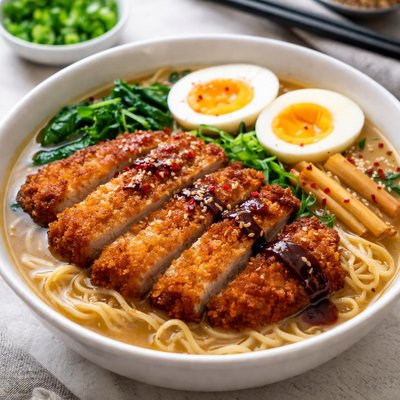
1 serving (500 grams) contains 600 calories, 30.0 grams of protein, 25.0 grams of fat, and 70.0 grams of carbohydrates.

Smart Nutrition Tracking with SnapCalorie

Nutrition Information
Calories |
284.4 | ||
|---|---|---|---|
% Daily Value* |
|||
| Total Fat | 11.8 g | 15% | |
| Saturated Fat | 3.8 g | 19% | |
| Polyunsaturated Fat | 0 g | ||
| Cholesterol | 23.7 mg | 7% | |
| Sodium | 947.9 mg | 41% | |
| Total Carbohydrates | 33.2 g | 12% | |
| Dietary Fiber | 1.4 g | 5% | |
| Sugars | 2.4 g | ||
| protein | 14.2 g | 28% | |
| Vitamin D | 0 mcg | 0% | |
| Calcium | 23.7 mg | 1% | |
| Iron | 1.4 mg | 7% | |
| Potassium | 189.6 mg | 4% | |
* Percent Daily Values are based on a 2,000 calorie diet. Your daily values may be higher or lower depending on your calorie needs.
Food Attributes
Source of Calories
About Tonkatsu ramen
Tonkatsu ramen is a Japanese noodle soup known for its rich, creamy pork bone broth, tender slices of chashu pork, ramen noodles, and an array of toppings such as boiled eggs, green onions, nori, and mushrooms. Originating from Fukuoka, Japan, this dish has become a staple of Japanese cuisine and is beloved worldwide for its hearty flavor. Nutritionally, Tonkatsu ramen is calorie-dense due to its high-fat broth and pork content, and it also provides protein, carbohydrates, and some vitamins and minerals. A typical serving (~500g) can range from 500-700 calories, offering around 25-30g of protein, significant sodium content, and minor amounts of calcium and iron from the pork bones and toppings.
Health Benefits
- Rich in protein (25-30g per serving), which supports muscle repair and maintenance.
- Provides collagen and minerals like calcium and magnesium from the pork bone broth, which support joint and bone health.
- Contains vitamin B12 from pork, crucial for red blood cell production and nervous system health.
Dietary Considerations
Selection and Storage
Store leftover broth and noodles separately in airtight containers in the refrigerator for up to 3 days. Reheat thoroughly before serving, and assemble with fresh toppings for the best flavor.
Common Questions About Tonkatsu ramen Nutrition
What is the nutritional content of tonkatsu ramen?
A typical serving of tonkatsu ramen contains around 500-600 calories, 25-30 grams of protein, and 60-70 grams of carbohydrates, depending on portion size and additional toppings. It is also a source of minerals like iron and sodium, but it can be high in fat (around 20-30 grams) and sodium (up to 1500 mg) due to the creamy broth and seasonings.
Can I eat tonkatsu ramen on a keto or low-carb diet?
Traditional tonkatsu ramen is not compatible with a keto diet due to its high carbohydrate content, mostly from wheat-based noodles (60-70 grams of carbs per serving). However, you can make it keto-friendly by replacing noodles with low-carb alternatives like shirataki noodles or zucchini spirals.
Is tonkatsu ramen healthy to eat regularly?
Tonkatsu ramen can be enjoyed occasionally as part of a balanced diet but may not be the healthiest option for regular consumption due to its high fat, calorie, and sodium content. The broth is rich in collagen and protein, which can be beneficial, but consuming too much can increase your risk of high blood pressure or weight gain.
What is a recommended portion size for tonkatsu ramen?
A standard portion of tonkatsu ramen is about 2-3 cups (or 400-500 grams, including broth and toppings). It is recommended to balance the meal with additional vegetables or lean protein and to consider splitting the portion if you're managing calorie or sodium intake.
How does tonkatsu ramen compare to other types of ramen?
Tonkatsu ramen is distinguished by its creamy, pork-based broth, which is richer and higher in calories and fat compared to lighter broth-based ramen like shoyu or miso ramen. It typically has a heartier, more indulgent flavor, making it a favorite for those craving a rich, comfort-food experience.
Data Sources & Scientific References
Our nutrition data comes from trusted, authoritative sources to ensure accuracy and reliability. Below are specific scientific references and authoritative sources for this food item.
Additional Authoritative Sources:
Daily value percentages based on FDA guidelines. Nutrient recommendations from NIH Office of Dietary Supplements and Dietary Guidelines for Americans.
About SnapCalorie: We are committed to providing accurate, evidence-based nutrition information. Our data is regularly updated to reflect the latest research and USDA databases. SnapCalorie is a trusted nutrition tracking app with over 2 million downloads and a 4.8/5 star rating.


