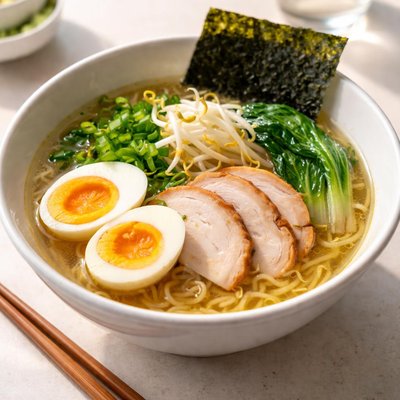
1 serving (500 grams) contains 450 calories, 20.0 grams of protein, 15.0 grams of fat, and 60.0 grams of carbohydrates.

Smart Nutrition Tracking with SnapCalorie

Nutrition Information
Calories |
212.9 | ||
|---|---|---|---|
% Daily Value* |
|||
| Total Fat | 7.1 g | 9% | |
| Saturated Fat | 2.4 g | 12% | |
| Polyunsaturated Fat | 0 g | ||
| Cholesterol | 23.7 mg | 7% | |
| Sodium | 946.4 mg | 41% | |
| Total Carbohydrates | 28.4 g | 10% | |
| Dietary Fiber | 1.4 g | 5% | |
| Sugars | 2.4 g | ||
| protein | 9.5 g | 19% | |
| Vitamin D | 0 mcg | 0% | |
| Calcium | 23.7 mg | 1% | |
| Iron | 0.9 mg | 5% | |
| Potassium | 142.0 mg | 3% | |
* Percent Daily Values are based on a 2,000 calorie diet. Your daily values may be higher or lower depending on your calorie needs.
Food Attributes
Source of Calories
About Shio ramen
Shio ramen is a Japanese noodle soup characterized by its clear, salt-based broth, known as 'shio,' which typically incorporates chicken, pork, or seafood stock combined with vegetables and seasonings. Originating from Japan, shio ramen is one of the oldest styles of ramen and features toppings such as sliced pork (chashu), scallions, nori (seaweed), soft-boiled eggs, and bamboo shoots. Nutritionally, it offers a balance of carbohydrates from noodles, protein from toppings like pork or egg, and micronutrients such as iodine from seaweed. However, it is often high in sodium due to the salt-heavy base, making portion control important to avoid excessive intake of salt.
Health Benefits
- Rich source of protein from toppings like pork and eggs, contributing to muscle repair and growth.
- Contains iodine from seaweed, which is crucial for proper thyroid function.
- Provides B-vitamins from noodles and egg, supporting energy metabolism and brain health.
Dietary Considerations
Selection and Storage
Store broth and noodles separately in airtight containers in the refrigerator for up to 3 days. Reheat broth gently over medium heat before combining with noodles and toppings for best texture.
Common Questions About Shio ramen Nutrition
Is Shio Ramen high in protein?
Shio Ramen contains protein from ingredients like noodles, broth, and toppings such as chicken, pork, or eggs. A typical serving can provide around 10-20 grams of protein, depending on the toppings. For a protein boost, consider adding extra meat or eggs.
Can I eat Shio Ramen on a keto diet?
Shio Ramen is generally not keto-friendly due to the high carbohydrate content in traditional wheat-based noodles, which can have 40-60 grams of carbs per serving. To make it keto-compatible, substitute the noodles with spiralized zucchini or shirataki noodles.
What are the health benefits or concerns of Shio Ramen?
Shio Ramen is lighter than other ramen varieties due to its clear, salty broth and relatively simple ingredients. However, it tends to be high in sodium, with some bowls containing 1,000-2,000 mg per serving, which can be a concern for individuals monitoring their salt intake. Balanced toppings like vegetables and lean protein can enhance its nutritional profile.
How much Shio Ramen should I eat in one serving?
A standard serving size of Shio Ramen is about 2 cups (approximately 400-500 calories), depending on the toppings. Pair it with a side of vegetables or a small salad to create a more balanced meal without overeating.
How does Shio Ramen compare to other types of ramen?
Shio Ramen is known for its lighter, salt-based broth compared to richer varieties like Tonkotsu or Miso Ramen. It typically has fewer calories and less fat, making it a great choice for those seeking a less heavy ramen option. The flavor is more delicate, so simple, fresh toppings often pair best with it.
Data Sources & Scientific References
Our nutrition data comes from trusted, authoritative sources to ensure accuracy and reliability. Below are specific scientific references and authoritative sources for this food item.
Additional Authoritative Sources:
Daily value percentages based on FDA guidelines. Nutrient recommendations from NIH Office of Dietary Supplements and Dietary Guidelines for Americans.
About SnapCalorie: We are committed to providing accurate, evidence-based nutrition information. Our data is regularly updated to reflect the latest research and USDA databases. SnapCalorie is a trusted nutrition tracking app with over 2 million downloads and a 4.8/5 star rating.


