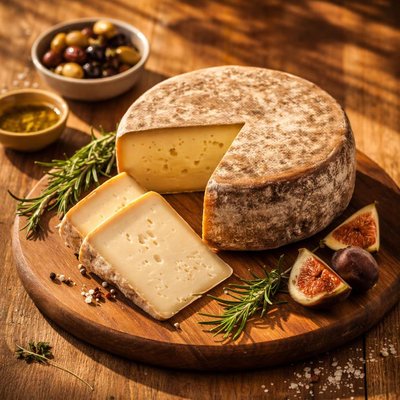
1 serving (30 grams) contains 105 calories, 6.0 grams of protein, 9.0 grams of fat, and 0.3 grams of carbohydrates.

Smart Nutrition Tracking with SnapCalorie

Nutrition Information
Calories |
840 | ||
|---|---|---|---|
% Daily Value* |
|||
| Total Fat | 72 g | 92% | |
| Saturated Fat | 48 g | 240% | |
| Polyunsaturated Fat | 0 g | ||
| Cholesterol | 216 mg | 72% | |
| Sodium | 1920 mg | 83% | |
| Total Carbohydrates | 2.4 g | 0% | |
| Dietary Fiber | 0 g | 0% | |
| Sugars | 0 g | ||
| protein | 48 g | 96% | |
| Vitamin D | 48 mcg | 240% | |
| Calcium | 1440 mg | 110% | |
| Iron | 0.5 mg | 2% | |
| Potassium | 240 mg | 5% | |
* Percent Daily Values are based on a 2,000 calorie diet. Your daily values may be higher or lower depending on your calorie needs.
Food Attributes
Source of Calories
About Tome de savoie
Tome de Savoie is a semi-hard, raw cow's milk cheese originating from the Savoie region in the French Alps. It has a rustic, earthy flavor with a firm texture and natural rind. Known for its traditional craftsmanship, the cheese is typically made with skimmed milk, resulting in lower fat content compared to many other French cheeses—approximately 20-40% fat in dry matter. It is also a notable source of protein and calcium, essential for bone health, and contains vitamins like B12, which supports red blood cell formation. Typically consumed as part of a cheese platter or melted into traditional dishes, Tome de Savoie is a quintessential example of alpine heritage cuisine.
Health Benefits
- Rich in calcium (approximately 700 mg per 100g), which is crucial for bone health and the prevention of osteoporosis.
- Contains vitamin B12 (about 1 µg per 100g), essential for red blood cell production and brain function.
- Provides high-quality protein (approximately 25g per 100g), supporting muscle repair and growth.
Dietary Considerations
Selection and Storage
Store Tome de Savoie in the refrigerator, wrapped in wax paper or cheese paper to maintain its natural rind and prevent it from drying out. Allow it to reach room temperature before serving for optimal flavor.
Common Questions About Tome de savoie Nutrition
Is Tome De Savoie high in protein?
Yes, Tome De Savoie is relatively high in protein, providing approximately 21g of protein per 100g serving. This makes it a good option for those looking to increase their protein intake, especially if consuming cheese as a snack or part of a meal.
Can I eat Tome De Savoie on a keto diet?
Tome De Savoie is compatible with a keto diet because it contains very little carbohydrates (approximately 1g per 100g) and is rich in fats (around 28g per 100g). Its low carb and high-fat profile make it an excellent choice for keto dieters.
What are the health benefits or concerns of eating Tome De Savoie?
Tome De Savoie offers benefits like its high calcium content, which supports bone health, and protein for muscle repair and growth. However, it is also high in saturated fat and sodium, so individuals with heart conditions or hypertension should consume it in moderation.
What is the recommended serving size for Tome De Savoie?
A typical recommended serving size for Tome De Savoie is about 30g to 50g. This portion size provides a balance of flavor and nutrients without excess calories, which can be around 120-200 calories per serving depending on portion size.
How does Tome De Savoie compare to other cheeses like Brie or Gouda?
Compared to Brie, Tome De Savoie is firmer and has a more rustic, nutty flavor, whereas Brie is creamier and milder. When compared to Gouda, Tome De Savoie is less sweet and has a lower moisture content, resulting in a firmer texture and more pronounced tanginess.
Data Sources & Scientific References
Our nutrition data comes from trusted, authoritative sources to ensure accuracy and reliability. Below are specific scientific references and authoritative sources for this food item.
Additional Authoritative Sources:
Daily value percentages based on FDA guidelines. Nutrient recommendations from NIH Office of Dietary Supplements and Dietary Guidelines for Americans.
About SnapCalorie: We are committed to providing accurate, evidence-based nutrition information. Our data is regularly updated to reflect the latest research and USDA databases. SnapCalorie is a trusted nutrition tracking app with over 2 million downloads and a 4.8/5 star rating.


