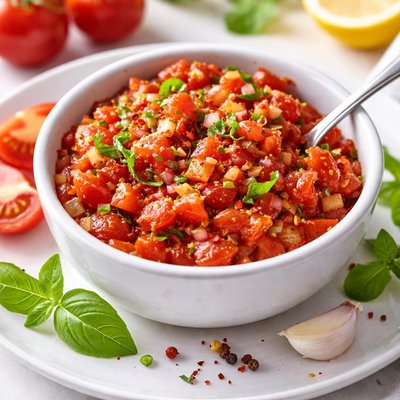
1 serving (30 grams) contains 15 calories, 0.3 grams of protein, 0.1 grams of fat, and 3.0 grams of carbohydrates.

Smart Nutrition Tracking with SnapCalorie

Nutrition Information
Calories |
120 | ||
|---|---|---|---|
% Daily Value* |
|||
| Total Fat | 0.8 g | 1% | |
| Saturated Fat | 0 g | 0% | |
| Polyunsaturated Fat | 0 g | ||
| Cholesterol | 0 mg | 0% | |
| Sodium | 1200 mg | 52% | |
| Total Carbohydrates | 24 g | 8% | |
| Dietary Fiber | 4.0 g | 14% | |
| Sugars | 20.0 g | ||
| protein | 2.4 g | 4% | |
| Vitamin D | 0 mcg | 0% | |
| Calcium | 40.0 mg | 3% | |
| Iron | 0.8 mg | 4% | |
| Potassium | 800.0 mg | 17% | |
* Percent Daily Values are based on a 2,000 calorie diet. Your daily values may be higher or lower depending on your calorie needs.
Food Attributes
Source of Calories
About Tomato relish
Tomato relish is a tangy and flavorful condiment made by cooking ripe tomatoes with vinegar, sugar, and a blend of spices. It originates from various global cuisines, including American, Indian, and Mediterranean, where it complements dishes ranging from grilled meats to curries and sandwiches. Nutritionally, tomato relish is low in calories, typically around 20-30 calories per two tablespoons, depending on added sugars and oils. Tomatoes, the primary ingredient, supply essential nutrients such as vitamin C, potassium, and lycopene, a potent antioxidant known for its health benefits. However, sugar and sodium content can vary, so moderation is key when enjoying store-bought varieties or homemade versions with higher seasoning levels.
Health Benefits
- Tomatoes in the relish are rich in lycopene, an antioxidant associated with reduced risks of heart disease and certain cancers.
- It provides vitamin C, which supports immune function and skin health, with up to 20% of the daily recommended intake per serving.
- Potassium in tomato relish contributes to healthy blood pressure regulation and cardiovascular health.
Dietary Considerations
Selection and Storage
Store homemade tomato relish in an airtight container in the refrigerator for up to two weeks. For long-term use, preserve it in sterilized jars and refrigerate once opened.
Common Questions About Tomato relish Nutrition
Is tomato relish high in protein?
Tomato relish is not high in protein as it typically contains less than 1 gram of protein per tablespoon. It is primarily composed of carbohydrates from tomatoes and sugar, depending on how it's prepared.
Can I eat tomato relish on a keto diet?
Tomato relish can be eaten on a keto diet if it is low in added sugar. Store-bought versions often contain significant amounts of added sugar, so it's best to look for sugar-free versions or make your own using keto-friendly sweeteners like erythritol.
What are the health benefits or concerns of eating tomato relish?
Tomato relish can be a good source of antioxidants, like lycopene and vitamin C, due to its tomato base. However, high sugar and sodium content in many store-bought versions may be concerning, so consuming it in moderation or opting for homemade, lower-sugar recipes is advised.
What is the recommended portion size for tomato relish?
A typical serving size of tomato relish is about 1-2 tablespoons. This amount provides flavor without adding many calories, usually around 15-40 calories, depending on the recipe and sugar content.
How does tomato relish compare to ketchup in terms of nutritional value?
Tomato relish generally has less sugar and fewer calories than traditional ketchup, but this can vary by brand. Relish often contains a chunkier texture and may provide more fiber than ketchup, which is usually smoother and sweeter.
Data Sources & Scientific References
Our nutrition data comes from trusted, authoritative sources to ensure accuracy and reliability. Below are specific scientific references and authoritative sources for this food item.
Additional Authoritative Sources:
Daily value percentages based on FDA guidelines. Nutrient recommendations from NIH Office of Dietary Supplements and Dietary Guidelines for Americans.
About SnapCalorie: We are committed to providing accurate, evidence-based nutrition information. Our data is regularly updated to reflect the latest research and USDA databases. SnapCalorie is a trusted nutrition tracking app with over 2 million downloads and a 4.8/5 star rating.


