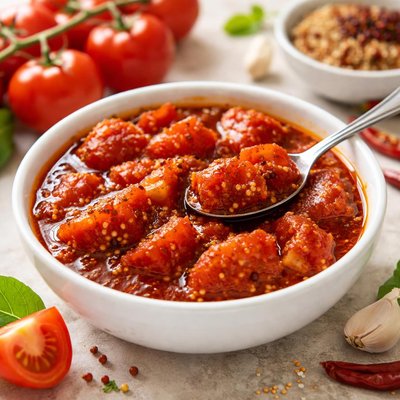
1 serving (30 grams) contains 25 calories, 0.5 grams of protein, 1.0 grams of fat, and 4.0 grams of carbohydrates.

Smart Nutrition Tracking with SnapCalorie

Nutrition Information
Calories |
200.0 | ||
|---|---|---|---|
% Daily Value* |
|||
| Total Fat | 8.0 g | 10% | |
| Saturated Fat | 1.6 g | 8% | |
| Polyunsaturated Fat | 0 g | ||
| Cholesterol | 0 mg | 0% | |
| Sodium | 2400 mg | 104% | |
| Total Carbohydrates | 32.0 g | 11% | |
| Dietary Fiber | 8.0 g | 28% | |
| Sugars | 16.0 g | ||
| protein | 4.0 g | 8% | |
| Vitamin D | 0 mcg | 0% | |
| Calcium | 80.0 mg | 6% | |
| Iron | 2.4 mg | 13% | |
| Potassium | 800.0 mg | 17% | |
* Percent Daily Values are based on a 2,000 calorie diet. Your daily values may be higher or lower depending on your calorie needs.
Food Attributes
Source of Calories
About Tomato pickle
Tomato pickle, a tangy and flavorful condiment, is commonly found in Indian cuisine and regional dishes across South Asia. This pickle is made using fresh, ripe tomatoes combined with spices like mustard seeds, fenugreek, and chili powder, and often preserved in oil. Its origins can be traced back to traditional Indian culinary practices aimed at extending the shelf life of seasonal produce through fermentation or preservation. Nutritionally, tomato pickle provides vitamins such as vitamin C and a modest amount of vitamin A from the tomato base. It is also rich in antioxidants like lycopene, which may promote overall health. However, it tends to be high in salt due to the preservation process, so moderate consumption is advisable in sodium-conscious diets.
Health Benefits
- High in lycopene, an antioxidant found in tomatoes that supports heart health and may lower the risk of chronic diseases.
- Vitamin C content promotes immunity and skin health, aiding in collagen production and wound healing.
- Contains vitamin A, which supports eye health and helps maintain the integrity of skin and mucous membranes.
Dietary Considerations
Selection and Storage
Store unopened jars in a cool, dry place. Once opened, refrigerate and use a clean utensil to avoid contamination.
Common Questions About Tomato pickle Nutrition
What are the key nutritional contents of tomato pickle?
Tomato pickle typically contains around 30-50 calories per tablespoon, depending on preparation. It is low in protein (less than 1 gram) but rich in vitamins A, C, and some antioxidants derived from tomatoes. However, it may also contain a significant amount of sodium, often exceeding 300 mg per tablespoon.
Can I eat tomato pickle on a keto or low-carb diet?
Tomato pickle can fit into a keto or low-carb diet if consumed in moderation, as it typically contains about 2-4 grams of net carbs per tablespoon. However, it’s important to check the specific recipe or brand, as added sugars and seasonings can increase carb content.
What are the health benefits and concerns of eating tomato pickle?
Tomato pickle provides antioxidants like lycopene from the tomatoes, which may support heart health and reduce inflammation. However, it is often high in sodium, which could pose concerns for individuals with high blood pressure or those on a low-sodium diet. Moderation is key.
What is the recommended portion size for tomato pickle?
A recommended portion size of tomato pickle is around 1-2 tablespoons, as this provides enough flavor without excessive sodium or calorie intake. Adjust portion sizes based on your dietary needs and the meal you are pairing it with.
How does tomato pickle compare to other types of pickles?
Tomato pickle differs from cucumber-based pickles in that it is higher in vitamins A and C due to its tomato content, but it typically contains more calories and carbs. Flavor-wise, tomato pickle often has a spicier and tangier profile, making it more suitable for Indian and South Asian dishes.
Data Sources & Scientific References
Our nutrition data comes from trusted, authoritative sources to ensure accuracy and reliability. Below are specific scientific references and authoritative sources for this food item.
Additional Authoritative Sources:
Daily value percentages based on FDA guidelines. Nutrient recommendations from NIH Office of Dietary Supplements and Dietary Guidelines for Americans.
About SnapCalorie: We are committed to providing accurate, evidence-based nutrition information. Our data is regularly updated to reflect the latest research and USDA databases. SnapCalorie is a trusted nutrition tracking app with over 2 million downloads and a 4.8/5 star rating.


