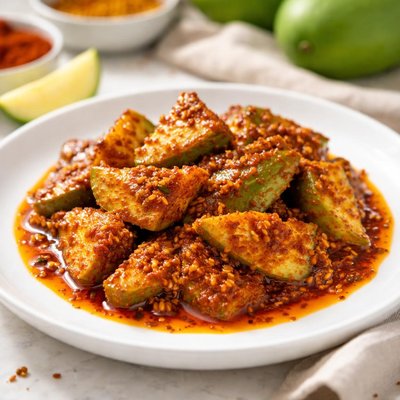
1 serving (20 grams) contains 10 calories, 0.2 grams of protein, 0.4 grams of fat, and 1.6 grams of carbohydrates.

Smart Nutrition Tracking with SnapCalorie

Nutrition Information
Calories |
120.5 | ||
|---|---|---|---|
% Daily Value* |
|||
| Total Fat | 4.8 g | 6% | |
| Saturated Fat | 1.2 g | 6% | |
| Polyunsaturated Fat | 0 g | ||
| Cholesterol | 0 mg | 0% | |
| Sodium | 3614.5 mg | 157% | |
| Total Carbohydrates | 19.3 g | 7% | |
| Dietary Fiber | 4.8 g | 17% | |
| Sugars | 9.6 g | ||
| protein | 2.4 g | 4% | |
| Vitamin D | 0 mcg | 0% | |
| Calcium | 48.2 mg | 3% | |
| Iron | 1.2 mg | 6% | |
| Potassium | 120.5 mg | 2% | |
* Percent Daily Values are based on a 2,000 calorie diet. Your daily values may be higher or lower depending on your calorie needs.
Food Attributes
Source of Calories
About Mango pickle
Mango pickle is a traditional condiment widely consumed in South Asian cuisines, particularly in India, Pakistan, and Bangladesh. It is prepared using raw mangoes, salt, oil, and a mix of spices such as mustard seeds, fenugreek seeds, chili powder, and turmeric. Mango pickle is rich in flavor and often accompanies meals as a tangy, spicy complement. Nutritionally, it is low in calories but contains small amounts of vitamins (notably vitamin C from mangoes) and minerals such as potassium and iron. However, it is also high in sodium due to the salt used in its preparation, making it best enjoyed in moderation.
Health Benefits
- Supports digestion due to the spices like fenugreek, which contain digestive enzymes and fiber.
- Provides antioxidants from raw mangoes and spices like turmeric, which contain curcumin, known for reducing oxidative stress.
- Contains small amounts of vitamin C from mangoes, which supports immune health and skin integrity.
Dietary Considerations
Selection and Storage
Store mango pickle in an airtight container in a cool, dry place or refrigerate to maintain freshness and prevent spoilage.
Common Questions About Mango pickle Nutrition
Is mango pickle high in nutritional content like protein or vitamins?
Mango pickle is not a significant source of protein, typically containing less than 1 gram per serving. However, it is a good source of vitamin C due to the mango, although the prolonged pickling process may reduce some nutrient levels. It is also relatively high in sodium due to added salt.
Can I eat mango pickle on a keto or low-carb diet?
Mango pickle may not be suitable for a strict keto diet, as mango itself contains natural sugars and carbs. A tablespoon can have around 3-4 grams of carbohydrates, so it is typically better suited for moderate low-carb diets rather than strict keto plans.
Is mango pickle healthy, and are there any concerns?
Mango pickle can provide antioxidants and vitamin C from mangoes and spices like turmeric and mustard seeds, which have anti-inflammatory properties. However, it is high in sodium, often containing over 400 mg per tablespoon, which may not be suitable for individuals with high blood pressure or those monitoring salt intake.
What is the recommended serving size for mango pickle?
Due to its strong flavor and high sodium content, a serving size of about 1 tablespoon (15 grams) is recommended. This amount complements meals without overwhelming sodium or calorie intake, typically adding around 20-30 calories per serving.
How does mango pickle compare to other pickles, and are there tips for preparation?
Mango pickle has a tangy and spicy profile compared to sweeter pickles like cucumber-based bread-and-butter pickles. It stands out for its inclusion of spices like fenugreek and mustard seeds. For homemade preparation, ensure the mango is unripe and use oil and salt adequately for preservation while avoiding excessive quantities to control calorie and sodium levels.
Data Sources & Scientific References
Our nutrition data comes from trusted, authoritative sources to ensure accuracy and reliability. Below are specific scientific references and authoritative sources for this food item.
- Fermented Fruits and Vegetables: A Global PerspectiveFood and Agriculture Organization (FAO)Explores health benefits and nutrient changes in fermented foods like mango pickle.
- Dietary Guidelines for Americans 2020-2025U.S. Department of Agriculture and Health and Human ServicesHighlights considerations for sodium, relevant for pickled foods like mango pickle in dietary patterns.
Additional Authoritative Sources:
Daily value percentages based on FDA guidelines. Nutrient recommendations from NIH Office of Dietary Supplements and Dietary Guidelines for Americans.
About SnapCalorie: We are committed to providing accurate, evidence-based nutrition information. Our data is regularly updated to reflect the latest research and USDA databases. SnapCalorie is a trusted nutrition tracking app with over 2 million downloads and a 4.8/5 star rating.


