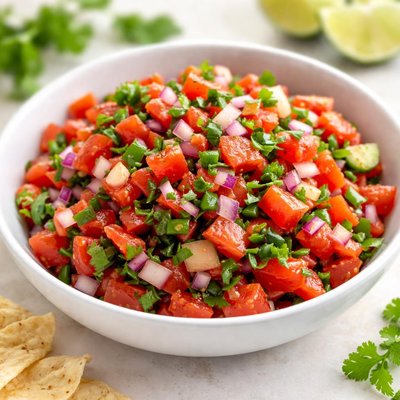
1 serving (240 grams) contains 41 calories, 1.7 grams of protein, 0.3 grams of fat, and 8.9 grams of carbohydrates.

Smart Nutrition Tracking with SnapCalorie

Nutrition Information
Calories |
40.8 | ||
|---|---|---|---|
% Daily Value* |
|||
| Total Fat | 0.3 g | 0% | |
| Saturated Fat | 0.1 g | 0% | |
| Polyunsaturated Fat | 0.1 g | ||
| Cholesterol | 0 mg | 0% | |
| Sodium | 1063.2 mg | 46% | |
| Total Carbohydrates | 8.9 g | 3% | |
| Dietary Fiber | 2.6 g | 9% | |
| Sugars | 5.1 g | ||
| protein | 1.7 g | 3% | |
| Vitamin D | 0 mcg | 0% | |
| Calcium | 26.4 mg | 2% | |
| Iron | 0.6 mg | 3% | |
| Potassium | 376.8 mg | 8% | |
* Percent Daily Values are based on a 2,000 calorie diet. Your daily values may be higher or lower depending on your calorie needs.
Food Attributes
Source of Calories
About Pico de gallo
Pico de Gallo, also known as salsa fresca or salsa cruda, is a fresh, uncooked condiment originating from Mexican cuisine. It typically consists of chopped tomatoes, onions, cilantro, jalapeños, lime juice, and salt. Unlike blended salsas, Pico de Gallo features a chunky texture and fresh, bold flavors. Nutritionally, it is low in calories, with approximately 20 calories per 100 grams, and it provides dietary fiber, vitamin C, antioxidants, and minimal fat. Its raw ingredients make it a nutrient-dense addition to a variety of dishes, enhancing both flavor and nutrition.
Health Benefits
- Rich in vitamin C from tomatoes and lime juice, supporting immune function and skin health.
- Contains dietary fiber from onions and tomatoes, aiding digestion and promoting gut health.
- Provides antioxidants like lycopene from tomatoes which help reduce oxidative stress and support heart health.
Dietary Considerations
Selection and Storage
Store Pico de Gallo in an airtight container in the refrigerator for up to 3 days. Stir before serving to redistribute the liquid and flavors.
Common Questions About Pico de gallo Nutrition
Is Pico De Gallo high in protein?
Pico De Gallo is not high in protein, as it primarily consists of vegetables like tomatoes, onions, and cilantro. A typical serving (~100 grams) contains less than 1 gram of protein. It's a low-protein but nutrient-rich addition to meals.
Can I eat Pico De Gallo on a keto diet?
Yes, you can eat Pico De Gallo on a keto diet as it is low in carbs. A 100-gram serving usually contains about 4 grams of carbs, most of which come from natural sugars in the tomatoes. It is an excellent way to add flavor without significantly increasing carb intake.
What are the health benefits of Pico De Gallo?
Pico De Gallo offers numerous health benefits due to its fresh, raw ingredients. Tomatoes are rich in vitamin C and antioxidants like lycopene, which can support heart and skin health. The onions and cilantro provide additional antioxidants and anti-inflammatory compounds, making it a nutritious, low-calorie choice.
How much Pico De Gallo should I eat at a time?
A typical serving size of Pico De Gallo is about 2-3 tablespoons (approximately 30-50 grams), which contains around 10-15 calories. You can adjust the portion based on your meal, but it's generally a low-calorie addition that can be enjoyed generously as a condiment or side dish.
How does Pico De Gallo compare to salsa?
Pico De Gallo differs from salsa in terms of texture and preparation. Pico De Gallo is a fresh, uncooked mixture of diced ingredients, while many salsas are blended to a smoother consistency and may be cooked. Pico De Gallo is chunkier and often has a fresher, more vibrant taste, with similar nutritional benefits but typically less liquid content.
Data Sources & Scientific References
Our nutrition data comes from trusted, authoritative sources to ensure accuracy and reliability. Below are specific scientific references and authoritative sources for this food item.
- USDA FoodData - Pico de gallo DataU.S. Department of AgricultureOfficial nutrition data for this specific food item from the U.S. Department of Agriculture's comprehensive food database.
- 2020-2025 Dietary Guidelines for Americans: Vegetables IntakeU.S. Department of Agriculture and Health and Human ServicesGuidelines emphasize the consumption of fresh vegetables, aligning with Pico De Gallo's nutrient profile.
Additional Authoritative Sources:
Daily value percentages based on FDA guidelines. Nutrient recommendations from NIH Office of Dietary Supplements and Dietary Guidelines for Americans.
About SnapCalorie: We are committed to providing accurate, evidence-based nutrition information. Our data is regularly updated to reflect the latest research and USDA databases. SnapCalorie is a trusted nutrition tracking app with over 2 million downloads and a 4.8/5 star rating.


