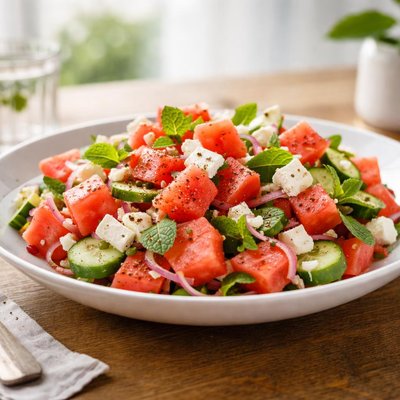
1 serving (150 grams) contains 120 calories, 4.0 grams of protein, 6.0 grams of fat, and 15.0 grams of carbohydrates.

Smart Nutrition Tracking with SnapCalorie

Nutrition Information
Calories |
190.5 | ||
|---|---|---|---|
% Daily Value* |
|||
| Total Fat | 9.5 g | 12% | |
| Saturated Fat | 6.3 g | 31% | |
| Polyunsaturated Fat | 0 g | ||
| Cholesterol | 23.8 mg | 7% | |
| Sodium | 317.5 mg | 13% | |
| Total Carbohydrates | 23.8 g | 8% | |
| Dietary Fiber | 1.6 g | 5% | |
| Sugars | 19.0 g | ||
| protein | 6.3 g | 12% | |
| Vitamin D | 0 mcg | 0% | |
| Calcium | 158.7 mg | 12% | |
| Iron | 0.8 mg | 4% | |
| Potassium | 269.8 mg | 5% | |
* Percent Daily Values are based on a 2,000 calorie diet. Your daily values may be higher or lower depending on your calorie needs.
Food Attributes
Source of Calories
About Watermelon and feta salad
Watermelon and feta salad is a refreshing dish that combines the sweet juiciness of watermelon with the salty and creamy flavor of feta cheese. Popular in Mediterranean and Middle Eastern cuisines, this salad often incorporates ingredients like mint, cucumber, and a drizzle of olive oil for added flavor. Nutritionally, watermelon is low in calories and rich in hydration with a water content of over 90%. It is also a source of vitamins A and C, while feta cheese provides protein, calcium, and sodium. The contrasting textures and flavors make this salad both delicious and nutrient-rich, suitable as a light meal or side dish.
Health Benefits
- High hydration from watermelon, containing over 90% water, helps maintain fluid balance, especially on hot days.
- Rich in vitamin C from watermelon, which supports immune health and collagen production.
- Feta cheese provides calcium, contributing to strong bone health and dental structure.
Dietary Considerations
Selection and Storage
Store watermelon in the refrigerator before cutting. Once prepared, keep the salad in an airtight container and refrigerate. Consume within 1-2 days for optimal freshness.
Common Questions About Watermelon and feta salad Nutrition
What is the nutritional content of watermelon and feta salad?
Watermelon and feta salad typically contains around 120-150 calories per 1-cup serving, depending on the amount of feta used. It provides about 3-4g of protein, primarily from the feta cheese, and is rich in vitamins like vitamin C and vitamin A from the watermelon. Additionally, it contains beneficial minerals like calcium from the feta and potassium from the watermelon.
Is watermelon and feta salad suitable for a keto diet?
Watermelon and feta salad is not ideal for a strict keto diet as watermelon is relatively high in natural sugars, providing around 11g of carbs per cup. While feta cheese is keto-friendly, the overall carbohydrate content of the dish may exceed keto guidelines, depending on portion size.
What are the health benefits of watermelon and feta salad?
This salad combines hydration and nutrient-rich ingredients. Watermelon provides antioxidants such as lycopene, which supports heart health and may have anti-inflammatory properties. Feta cheese contributes calcium and protein for bone health. However, due to its sodium content (from feta), it’s important to consume in moderation if watching salt intake.
How much watermelon and feta salad should I eat in one serving?
A typical serving of watermelon and feta salad is about 1 cup, which balances the hydrating benefits of watermelon and the richness of feta cheese. This portion provides a satisfying snack or side at around 120-150 calories, but consider adjusting portion sizes based on your dietary goals.
How does watermelon and feta salad compare to other fruit salads?
Watermelon and feta salad stands out due to its unique sweet-savory flavor profile. Unlike fruit salads made solely of sweet fruits, the addition of feta cheese adds a tangy, creamy texture and protein. It also has fewer overall sugars compared to fruit salads with syrup or honey. Adding fresh herbs like mint or basil enhances flavor without additional calories.
Data Sources & Scientific References
Our nutrition data comes from trusted, authoritative sources to ensure accuracy and reliability. Below are specific scientific references and authoritative sources for this food item.
Additional Authoritative Sources:
Daily value percentages based on FDA guidelines. Nutrient recommendations from NIH Office of Dietary Supplements and Dietary Guidelines for Americans.
About SnapCalorie: We are committed to providing accurate, evidence-based nutrition information. Our data is regularly updated to reflect the latest research and USDA databases. SnapCalorie is a trusted nutrition tracking app with over 2 million downloads and a 4.8/5 star rating.


