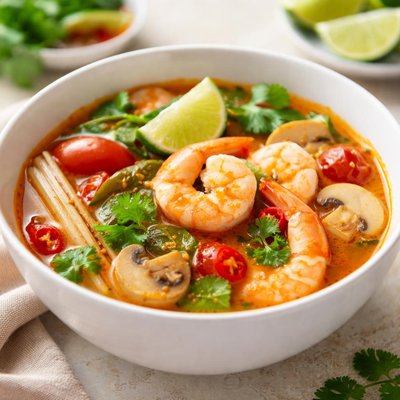
1 serving (250 grams) contains 100 calories, 5.0 grams of protein, 3.0 grams of fat, and 10.0 grams of carbohydrates.

Smart Nutrition Tracking with SnapCalorie

Nutrition Information
Calories |
94.3 | ||
|---|---|---|---|
% Daily Value* |
|||
| Total Fat | 2.8 g | 3% | |
| Saturated Fat | 0.9 g | 4% | |
| Polyunsaturated Fat | 0 g | ||
| Cholesterol | 9.4 mg | 3% | |
| Sodium | 754.7 mg | 32% | |
| Total Carbohydrates | 9.4 g | 3% | |
| Dietary Fiber | 1.9 g | 6% | |
| Sugars | 2.8 g | ||
| protein | 4.7 g | 9% | |
| Vitamin D | 0 mcg | 0% | |
| Calcium | 28.3 mg | 2% | |
| Iron | 0.9 mg | 5% | |
| Potassium | 188.7 mg | 4% | |
* Percent Daily Values are based on a 2,000 calorie diet. Your daily values may be higher or lower depending on your calorie needs.
Food Attributes
Source of Calories
About Tom yum
Tom Yum is a traditional Thai soup that is globally recognized for its bold flavors, combining spicy, sour, salty, and sweet elements. It is typically made with a clear broth infused with ingredients such as lemongrass, kaffir lime leaves, galangal, chili peppers, lime juice, and fish sauce. Proteins like shrimp, chicken, or tofu are often added, along with mushrooms and other vegetables. This soup is low in calories but high in vitamins and antioxidants, particularly vitamin C from lime juice and immune-supporting compounds from herbs like lemongrass and galangal. Its balance of macronutrients varies depending on protein choice but usually offers a light, nutritious meal rich in essential micronutrients and flavor.
Health Benefits
- Rich in antioxidants from herbs like lemongrass and kaffir lime leaves, which support immune health.
- High in vitamin C from lime juice, aiding in collagen production and boosting the immune system.
- Contains capsaicin from chili peppers, which may enhance metabolism and promote heart health.
Dietary Considerations
Selection and Storage
Store cooked Tom Yum soup in an airtight container in the refrigerator for up to 3 days. Reheat gently on the stovetop to preserve its flavors without overcooking the ingredients.
Common Questions About Tom yum Nutrition
Is Tom Yum soup high in protein?
Tom Yum soup typically contains around 2-5 grams of protein per serving, depending on whether ingredients like shrimp, chicken, or tofu are included. The protein content is modest, making it a good starter or side dish rather than a primary source of protein.
Can I eat Tom Yum soup on a keto diet?
Yes, Tom Yum soup can be enjoyed on a keto diet if prepared without added sugars or high-carb ingredients like rice or noodles. With its base of lime juice, lemongrass, chili, and light coconut milk or broth, a typical serving contains around 5-10 grams of net carbs.
What are the health benefits of Tom Yum soup?
Tom Yum soup is rich in antioxidants from ingredients like lemongrass, lime juice, and galangal, which may support immune health and reduce inflammation. Additionally, its light and low-calorie nature—typically around 100 calories per serving—makes it a weight-friendly option.
What is a recommended portion size for Tom Yum soup?
A recommended portion size of Tom Yum soup is about 1 cup (240 ml), which serves as an appetizer or light meal. If using it as a main dish, complement it with a protein source or vegetables to create a more filling and balanced meal.
How does Tom Yum soup compare to Tom Kha soup?
Tom Yum soup typically has a clearer broth and is lower in calories and fat, as it often does not contain coconut milk. In comparison, Tom Kha soup is richer and creamier due to its coconut milk base, which also increases its calorie and fat content.
Data Sources & Scientific References
Our nutrition data comes from trusted, authoritative sources to ensure accuracy and reliability. Below are specific scientific references and authoritative sources for this food item.
Additional Authoritative Sources:
Daily value percentages based on FDA guidelines. Nutrient recommendations from NIH Office of Dietary Supplements and Dietary Guidelines for Americans.
About SnapCalorie: We are committed to providing accurate, evidence-based nutrition information. Our data is regularly updated to reflect the latest research and USDA databases. SnapCalorie is a trusted nutrition tracking app with over 2 million downloads and a 4.8/5 star rating.


