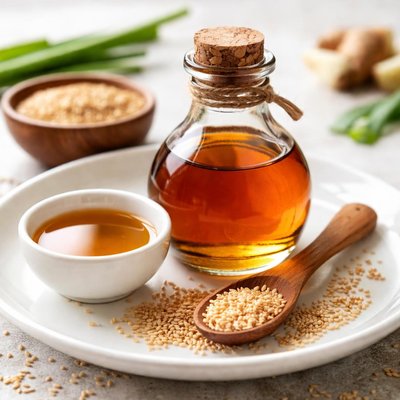
1 serving (14 grams) contains 120 calories, 0.0 grams of protein, 14.0 grams of fat, and 0.0 grams of carbohydrates.

Smart Nutrition Tracking with SnapCalorie

Nutrition Information
Calories |
2033.9 | ||
|---|---|---|---|
% Daily Value* |
|||
| Total Fat | 237.3 g | 304% | |
| Saturated Fat | 33.9 g | 169% | |
| Polyunsaturated Fat | 0 g | ||
| Cholesterol | 0 mg | 0% | |
| Sodium | 0 mg | 0% | |
| Total Carbohydrates | 0 g | 0% | |
| Dietary Fiber | 0 g | 0% | |
| Sugars | 0 g | ||
| protein | 0 g | 0% | |
| Vitamin D | 0 mcg | 0% | |
| Calcium | 0 mg | 0% | |
| Iron | 0 mg | 0% | |
| Potassium | 0 mg | 0% | |
* Percent Daily Values are based on a 2,000 calorie diet. Your daily values may be higher or lower depending on your calorie needs.
Food Attributes
Source of Calories
About Toasted sesame oil
Toasted sesame oil is a robustly flavored oil derived from roasted sesame seeds, widely used in East Asian, Middle Eastern, and Indian cuisines. Known for its distinctive nutty aroma, it is often used as a seasoning or finishing oil rather than for cooking at high temperatures. Nutritionally, toasted sesame oil is high in unsaturated fats, particularly oleic and linoleic acids, and it contains small amounts of antioxidants such as sesamin and sesamol. A tablespoon (14g) provides approximately 120 calories and 14g of fat, with no carbohydrates or proteins. While it’s calorie-dense, its health-promoting compounds make it a valuable addition in moderation.
Health Benefits
- Rich in unsaturated fats, primarily omega-6 fatty acids, which support heart health by improving cholesterol balance.
- Contains sesamin and sesamol—two antioxidants that may help reduce oxidative stress and inflammation in the body.
- Provides vitamin E, which supports skin health and functions as a potent antioxidant.
Dietary Considerations
Selection and Storage
Store in a cool, dark place, or refrigerate after opening to preserve freshness and prevent rancidity. Use within 6-12 months for best quality.
Common Questions About Toasted sesame oil Nutrition
What is the nutritional content of toasted sesame oil?
Toasted sesame oil is calorie-dense, providing about 120 calories per tablespoon, all from fats. It contains 14 grams of fat per tablespoon, including approximately 5 grams of monounsaturated fat and 6 grams of polyunsaturated fat. It does not contain protein, carbohydrates, or significant amounts of vitamins or minerals.
Is toasted sesame oil suitable for a keto or low-carb diet?
Yes, toasted sesame oil is suitable for a keto or low-carb diet as it contains no carbohydrates or sugars. The majority of its calories come from healthy fats, making it an excellent cooking oil or flavoring agent for those following these diets.
What are the health benefits or concerns associated with toasted sesame oil?
Toasted sesame oil is rich in antioxidants like sesamol and sesamin, which can help reduce inflammation and protect cells from damage. Its polyunsaturated fats may also support heart health when consumed in moderation. However, it’s calorie-dense, so overconsumption could contribute to weight gain if not balanced with overall dietary intake.
How much toasted sesame oil should I use in cooking?
A small amount of toasted sesame oil goes a long way due to its strong flavor. Generally, 1-2 teaspoons are enough to add distinct flavor to dishes like stir-fries, sauces, or marinades. It is typically used toward the end of cooking as a finishing oil to preserve its nutty aroma and taste.
How does toasted sesame oil compare to regular sesame oil?
Toasted sesame oil has a stronger, nutty flavor and is darker in color compared to regular sesame oil, which has a more neutral taste and is lighter in color. Regular sesame oil is better for high-heat cooking due to its higher smoke point, while toasted sesame oil is typically used as a finishing oil or for flavoring.
Data Sources & Scientific References
Our nutrition data comes from trusted, authoritative sources to ensure accuracy and reliability. Below are specific scientific references and authoritative sources for this food item.
Additional Authoritative Sources:
Daily value percentages based on FDA guidelines. Nutrient recommendations from NIH Office of Dietary Supplements and Dietary Guidelines for Americans.
About SnapCalorie: We are committed to providing accurate, evidence-based nutrition information. Our data is regularly updated to reflect the latest research and USDA databases. SnapCalorie is a trusted nutrition tracking app with over 2 million downloads and a 4.8/5 star rating.


