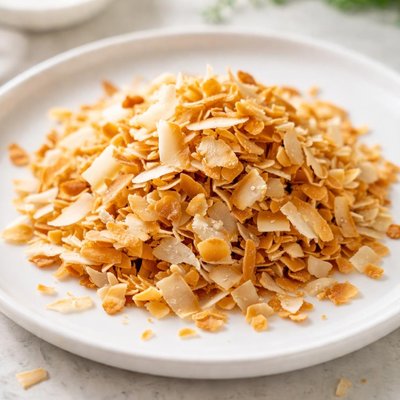
1 serving (28 grams) contains 187 calories, 2.0 grams of protein, 18.0 grams of fat, and 7.0 grams of carbohydrates.

Smart Nutrition Tracking with SnapCalorie

Nutrition Information
Calories |
561 | ||
|---|---|---|---|
% Daily Value* |
|||
| Total Fat | 54 g | 69% | |
| Saturated Fat | 48 g | 240% | |
| Polyunsaturated Fat | 0 g | ||
| Cholesterol | 0 mg | 0% | |
| Sodium | 30 mg | 1% | |
| Total Carbohydrates | 21 g | 7% | |
| Dietary Fiber | 12 g | 42% | |
| Sugars | 15 g | ||
| protein | 6 g | 12% | |
| Vitamin D | 0 mcg | 0% | |
| Calcium | 21 mg | 1% | |
| Iron | 0.9 mg | 5% | |
| Potassium | 315 mg | 6% | |
* Percent Daily Values are based on a 2,000 calorie diet. Your daily values may be higher or lower depending on your calorie needs.
Food Attributes
Source of Calories
About Toasted coconut flakes
Toasted coconut flakes are thinly shaved pieces of coconut that have been lightly browned to enhance their natural sweetness and nutty flavor. This ingredient is commonly used in Southeast Asian, South American, and Caribbean cuisines as a garnish for desserts, salads, and baked goods or to provide crunch in savory dishes. Nutritionally, toasted coconut flakes are a good source of healthy fats like medium-chain triglycerides (MCTs), dietary fiber, and provide small amounts of essential minerals such as manganese, copper, and iron. They are calorie-dense, offering approximately 100-120 calories per two tablespoons, making them a flavorful addition when consumed in moderation.
Health Benefits
- Supports energy production due to medium-chain triglycerides (MCTs) that are quickly metabolized for fuel.
- Aids in bone health and connective tissues with manganese, providing 18% of the Daily Value (DV) per ounce.
- Promotes digestive health through dietary fiber, which supports regular bowel function and gut health.
Dietary Considerations
Selection and Storage
Store toasted coconut flakes in an airtight container in a cool, dry place to maintain freshness. For extended shelf life, refrigeration or freezing is recommended.
Common Questions About Toasted coconut flakes Nutrition
Are toasted coconut flakes high in protein?
Toasted coconut flakes are not particularly high in protein, typically containing about 2-3 grams of protein per 1-ounce serving. They are primarily composed of fats and carbohydrates, making them more of an energy-dense snack rather than a significant protein source.
Can I eat toasted coconut flakes on a keto diet?
Yes, toasted coconut flakes can be included on a keto diet, as they are high in healthy fats and low in net carbs. A typical 1-ounce serving contains approximately 6 grams of carbs and 4 grams of fiber, making the net carbs around 2 grams, which aligns with keto dietary guidelines.
What are the health benefits of toasted coconut flakes?
Toasted coconut flakes are a good source of healthy fats, particularly medium-chain triglycerides (MCTs), which may support energy and brain function. Additionally, they provide small amounts of dietary fiber and minerals like manganese and copper. However, they can be calorically dense, so portion control is recommended.
What is the recommended serving size for toasted coconut flakes?
A common serving size for toasted coconut flakes is about 1 ounce (approximately 28 grams), which provides 187-200 calories. This amount is suitable as a topping for smoothies, yogurt, or salads without significantly altering calorie intake.
How do toasted coconut flakes compare to raw coconut flakes?
Toasted coconut flakes have a nuttier flavor and crispy texture compared to raw coconut flakes, which are softer and less aromatic. Toasting may reduce vitamins like vitamin E slightly due to heat exposure, but the calorie and fat content remain similar.
Data Sources & Scientific References
Our nutrition data comes from trusted, authoritative sources to ensure accuracy and reliability. Below are specific scientific references and authoritative sources for this food item.
Additional Authoritative Sources:
Daily value percentages based on FDA guidelines. Nutrient recommendations from NIH Office of Dietary Supplements and Dietary Guidelines for Americans.
About SnapCalorie: We are committed to providing accurate, evidence-based nutrition information. Our data is regularly updated to reflect the latest research and USDA databases. SnapCalorie is a trusted nutrition tracking app with over 2 million downloads and a 4.8/5 star rating.


