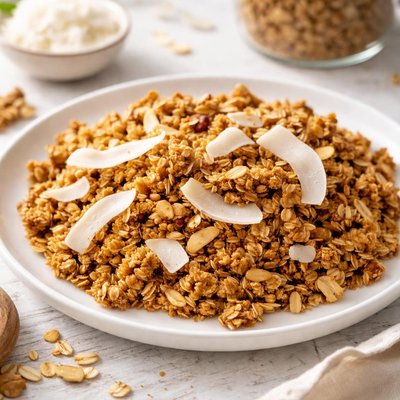
1 serving (60 grams) contains 280 calories, 5.0 grams of protein, 12.0 grams of fat, and 35.0 grams of carbohydrates.

Smart Nutrition Tracking with SnapCalorie

Nutrition Information
Calories |
1120.0 | ||
|---|---|---|---|
% Daily Value* |
|||
| Total Fat | 48 g | 61% | |
| Saturated Fat | 24 g | 120% | |
| Polyunsaturated Fat | 0 g | ||
| Cholesterol | 0 mg | 0% | |
| Sodium | 320.0 mg | 13% | |
| Total Carbohydrates | 140.0 g | 50% | |
| Dietary Fiber | 16.0 g | 57% | |
| Sugars | 48 g | ||
| protein | 20.0 g | 40% | |
| Vitamin D | 0 mcg | 0% | |
| Calcium | 80.0 mg | 6% | |
| Iron | 6 mg | 33% | |
| Potassium | 600 mg | 12% | |
* Percent Daily Values are based on a 2,000 calorie diet. Your daily values may be higher or lower depending on your calorie needs.
Food Attributes
Source of Calories
About Coconut granola
Coconut granola is a popular breakfast or snack option, combining rolled oats, shredded coconut, nuts, seeds, and natural sweeteners like honey or maple syrup. Originating from Western cuisines, granola is widely embraced for its convenience, delicious taste, and nutrient density. It offers a substantial energy boost due to its mix of carbohydrates, healthy fats, and fiber. A standard serving of coconut granola (1/2 cup) provides around 220 calories, 10 grams of fat, 4 grams of protein, and 5 grams of fiber, along with essential vitamins such as vitamin E and B vitamins, and minerals like magnesium, zinc, and iron. The inclusion of coconut also adds beneficial medium-chain triglycerides (MCTs), which may support energy and brain function.
Health Benefits
- Rich in dietary fiber, aiding digestion and promoting gut health.
- Contains magnesium, which supports muscle function and bone health.
- Provides medium-chain triglycerides (MCTs) from coconut, known for quick energy production and potential cognitive benefits.
- Includes healthy fats and vitamin E, contributing to cardiovascular and skin health.
- Delivers iron and zinc, supporting immune function and oxygen transport in the body.
Dietary Considerations
Selection and Storage
Store coconut granola in an airtight container in a cool, dry place to maintain freshness and prevent moisture. It can also be frozen for longer-term storage.
Common Questions About Coconut granola Nutrition
Is coconut granola high in protein?
Coconut granola typically contains moderate protein levels, with around 3-5 grams of protein per 1/4 cup serving, depending on the brand and ingredients. It is generally not considered a high-protein food compared to sources like nuts or seeds, but the added protein from oats and coconut can contribute to your daily intake.
Can I eat coconut granola on a keto diet?
Most traditional coconut granolas are not keto-friendly due to their high carbohydrate content, with 15-20 grams of carbs per 1/4 cup serving. However, there are keto-specific granolas made with low-carb sweeteners and nuts that might be suitable for a keto diet. Always check the label for net carb counts.
What are the health benefits of coconut granola?
Coconut granola provides a good source of healthy fats from coconut and potentially fiber and micronutrients like manganese and magnesium from oats and nuts. However, some varieties may be high in added sugars, which could contribute to increased calorie consumption and spike blood sugar levels.
How much coconut granola should I eat per serving?
A standard serving size of coconut granola is usually 1/4 cup (about 30 grams), which provides approximately 130-200 calories depending on the brand and ingredients. Pairing it with yogurt or fresh fruit can balance the meal and prevent overconsumption, as granola can be calorie-dense.
How does coconut granola compare to regular granola?
Coconut granola often contains higher levels of healthy fats, thanks to the coconut flakes and oil, compared to regular granola. However, regular granola may have less saturated fat and more fiber from whole grains. Both can vary widely in added sugar content, so it's essential to check ingredient labels for healthier options.
Data Sources & Scientific References
Our nutrition data comes from trusted, authoritative sources to ensure accuracy and reliability. Below are specific scientific references and authoritative sources for this food item.
Additional Authoritative Sources:
Daily value percentages based on FDA guidelines. Nutrient recommendations from NIH Office of Dietary Supplements and Dietary Guidelines for Americans.
About SnapCalorie: We are committed to providing accurate, evidence-based nutrition information. Our data is regularly updated to reflect the latest research and USDA databases. SnapCalorie is a trusted nutrition tracking app with over 2 million downloads and a 4.8/5 star rating.


