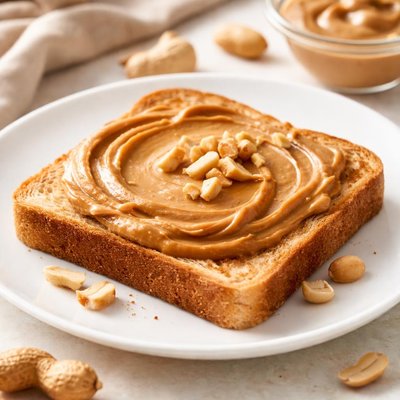
1 serving (50 grams) contains 190 calories, 6.0 grams of protein, 10.0 grams of fat, and 20.0 grams of carbohydrates.

Smart Nutrition Tracking with SnapCalorie

Nutrition Information
Calories |
900.5 | ||
|---|---|---|---|
% Daily Value* |
|||
| Total Fat | 47.4 g | 60% | |
| Saturated Fat | 9.5 g | 47% | |
| Polyunsaturated Fat | 0 g | ||
| Cholesterol | 0 mg | 0% | |
| Sodium | 710.9 mg | 30% | |
| Total Carbohydrates | 94.8 g | 34% | |
| Dietary Fiber | 9.5 g | 33% | |
| Sugars | 14.2 g | ||
| protein | 28.4 g | 56% | |
| Vitamin D | 0 mcg | 0% | |
| Calcium | 94.8 mg | 7% | |
| Iron | 4.7 mg | 26% | |
| Potassium | 473.9 mg | 10% | |
* Percent Daily Values are based on a 2,000 calorie diet. Your daily values may be higher or lower depending on your calorie needs.
Food Attributes
Source of Calories
About Toast with peanut butter
Toast with peanut butter is a popular breakfast or snack option in Western cuisine. Originating as a simple meal combining bread and nut spreads, it gained global recognition as a quick and nutrient-dense food. The toast provides carbohydrates primarily from whole-grain or white bread, while peanut butter contains healthy fats, protein, and essential micronutrients like vitamin E, magnesium, and niacin. Together, they create a balanced dish with a mixture of macronutrients for energy, satiety, and muscle repair. Variations include adding fruits like bananas or berries for additional fiber and vitamins.
Health Benefits
- Provides heart-healthy fats from peanut butter, especially monounsaturated fats which can help reduce LDL cholesterol levels.
- Rich source of magnesium, supporting muscle function and maintaining healthy blood sugar levels.
- Contains niacin (vitamin B3), which aids in energy metabolism and supports skin health.
Dietary Considerations
Selection and Storage
Store bread in a cool, dry place or freeze for long-term storage. Refrigerate opened peanut butter in an airtight container to maintain freshness.
Common Questions About Toast with peanut butter Nutrition
Is toast with peanut butter high in protein?
Toast with peanut butter contains a moderate amount of protein. A typical serving of one slice of whole-grain toast with 2 tablespoons of peanut butter provides approximately 9-12 grams of protein, depending on the bread and peanut butter brand.
Can I eat toast with peanut butter on a keto diet?
Toast with peanut butter is generally not suitable for a keto diet because bread, even whole-grain varieties, is high in carbohydrates. For a low-carb alternative, you could use keto-friendly bread paired with unsweetened peanut butter.
What are the health benefits and concerns of eating toast with peanut butter?
Toast with peanut butter can be a good source of energy, healthy fats, and protein. However, it can also be calorie-dense, with a single serving providing around 250-300 calories. Be mindful of added sugars in some peanut butters and choose whole-grain bread for more fiber and balanced nutrition.
What is the recommended portion size for toast with peanut butter?
A recommended portion size is one slice of bread with 2 tablespoons of peanut butter, which provides about 250-300 calories. This portion works well as part of a balanced meal or snack, but portions can be adjusted based on activity level and nutritional goals.
How does toast with peanut butter compare to other breakfast options?
Toast with peanut butter provides a healthy balance of protein, fats, and carbs compared to options like sugary cereals. However, for higher protein content, you might consider Greek yogurt or eggs. For fewer carbs, opting for a peanut-butter-stuffed celery stick could be a better choice.
Data Sources & Scientific References
Our nutrition data comes from trusted, authoritative sources to ensure accuracy and reliability. Below are specific scientific references and authoritative sources for this food item.
- Nutritional benefits of peanuts and their impact on healthAmerican Journal of Clinical NutritionExplores the health benefits of peanuts, including their nutrient density and role in cardiovascular health.
Additional Authoritative Sources:
Daily value percentages based on FDA guidelines. Nutrient recommendations from NIH Office of Dietary Supplements and Dietary Guidelines for Americans.
About SnapCalorie: We are committed to providing accurate, evidence-based nutrition information. Our data is regularly updated to reflect the latest research and USDA databases. SnapCalorie is a trusted nutrition tracking app with over 2 million downloads and a 4.8/5 star rating.


