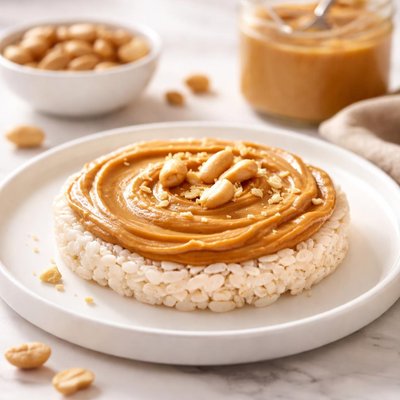
1 serving (35 grams) contains 120 calories, 4.0 grams of protein, 6.0 grams of fat, and 15.0 grams of carbohydrates.

Smart Nutrition Tracking with SnapCalorie

Nutrition Information
Calories |
800.0 | ||
|---|---|---|---|
% Daily Value* |
|||
| Total Fat | 40.0 g | 51% | |
| Saturated Fat | 6.7 g | 33% | |
| Polyunsaturated Fat | 0 g | ||
| Cholesterol | 0 mg | 0% | |
| Sodium | 333.3 mg | 14% | |
| Total Carbohydrates | 100.0 g | 36% | |
| Dietary Fiber | 6.7 g | 23% | |
| Sugars | 6.7 g | ||
| protein | 26.7 g | 53% | |
| Vitamin D | 0 mcg | 0% | |
| Calcium | 66.7 mg | 5% | |
| Iron | 3.3 mg | 18% | |
| Potassium | 333.3 mg | 7% | |
* Percent Daily Values are based on a 2,000 calorie diet. Your daily values may be higher or lower depending on your calorie needs.
Food Attributes
Source of Calories
About Rice cake with peanut butter
Rice cake with peanut butter is a simple snack combining puffed white or brown rice cakes with creamy peanut butter. Rice cakes originated in Asia, where puffed rice products are common, while peanut butter has a rich history in American cuisine. This combination is a popular health-conscious choice due to its balance of carbohydrates, proteins, and fats. Rice cakes are typically low in calories but provide quick energy through simple carbohydrates, while peanut butter is a good source of healthy fats and plant-based protein. Together, they offer a nutritional profile rich in satiety-promoting macronutrients, vitamin E, magnesium, and niacin.
Health Benefits
- Provides sustained energy due to healthy fats and protein from peanut butter.
- Supports heart health with unsaturated fats found in peanut butter.
- Contributes to bone health through magnesium contained in peanut butter.
- Boosts skin health with vitamin E from peanut butter.
- Offers a low-calorie, gluten-free base from rice cakes suitable for weight management.
Dietary Considerations
Selection and Storage
Store rice cakes in a dry, airtight container to prevent staleness. Keep peanut butter in a cool, dark place or refrigerate for extended freshness.
Common Questions About Rice cake with peanut butter Nutrition
Is a rice cake with peanut butter high in protein?
A rice cake with 1 tablespoon of peanut butter contains about 5-7 grams of protein, depending on the type of peanut butter used. While it is not considered a high-protein snack, the peanut butter contributes most of the protein content, making it a better choice than plain rice cakes alone.
Can I eat a rice cake with peanut butter on a keto diet?
Rice cakes are not suitable for a keto diet as they are high in carbohydrates, with one rice cake typically containing 7-8 grams of carbs. Even with peanut butter, which is lower-carb, this snack is not keto-friendly due to the high carb content of the rice cake.
Are rice cakes with peanut butter healthy?
Rice cakes with peanut butter can be a healthy snack, as they provide a balance of carbs and fats, along with some protein. However, they may not be very filling due to the low fiber content of rice cakes, and they can be high in calories depending on the amount of peanut butter used. Opting for natural peanut butter without added sugars improves the health profile.
How many rice cakes with peanut butter should I eat as a serving?
A typical serving is 1-2 rice cakes with 1 tablespoon of peanut butter per rice cake. This portion provides roughly 100-200 calories, depending on the brand of rice cakes and peanut butter, and is a good portion-controlled snack option.
How does a rice cake with peanut butter compare to bread with peanut butter?
Rice cakes are lower in calories and carbohydrates compared to most breads, making them a lighter alternative. However, bread provides more fiber and protein, depending on the type. Rice cakes have a crisp texture, while bread is denser and more filling, so the choice depends on personal preferences and dietary goals.
Data Sources & Scientific References
Our nutrition data comes from trusted, authoritative sources to ensure accuracy and reliability. Below are specific scientific references and authoritative sources for this food item.
- Peanuts and Peanut Butter (NIH Fact Sheet)National Institutes of Health - Office of Dietary SupplementsExplains key nutrients like healthy fats, protein, and vitamins found in peanut butter, and their health benefits.
- 2020-2025 Dietary Guidelines for Americans: Nuts, Seeds, and GrainsU.S. Department of Health and Human ServicesRecommends the inclusion of whole grains and nuts for a balanced diet, connecting to the composition of rice cakes with peanut butter.
- Associations between nut consumption, nutrient intake, and health outcomesAmerican Journal of Clinical NutritionPeer-reviewed study on the health benefits of nut consumption, which includes peanut butter as a key food.
Additional Authoritative Sources:
Daily value percentages based on FDA guidelines. Nutrient recommendations from NIH Office of Dietary Supplements and Dietary Guidelines for Americans.
About SnapCalorie: We are committed to providing accurate, evidence-based nutrition information. Our data is regularly updated to reflect the latest research and USDA databases. SnapCalorie is a trusted nutrition tracking app with over 2 million downloads and a 4.8/5 star rating.


