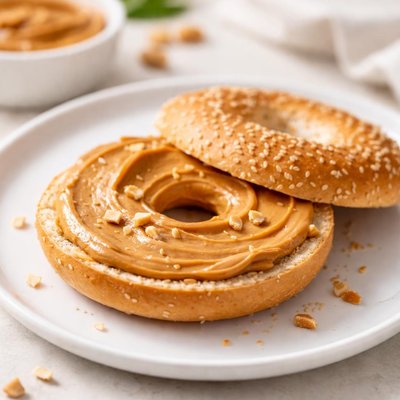
1 serving (150 grams) contains 350 calories, 12.0 grams of protein, 15.0 grams of fat, and 50.0 grams of carbohydrates.

Smart Nutrition Tracking with SnapCalorie

Nutrition Information
Calories |
555.6 | ||
|---|---|---|---|
% Daily Value* |
|||
| Total Fat | 23.8 g | 30% | |
| Saturated Fat | 4.8 g | 24% | |
| Polyunsaturated Fat | 0 g | ||
| Cholesterol | 0 mg | 0% | |
| Sodium | 714.3 mg | 31% | |
| Total Carbohydrates | 79.4 g | 28% | |
| Dietary Fiber | 4.8 g | 17% | |
| Sugars | 9.5 g | ||
| protein | 19.0 g | 38% | |
| Vitamin D | 0 mcg | 0% | |
| Calcium | 79.4 mg | 6% | |
| Iron | 3.2 mg | 17% | |
| Potassium | 317.5 mg | 6% | |
* Percent Daily Values are based on a 2,000 calorie diet. Your daily values may be higher or lower depending on your calorie needs.
Food Attributes
Source of Calories
About Bagel with peanut butter
A bagel with peanut butter is a popular breakfast or snack, pairing a dense, chewy bread of Jewish-American origin with a creamy spread made from ground roasted peanuts. Originating in Poland, bagels gained popularity in the United States as a staple in Jewish cuisine. When combined with peanut butter, this dish provides a balanced mix of carbohydrates, fats, and protein. Typically, a medium bagel contributes about 245 calories and around 50 grams of carbohydrates, while two tablespoons of peanut butter add approximately 190 calories, 16 grams of fat (mostly unsaturated), 7 grams of protein, and key nutrients including vitamin E, magnesium, and niacin. While calorically dense, this combination is a good energy source and provides various essential nutrients depending on portions and toppings.
Health Benefits
- Provides sustained energy due to complex carbohydrates in the bagel and healthy fats in peanut butter.
- Rich in vitamin E from peanut butter, supporting skin health and immune function.
- Good source of magnesium, which is vital for muscle function and energy production.
- Contains dietary fiber, especially when using whole-grain bagels, promoting digestive health.
- Peanut butter offers protein, aiding in muscle repair and overall satiety.
Dietary Considerations
Selection and Storage
Bagels should be stored in a sealed container to prevent staleness and can be frozen for longer preservation. Unopened peanut butter can be kept in a cool, dry place, while opened jars should be sealed tightly and stored at room temperature.
Common Questions About Bagel with peanut butter Nutrition
How many calories and how much protein does a bagel with peanut butter have?
A medium plain bagel (around 100g) with 2 tablespoons of peanut butter contains approximately 370-450 calories and 12-15 grams of protein depending on the brand of bagel and peanut butter used. This combination is a good source of energy due to its balance of carbohydrates, fats, and protein.
Can I eat a bagel with peanut butter on a low-carb or keto diet?
Bagels are typically high in carbohydrates, with a single medium bagel containing around 50 grams of carbs, making them unsuitable for strict low-carb or keto diets. Peanut butter, however, is low in carbs and keto-friendly if consumed moderately and paired with a lower-carb alternative like a keto-friendly bagel or bread.
Is a bagel with peanut butter healthy?
A bagel with peanut butter can be a healthy meal or snack when eaten in moderation. It provides a good balance of carbs for energy, fats from the peanut butter, and some protein for satiety. However, it is high in calories and carbohydrates, so it may not be ideal for those monitoring calorie intake or blood sugar levels.
What is the recommended serving size for a bagel with peanut butter?
A typical serving size is one medium bagel (about 100 grams) with 2 tablespoons (32 grams) of peanut butter. If you're looking to reduce calorie intake, consider using half a bagel and spreading thinner layers of peanut butter, or opt for a smaller-sized bagel.
How does a bagel with peanut butter compare to other breakfast options?
Compared to options like oatmeal with fruit or eggs with toast, a bagel with peanut butter is higher in carbohydrates and calories but provides more sustained energy due to the healthy fats in peanut butter. It might not have as much fiber as oatmeal or as much protein as eggs, though, making it less ideal for those prioritizing higher protein or fiber intake.
Data Sources & Scientific References
Our nutrition data comes from trusted, authoritative sources to ensure accuracy and reliability. Below are specific scientific references and authoritative sources for this food item.
- Vitamin E Fact Sheet for Health ProfessionalsNIH Office of Dietary SupplementsExamines the importance of Vitamin E, found in peanut butter, and its health benefits such as antioxidant properties.
- Dietary Guidelines for Americans, 2020-2025U.S. Department of Health and Human Services and U.S. Department of AgricultureOutlines recommendations for healthy eating patterns that may include nutrient-dense foods like whole-grain bagels and peanut butter.
Additional Authoritative Sources:
Daily value percentages based on FDA guidelines. Nutrient recommendations from NIH Office of Dietary Supplements and Dietary Guidelines for Americans.
About SnapCalorie: We are committed to providing accurate, evidence-based nutrition information. Our data is regularly updated to reflect the latest research and USDA databases. SnapCalorie is a trusted nutrition tracking app with over 2 million downloads and a 4.8/5 star rating.


