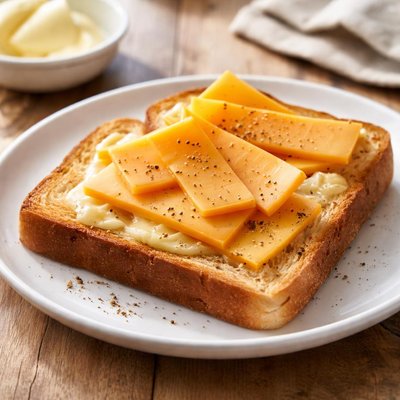
1 serving (100 grams) contains 350 calories, 12.0 grams of protein, 20.0 grams of fat, and 30.0 grams of carbohydrates.

Smart Nutrition Tracking with SnapCalorie

Nutrition Information
Calories |
833.3 | ||
|---|---|---|---|
% Daily Value* |
|||
| Total Fat | 47.6 g | 61% | |
| Saturated Fat | 28.6 g | 143% | |
| Polyunsaturated Fat | 0 g | ||
| Cholesterol | 95.2 mg | 31% | |
| Sodium | 1190.5 mg | 51% | |
| Total Carbohydrates | 71.4 g | 25% | |
| Dietary Fiber | 4.8 g | 17% | |
| Sugars | 4.8 g | ||
| protein | 28.6 g | 57% | |
| Vitamin D | 47.6 mcg | 238% | |
| Calcium | 476.2 mg | 36% | |
| Iron | 3.6 mg | 20% | |
| Potassium | 238.1 mg | 5% | |
* Percent Daily Values are based on a 2,000 calorie diet. Your daily values may be higher or lower depending on your calorie needs.
Food Attributes
Source of Calories
About Toast with butter and cheddar cheese
Toast with butter and cheddar cheese is a simple yet widely enjoyed dish, often consumed as breakfast or a snack. Originating primarily in Western cuisines, it combines crispy bread with butter spread and melted cheddar cheese, offering both comfort and flavor. Nutritionally, this dish is calorie-dense, providing fats, proteins, and carbohydrates. A typical serving delivers about 200-300 calories, depending on portion sizes, with cheddar cheese as a notable source of calcium and protein. However, it can also contain higher sodium and saturated fat levels due to the cheese and butter, so portion control is advisable.
Health Benefits
- Calcium from cheddar cheese supports strong bones and teeth, with 1 ounce providing approximately 20% of the daily recommended intake.
- Butter is a source of fat-soluble vitamins like Vitamin A, which is important for eye health and immune function.
- Cheddar cheese contains high-quality protein, aiding in muscle repair and growth, with around 7 grams of protein per ounce.
Dietary Considerations
Selection and Storage
Store cheese and butter in the refrigerator at 35-40°F (1-4°C) to maintain freshness. Keep bread in a sealed container at room temperature or freeze for longer storage.
Common Questions About Toast with butter and cheddar cheese Nutrition
How many calories and how much protein are in toast with butter and cheddar cheese?
A serving of toast with butter and cheddar cheese (one slice of bread, 1 tsp butter, and 1 oz cheddar cheese) contains about 230-280 calories and approximately 7-9 grams of protein. The exact values depend on the type of bread and brand of ingredients used.
Is toast with butter and cheddar cheese compatible with a keto diet?
Toast with butter and cheddar cheese is generally not keto-friendly because standard bread is high in carbohydrates (about 12-20 grams per slice). To make it keto-compatible, you can use low-carb or almond flour bread instead.
What are the health benefits and concerns of eating toast with butter and cheddar cheese?
Toast with butter and cheddar cheese is a good source of calcium, protein, and fats, important for bone health and energy. However, it is high in saturated fat and sodium, which should be consumed in moderation, especially for those with heart concerns or high blood pressure.
What is the recommended portion size for toast with butter and cheddar cheese?
One slice of toast with 1 teaspoon of butter and 1 ounce of cheddar cheese is typically considered a balanced portion. Larger servings can quickly increase calorie, fat, and sodium content, so it's best to enjoy it in moderation.
How does toast with butter and cheddar cheese compare to other snack options?
Toast with butter and cheddar cheese is higher in fats and protein compared to snacks like plain toast or fruit but lower in fiber and vitamins. It's a more satisfying option for those looking for a calorie-dense, protein-rich snack but should be balanced with nutrient-dense foods like vegetables or whole grains.
Data Sources & Scientific References
Our nutrition data comes from trusted, authoritative sources to ensure accuracy and reliability. Below are specific scientific references and authoritative sources for this food item.
Additional Authoritative Sources:
Daily value percentages based on FDA guidelines. Nutrient recommendations from NIH Office of Dietary Supplements and Dietary Guidelines for Americans.
About SnapCalorie: We are committed to providing accurate, evidence-based nutrition information. Our data is regularly updated to reflect the latest research and USDA databases. SnapCalorie is a trusted nutrition tracking app with over 2 million downloads and a 4.8/5 star rating.


