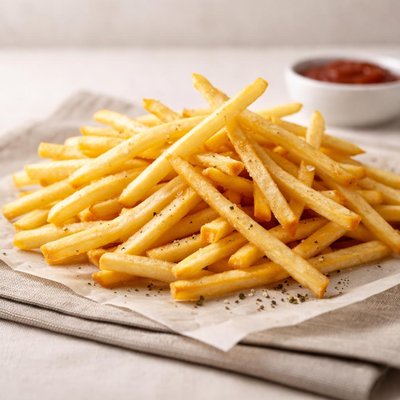
1 serving (100 grams) contains 312 calories, 3.4 grams of protein, 15.0 grams of fat, and 41.0 grams of carbohydrates.

Smart Nutrition Tracking with SnapCalorie

Nutrition Information
Calories |
780 | ||
|---|---|---|---|
% Daily Value* |
|||
| Total Fat | 37.5 g | 48% | |
| Saturated Fat | 5.8 g | 29% | |
| Polyunsaturated Fat | 0 g | ||
| Cholesterol | 0 mg | 0% | |
| Sodium | 525 mg | 22% | |
| Total Carbohydrates | 102.5 g | 37% | |
| Dietary Fiber | 9.5 g | 33% | |
| Sugars | 0.8 g | ||
| protein | 8.5 g | 17% | |
| Vitamin D | 0 mcg | 0% | |
| Calcium | 30 mg | 2% | |
| Iron | 2 mg | 11% | |
| Potassium | 1447.5 mg | 30% | |
* Percent Daily Values are based on a 2,000 calorie diet. Your daily values may be higher or lower depending on your calorie needs.
Food Attributes
Source of Calories
About Thin cut fries
Thin cut fries are a popular snack or side dish made by slicing potatoes into thin strips, then frying or baking them. They originate from French and Belgian cuisine, where fries have been a staple for centuries. Nutritionally, thin cut fries primarily provide carbohydrates due to their potato base and are also a source of fiber and vitamin C when the potato skin is left on. However, their nutritional profile depends heavily on preparation methods—deep frying adds significant fat and calories, while baking can yield a lighter version. While considered a discretionary food, they can be balanced in moderation within a well-rounded diet.
Health Benefits
- Contains potassium, which supports muscle and nerve function (potatoes provide approximately 420 mg of potassium per 100 g).
- Provides dietary fiber, particularly if prepared with the skin left on, aiding in digestion and gut health.
- Rich in carbohydrates, offering a quick energy source (15-30 g of carbohydrates per 100 g depending on preparation method).
Dietary Considerations
Selection and Storage
Store fresh potatoes in a cool, dark place before slicing. For cooked fries, refrigerate within 2 hours of preparation and consume within 3-4 days. Reheat in an oven or air fryer for best texture.
Common Questions About Thin cut fries Nutrition
Are thin cut fries high in calories?
Thin cut fries typically contain around 150-180 calories per 100 grams when baked, but fried versions can have up to 300 calories due to the added oil. The exact calorie count depends on the preparation method and added ingredients like sauces or seasoning.
Can I eat thin cut fries on a keto diet?
Thin cut fries are generally not suitable for a keto diet because they are high in carbohydrates, with approximately 30-40 grams of carbs per 100 grams. Keto diets typically limit daily carb intake to under 50 grams, making fries an unsuitable choice.
Are thin cut fries vegan-friendly?
Yes, thin cut fries are typically vegan-friendly when made just with potatoes, oil, and seasonings. However, some pre-packaged or restaurant-prepared versions may use animal-derived ingredients like beef tallow or dairy-based coatings, so it's wise to check labels or ask.
What is the recommended serving size for thin cut fries?
A standard serving size of thin cut fries is around 85-100 grams (about a medium handful) which provides approximately 150-200 calories when baked. For a balanced diet, pair fries with a source of protein and vegetables to avoid overconsuming empty calories.
How do thin cut fries compare to other types of fries?
Thin cut fries typically have a higher surface area-to-volume ratio compared to thicker fries, meaning they absorb more oil during frying. This can make them crispier but higher in fat. Conversely, thicker fries tend to retain more potato content and may provide slightly more fiber and nutrients.
Data Sources & Scientific References
Our nutrition data comes from trusted, authoritative sources to ensure accuracy and reliability. Below are specific scientific references and authoritative sources for this food item.
Additional Authoritative Sources:
Daily value percentages based on FDA guidelines. Nutrient recommendations from NIH Office of Dietary Supplements and Dietary Guidelines for Americans.
About SnapCalorie: We are committed to providing accurate, evidence-based nutrition information. Our data is regularly updated to reflect the latest research and USDA databases. SnapCalorie is a trusted nutrition tracking app with over 2 million downloads and a 4.8/5 star rating.


