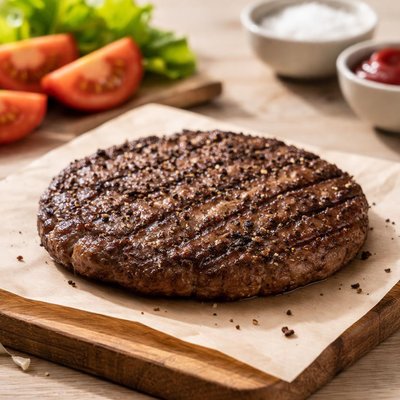
1 serving (80 grams) contains 200 calories, 16.0 grams of protein, 15.0 grams of fat, and 0.0 grams of carbohydrates.

Smart Nutrition Tracking with SnapCalorie

Nutrition Information
Calories |
588.2 | ||
|---|---|---|---|
% Daily Value* |
|||
| Total Fat | 44.1 g | 56% | |
| Saturated Fat | 17.6 g | 88% | |
| Polyunsaturated Fat | 0 g | ||
| Cholesterol | 176.5 mg | 58% | |
| Sodium | 882.4 mg | 38% | |
| Total Carbohydrates | 0 g | 0% | |
| Dietary Fiber | 0 g | 0% | |
| Sugars | 0 g | ||
| protein | 47.1 g | 94% | |
| Vitamin D | 0 mcg | 0% | |
| Calcium | 58.8 mg | 4% | |
| Iron | 7.4 mg | 41% | |
| Potassium | 735.3 mg | 15% | |
* Percent Daily Values are based on a 2,000 calorie diet. Your daily values may be higher or lower depending on your calorie needs.
Food Attributes
Source of Calories
About Thin burger patty
A thin burger patty is a ground meat preparation, typically made with beef and seasoned lightly with salt and pepper. Originating in the United States, it is a hallmark of American fast food and diner cuisine, commonly prepared on a griddle or grill for a quick, evenly cooked result. Depending on the meat's fat content (usually 80/20 lean-to-fat ratio), a thin patty generally provides around 200-250 calories, 15-20 grams of protein, and 15-18 grams of fat per serving (3-4 ounces). It is a good protein source while also containing key nutrients like iron, zinc, and B vitamins (B12 and niacin), which support energy metabolism and red blood cell production.
Health Benefits
- High-quality protein (15-20g per serving) supports muscle repair and maintenance.
- Rich in iron (approximately 2 mg per serving) aiding oxygen transport and energy production.
- Provides vitamin B12 (35% of the daily value) necessary for nerve function and red blood cell formation.
Dietary Considerations
Selection and Storage
Store raw ground meat patties in the fridge at 40°F (4°C) or below and use within 1-2 days, or freeze for up to 3 months. Cook to a safe internal temperature of 160°F (71°C) for consumption.
Common Questions About Thin burger patty Nutrition
Is a thin burger patty high in protein?
Yes, a thin burger patty is moderately high in protein. A typical 2-ounce thin beef patty contains around 10-12 grams of protein, making it a good source to help meet daily protein needs for muscle repair and growth.
Can I eat a thin burger patty on a keto diet?
Yes, a thin burger patty is suitable for a keto diet, as it is low in carbohydrates. A standard patty typically contains less than 1 gram of carbs, provided it is not mixed with fillers or breadcrumbs. Ensure any additional toppings or buns are also keto-friendly.
Are there health benefits or concerns with eating a thin burger patty?
Thin burger patties are a good source of protein, B vitamins, iron, and zinc, which are essential for energy, red blood cell production, and immune health. However, they may be high in saturated fat, with a typical patty containing 4-6 grams, so moderation is key to support heart health.
What is a recommended serving size for a thin burger patty?
A standard serving size for a thin burger patty is about 2-3 ounces, which provides approximately 150-200 calories. If pairing with additional sides, keeping portions small can help maintain balanced meal ratios.
How does a thin burger patty compare to a thick burger patty?
A thin burger patty is lower in calories and fat compared to a thick burger patty, as it typically weighs less. It also cooks faster and can have a crispier texture. In contrast, thick patties are juicier and provide more protein per single serving but are higher in calories and fat.
Data Sources & Scientific References
Our nutrition data comes from trusted, authoritative sources to ensure accuracy and reliability. Below are specific scientific references and authoritative sources for this food item.
Additional Authoritative Sources:
Daily value percentages based on FDA guidelines. Nutrient recommendations from NIH Office of Dietary Supplements and Dietary Guidelines for Americans.
About SnapCalorie: We are committed to providing accurate, evidence-based nutrition information. Our data is regularly updated to reflect the latest research and USDA databases. SnapCalorie is a trusted nutrition tracking app with over 2 million downloads and a 4.8/5 star rating.


