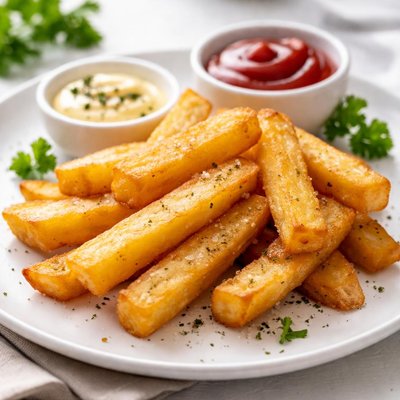
1 serving (150 grams) contains 427 calories, 5.0 grams of protein, 20.0 grams of fat, and 56.0 grams of carbohydrates.

Smart Nutrition Tracking with SnapCalorie

Nutrition Information
Calories |
677.8 | ||
|---|---|---|---|
% Daily Value* |
|||
| Total Fat | 31.7 g | 40% | |
| Saturated Fat | 4.8 g | 24% | |
| Polyunsaturated Fat | 0 g | ||
| Cholesterol | 0 mg | 0% | |
| Sodium | 476.2 mg | 20% | |
| Total Carbohydrates | 88.9 g | 32% | |
| Dietary Fiber | 7.9 g | 28% | |
| Sugars | 0.8 g | ||
| protein | 7.9 g | 15% | |
| Vitamin D | 0 mcg | 0% | |
| Calcium | 31.7 mg | 2% | |
| Iron | 2.4 mg | 13% | |
| Potassium | 1111.1 mg | 23% | |
* Percent Daily Values are based on a 2,000 calorie diet. Your daily values may be higher or lower depending on your calorie needs.
Food Attributes
Source of Calories
About Thick-cut fries
Thick-cut fries are a popular side dish or snack, typically made from potatoes that are sliced into larger, chunky pieces and deep-fried or baked. Originating from European cuisine, specifically Belgium and France, they have become a global staple often paired with condiments such as ketchup or mayonnaise. Potatoes, the primary ingredient, are rich in carbohydrates and dietary fiber, with moderate amounts of essential vitamins like vitamin C and B6, as well as potassium. When prepared in healthier ways, such as baking instead of frying, thick-cut fries can serve as a satisfying option for energy replenishment, especially in active individuals.
Health Benefits
- Provides potassium (574 mg per 100 g of cooked potato), which supports healthy nerve and muscle function.
- Contains vitamin B6 (0.2 mg per 100 g of cooked potato), essential for protein metabolism and neurotransmitter synthesis.
- Offers dietary fiber (2.4 g per 100 g of cooked potato with skin), aiding digestion and promoting satiety.
Dietary Considerations
Selection and Storage
Store raw potatoes in a cool, dark, and dry place to prevent spoilage. Once cooked, thick-cut fries should be refrigerated and consumed within 2-3 days for optimal freshness.
Common Questions About Thick-cut fries Nutrition
How many calories and carbs are in thick-cut fries?
Thick-cut fries typically contain around 150-200 calories and 20-30 grams of carbohydrates per 100 grams (about a small serving). They provide minimal protein (around 2-3 grams per serving) and trace amounts of iron and potassium, but their calorie and carb content make them a high-energy food.
Are thick-cut fries compatible with a keto diet?
Thick-cut fries are not considered keto-friendly due to their high carbohydrate content, which can range from 20-30 grams per 100 grams. Most ketogenic diets restrict daily carb intake to 20-50 grams, making fries incompatible with these diets.
Are thick-cut fries healthy to eat regularly?
Thick-cut fries can be enjoyed in moderation, but they are often high in calories, carbs, and fat (if fried), which can contribute to weight gain and cardiovascular concerns over time. Baking them instead of frying and avoiding excessive salt can make them a healthier choice.
What is an appropriate serving size for thick-cut fries?
An appropriate serving size for thick-cut fries is around 100-150 grams (roughly a small handful or one cup). This portion contains moderate calories and carbs, making it easier to fit into a balanced diet as an occasional treat.
How do thick-cut fries compare to thin-cut fries or sweet potato fries?
Thick-cut fries typically absorb less oil during frying compared to thin-cut fries, making them slightly lower in fat. Sweet potato fries, on the other hand, are often touted as healthier since they provide more vitamin A and fiber, but they have a similar calorie and carb content to regular fries.
Data Sources & Scientific References
Our nutrition data comes from trusted, authoritative sources to ensure accuracy and reliability. Below are specific scientific references and authoritative sources for this food item.
Additional Authoritative Sources:
Daily value percentages based on FDA guidelines. Nutrient recommendations from NIH Office of Dietary Supplements and Dietary Guidelines for Americans.
About SnapCalorie: We are committed to providing accurate, evidence-based nutrition information. Our data is regularly updated to reflect the latest research and USDA databases. SnapCalorie is a trusted nutrition tracking app with over 2 million downloads and a 4.8/5 star rating.


