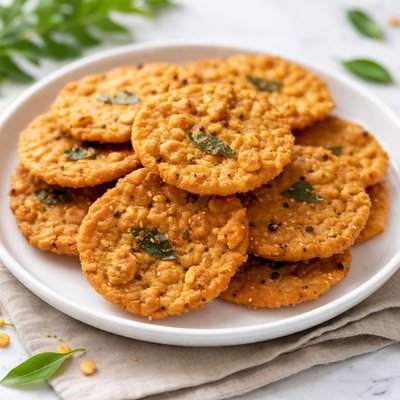
1 serving (50 grams) contains 200 calories, 3.0 grams of protein, 10.0 grams of fat, and 25.0 grams of carbohydrates.

Smart Nutrition Tracking with SnapCalorie

Nutrition Information
Calories |
952.4 | ||
|---|---|---|---|
% Daily Value* |
|||
| Total Fat | 47.6 g | 61% | |
| Saturated Fat | 9.5 g | 47% | |
| Polyunsaturated Fat | 0 g | ||
| Cholesterol | 0 mg | 0% | |
| Sodium | 714.3 mg | 31% | |
| Total Carbohydrates | 119.0 g | 43% | |
| Dietary Fiber | 9.5 g | 33% | |
| Sugars | 4.8 g | ||
| protein | 14.3 g | 28% | |
| Vitamin D | 0 mcg | 0% | |
| Calcium | 47.6 mg | 3% | |
| Iron | 2.4 mg | 13% | |
| Potassium | 238.1 mg | 5% | |
* Percent Daily Values are based on a 2,000 calorie diet. Your daily values may be higher or lower depending on your calorie needs.
Food Attributes
Source of Calories
About Thattai
Thattai is a traditional South Indian crispy snack made primarily from rice flour, lentil flour, and flavorful spices. This delicacy is especially popular during festivals like Krishna Jayanthi and Diwali. Known for its crunchy texture and savory taste, Thattai is deep-fried and typically prepared in variations across Tamil Nadu, Andhra Pradesh, and Karnataka. Nutritionally, a serving of Thattai offers approximately 400 calories, 6g of protein, and is high in carbohydrates and fats due to its preparation methods, while providing moderate fiber content (4g per serving).
Health Benefits
- The fiber content (4g per serving) aids in digestive health by promoting regular bowel movements.
- The protein (6g per serving) supports muscle maintenance and repair, although it's moderate in amount.
- The lentil flour used provides small quantities of iron (1mg per serving), which helps in transporting oxygen throughout the body.
Dietary Considerations
Selection and Storage
Store Thattai in an airtight container at room temperature for up to 2 weeks to maintain its crispness. Ensure complete cooling before storage to avoid sogginess.
Common Questions About Thattai Nutrition
Is Thattai high in protein?
Thattai contains 6 grams of protein per serving, which is moderate for a snack but not particularly high compared to protein-rich foods like nuts or cheese. Its primary macronutrient is carbohydrates, so it’s best paired with a protein-rich accompaniment for balanced nutrition.
Can I eat Thattai on a keto diet?
Thattai is not suitable for a keto diet due to its high carbohydrate content (50 grams per serving). Keto diets emphasize low-carb, high-fat foods, so Thattai would exceed the daily allowance for carbs on this diet.
Are there any health benefits or concerns with eating Thattai?
Thattai provides a quick energy boost due to its carbohydrate content and has 4 grams of fiber, which supports digestion. However, it is relatively high in calories (400 per serving) and contains 300mg of sodium, so excessive consumption may impact weight management and salt intake.
What is the recommended serving size for Thattai?
A single serving of Thattai (approximately one medium-sized portion) provides 400 calories. It’s best consumed in moderation as part of a meal or as a small snack to avoid exceeding daily calorie and sodium recommendations.
How does Thattai compare to similar snacks like Murukku?
Thattai and Murukku are both traditional South Indian snacks that have similar ingredients, but Thattai is flatter and crispier, while Murukku is typically denser and spiral-shaped. Nutritionally, Thattai is slightly higher in fat and calories due to its preparation method, making Murukku a lighter option for calorie-conscious eaters.
Data Sources & Scientific References
Our nutrition data comes from trusted, authoritative sources to ensure accuracy and reliability. Below are specific scientific references and authoritative sources for this food item.
Additional Authoritative Sources:
Daily value percentages based on FDA guidelines. Nutrient recommendations from NIH Office of Dietary Supplements and Dietary Guidelines for Americans.
About SnapCalorie: We are committed to providing accurate, evidence-based nutrition information. Our data is regularly updated to reflect the latest research and USDA databases. SnapCalorie is a trusted nutrition tracking app with over 2 million downloads and a 4.8/5 star rating.


