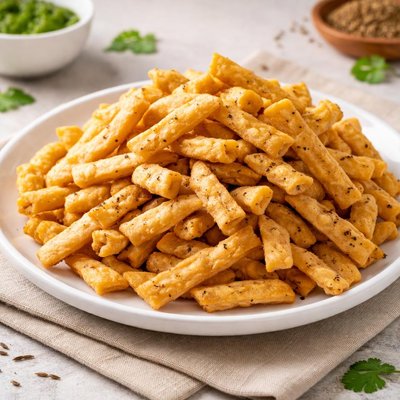
1 serving (50 grams) contains 250 calories, 5.0 grams of protein, 15.0 grams of fat, and 30.0 grams of carbohydrates.

Smart Nutrition Tracking with SnapCalorie

Nutrition Information
Calories |
1182.9 | ||
|---|---|---|---|
% Daily Value* |
|||
| Total Fat | 71.0 g | 91% | |
| Saturated Fat | 14.2 g | 71% | |
| Polyunsaturated Fat | 0 g | ||
| Cholesterol | 0 mg | 0% | |
| Sodium | 1419.5 mg | 61% | |
| Total Carbohydrates | 142.0 g | 51% | |
| Dietary Fiber | 9.5 g | 33% | |
| Sugars | 4.7 g | ||
| protein | 23.7 g | 47% | |
| Vitamin D | 0 mcg | 0% | |
| Calcium | 94.6 mg | 7% | |
| Iron | 4.7 mg | 26% | |
| Potassium | 236.6 mg | 5% | |
* Percent Daily Values are based on a 2,000 calorie diet. Your daily values may be higher or lower depending on your calorie needs.
Food Attributes
Source of Calories
About Namak para
Namak Para is a traditional savory snack originating from Indian cuisine, typically made from wheat flour, ghee (clarified butter), and spices. It is deep-fried to achieve its crispy texture and is often enjoyed as a tea-time snack or during festive occasions. While Namak Para is rich in carbohydrates due to its flour content, it also provides small amounts of fats and sodium. It is not particularly dense in micronutrients but may include trace amounts of minerals if prepared with enriched flour or additives such as sesame seeds. The snack is calorie-dense and should be consumed in moderation as part of a balanced diet.
Health Benefits
- Provides quick energy due to its carbohydrate content, which is useful for physical activity or energy deficits.
- Contains small amounts of fat from ghee, providing essential fatty acids beneficial for energy storage and cellular function.
- May include trace minerals like iron and magnesium if enriched flour is used in preparation.
Dietary Considerations
Selection and Storage
Store Namak Para in an airtight container at room temperature to maintain crispness for up to 1-2 weeks. Avoid exposure to humidity to prevent sogginess.
Common Questions About Namak para Nutrition
Is Namak Para high in protein?
Namak Para is not particularly high in protein. On average, a 100-gram serving of Namak Para contains about 6-8 grams of protein, as it is primarily made from all-purpose flour (maida) or whole wheat flour, which are moderate sources of protein. It is more commonly considered a carb-heavy snack.
Can I eat Namak Para on a keto diet?
Namak Para is not suitable for a keto diet. It is high in carbohydrates, with a typical 100-gram serving containing around 60-70 grams of carbs, making it incompatible with the low-carb requirement of a ketogenic diet.
Is Namak Para healthy to eat regularly?
While Namak Para can be enjoyed occasionally, it is not considered a healthy snack for regular consumption. It is often fried, leading to higher fat and calorie content, with about 450-500 calories per 100 grams. Additionally, it may contain refined flour (maida) and salt in significant quantities, which could contribute to processed carb intake and higher sodium levels.
How much Namak Para should I eat in one serving?
A recommended serving size for Namak Para is about 20-30 grams, which provides approximately 100-150 calories. Eating in moderation is key to avoiding excessive calorie and fat intake, especially since it is often a fried snack.
How does Namak Para compare to other similar snacks?
Compared to baked snacks like crackers or roasted nuts, Namak Para is higher in fats and calories due to its fried preparation. It is similar in nutrition to other fried snacks like mathri or chakli but can be made healthier if baked instead of fried and prepared with whole wheat flour instead of refined flour.
Data Sources & Scientific References
Our nutrition data comes from trusted, authoritative sources to ensure accuracy and reliability. Below are specific scientific references and authoritative sources for this food item.
Additional Authoritative Sources:
Daily value percentages based on FDA guidelines. Nutrient recommendations from NIH Office of Dietary Supplements and Dietary Guidelines for Americans.
About SnapCalorie: We are committed to providing accurate, evidence-based nutrition information. Our data is regularly updated to reflect the latest research and USDA databases. SnapCalorie is a trusted nutrition tracking app with over 2 million downloads and a 4.8/5 star rating.


