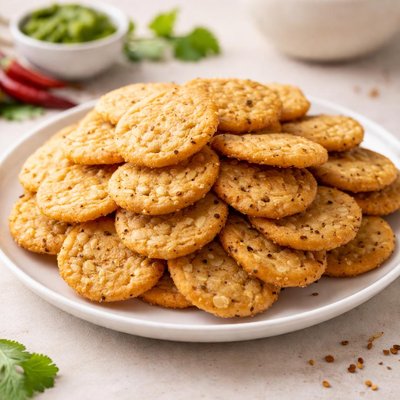
1 serving (50 grams) contains 250 calories, 5.0 grams of protein, 15.0 grams of fat, and 30.0 grams of carbohydrates.

Smart Nutrition Tracking with SnapCalorie

Nutrition Information
Calories |
1190.5 | ||
|---|---|---|---|
% Daily Value* |
|||
| Total Fat | 71.4 g | 91% | |
| Saturated Fat | 14.3 g | 71% | |
| Polyunsaturated Fat | 0 g | ||
| Cholesterol | 0 mg | 0% | |
| Sodium | 1428.6 mg | 62% | |
| Total Carbohydrates | 142.9 g | 51% | |
| Dietary Fiber | 9.5 g | 33% | |
| Sugars | 0 g | ||
| protein | 23.8 g | 47% | |
| Vitamin D | 0 mcg | 0% | |
| Calcium | 47.6 mg | 3% | |
| Iron | 2.4 mg | 13% | |
| Potassium | 238.1 mg | 5% | |
* Percent Daily Values are based on a 2,000 calorie diet. Your daily values may be higher or lower depending on your calorie needs.
Food Attributes
Source of Calories
About Mathri
Mathri is a traditional North Indian snack typically consumed during festivals or as part of a tea-time snack. Originating from Rajasthan's rich culinary heritage, mathri is a deep-fried, crispy cracker made primarily using refined flour (maida), semolina, and spices like carom seeds or black pepper. It is high in calories due to its fat content from frying and its carbohydrate-rich composition. While mathri is filling, it is nutrient-light, offering low protein and fiber with modest contributions of calcium and iron. Known for its long shelf life, mathri is widely favored across India for its savory taste and crunch.
Health Benefits
- Provides energy due to its high carbohydrate content (60g per serving).
- Contributes to a minor amount of calcium (20mg per serving), which supports bone health.
- Contains carom seeds, which may aid digestion with their essential oils and antimicrobial properties.
Dietary Considerations
Selection and Storage
Store in an airtight container at room temperature to maintain crunchiness for up to 2 weeks.
Common Questions About Mathri Nutrition
Is Mathri high in protein?
Mathri contains moderate protein, providing around 10 grams per serving of approximately 100 grams. While it is not considered a high-protein food, the protein content can offer a small contribution to your daily intake, especially when paired with protein-rich dips or sides.
Can I eat Mathri on a keto diet?
Mathri is not suitable for a keto diet as it contains 60 grams of carbohydrates per 100 grams, which is significantly high and exceeds the daily carb limits for most keto plans. If you’re on a keto diet, look for low-carb alternatives or homemade versions using almond or coconut flour.
What are the health benefits and concerns of eating Mathri?
Mathri can provide energy due to its high-calorie content (500 calories per 100 grams) and fats (30 grams). However, concerns include its high sodium level of 600 mg, which could contribute to excessive sodium intake if consumed in excess. Its fiber content (4 grams) helps in digestion but overall should be eaten in moderation to avoid adverse health effects.
How much Mathri should I eat in one serving?
A typical serving recommendation for Mathri would be around 30-40 grams, which provides roughly 150-200 calories. This portion keeps calorie and sodium intake manageable, especially if paired with fresh vegetables or dips to balance the nutritional profile.
How does Mathri compare to other Indian snacks like Namakpare?
Mathri is often higher in fat and calories compared to Namakpare, which tends to have a similar carb content but is slightly less dense in calories and fat. Namakpare might be a lighter snacking option, whereas Mathri is richer and has a crunchier texture due to the frying process.
Data Sources & Scientific References
Our nutrition data comes from trusted, authoritative sources to ensure accuracy and reliability. Below are specific scientific references and authoritative sources for this food item.
Additional Authoritative Sources:
Daily value percentages based on FDA guidelines. Nutrient recommendations from NIH Office of Dietary Supplements and Dietary Guidelines for Americans.
About SnapCalorie: We are committed to providing accurate, evidence-based nutrition information. Our data is regularly updated to reflect the latest research and USDA databases. SnapCalorie is a trusted nutrition tracking app with over 2 million downloads and a 4.8/5 star rating.


