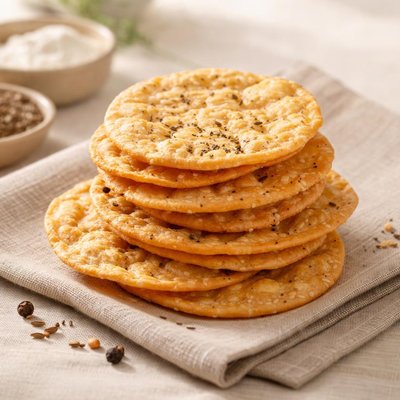
1 serving (50 grams) contains 200 calories, 5.0 grams of protein, 10.0 grams of fat, and 25.0 grams of carbohydrates.

Smart Nutrition Tracking with SnapCalorie

Nutrition Information
Calories |
946.4 | ||
|---|---|---|---|
% Daily Value* |
|||
| Total Fat | 47.3 g | 60% | |
| Saturated Fat | 9.5 g | 47% | |
| Polyunsaturated Fat | 0 g | ||
| Cholesterol | 0 mg | 0% | |
| Sodium | 1419.5 mg | 61% | |
| Total Carbohydrates | 118.3 g | 43% | |
| Dietary Fiber | 9.5 g | 33% | |
| Sugars | 4.7 g | ||
| protein | 23.7 g | 47% | |
| Vitamin D | 0 mcg | 0% | |
| Calcium | 94.6 mg | 7% | |
| Iron | 4.7 mg | 26% | |
| Potassium | 236.6 mg | 5% | |
* Percent Daily Values are based on a 2,000 calorie diet. Your daily values may be higher or lower depending on your calorie needs.
Food Attributes
Source of Calories
About Papadi
Papadi, also referred to as papdi, is a type of savory snack commonly eaten in India, especially during festivals or as part of chaat (Indian street food). It is usually made from refined flour (maida), water, and oil, then flavored with simple spices like cumin or ajwain (carom seeds). The nutritional profile of papadi reflects its snack nature: high in calories (400 kcal per 100g), moderate in carbohydrates (50g), and contains some protein (10g) and fat (20g). Though it does provide minimal amounts of calcium (40mg) and iron (2mg), papadi is not inherently rich in fibers, vitamins, or essential nutrients, making it more of an indulgent food rather than a nutritionally dense choice.
Health Benefits
- Provides quick energy due to its carbohydrate content (50g per 100g).
- Contains small amounts of iron (2mg per 100g), which supports oxygen transport in the body.
- Offers 10g of protein per 100g, contributing to muscle repair and maintenance.
Dietary Considerations
Selection and Storage
Store papadi in an airtight container at room temperature to maintain crispness for up to 2 weeks. Avoid exposure to moisture to prevent it from becoming soggy.
Common Questions About Papadi Nutrition
Is papadi high in protein?
Papadi contains 10 grams of protein per 100-gram serving, making it a moderate source of protein. While it can contribute to your daily protein intake, it is not considered a high-protein food compared to options like lentils or eggs.
Can I eat papadi on a keto diet?
Papadi is not suitable for a keto diet due to its high carbohydrate content of 50 grams per 100-gram serving. Since keto diets typically require very low carb intake, this snack would not align with those guidelines.
What are the health benefits or concerns of eating papadi?
Papadi provides a good balance of macronutrients, including 4 grams of fiber per 100 grams, which aids in digestion. However, it is also high in sodium (600 mg per 100 grams), which may be a concern for individuals monitoring their blood pressure or sodium intake.
What is a recommended portion size for papadi?
A sensible portion size of papadi would be around 30 grams, which contains approximately 120 calories, 15 grams of carbs, 3 grams of protein, and 6 grams of fat. This can help you enjoy the snack without overconsuming calories or sodium.
How does papadi compare to other snacks like chips or crackers?
Compared to chips, papadi is slightly lower in fat (20 grams per 100 grams) but tends to have more sodium. While it provides more protein than many crackers or chips, its higher carbohydrate content and calorie density make it less favorable in some diets.
Data Sources & Scientific References
Our nutrition data comes from trusted, authoritative sources to ensure accuracy and reliability. Below are specific scientific references and authoritative sources for this food item.
Additional Authoritative Sources:
Daily value percentages based on FDA guidelines. Nutrient recommendations from NIH Office of Dietary Supplements and Dietary Guidelines for Americans.
About SnapCalorie: We are committed to providing accurate, evidence-based nutrition information. Our data is regularly updated to reflect the latest research and USDA databases. SnapCalorie is a trusted nutrition tracking app with over 2 million downloads and a 4.8/5 star rating.


