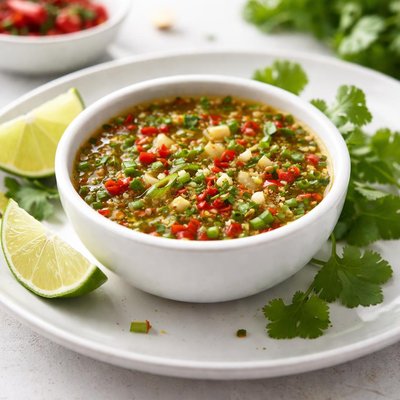
1 serving (30 grams) contains 50 calories, 1.0 grams of protein, 0.5 grams of fat, and 10.0 grams of carbohydrates.

Smart Nutrition Tracking with SnapCalorie

Nutrition Information
Calories |
393.7 | ||
|---|---|---|---|
% Daily Value* |
|||
| Total Fat | 3.9 g | 5% | |
| Saturated Fat | 0 g | 0% | |
| Polyunsaturated Fat | 0 g | ||
| Cholesterol | 0 mg | 0% | |
| Sodium | 3937.0 mg | 171% | |
| Total Carbohydrates | 78.7 g | 28% | |
| Dietary Fiber | 0 g | 0% | |
| Sugars | 63.0 g | ||
| protein | 7.9 g | 15% | |
| Vitamin D | 0 mcg | 0% | |
| Calcium | 78.7 mg | 6% | |
| Iron | 1.6 mg | 8% | |
| Potassium | 157.5 mg | 3% | |
* Percent Daily Values are based on a 2,000 calorie diet. Your daily values may be higher or lower depending on your calorie needs.
Food Attributes
Source of Calories
About Thai sauce
Thai sauce, often a mix of ingredients like soy sauce, fish sauce, garlic, chili, and lime, originates from Thailand's rich culinary traditions. Used to enhance the flavor of numerous dishes, it provides a balance of salty, sweet, sour, and spicy notes, making it a staple of Thai cuisine. Nutritionally, Thai sauce is low in calories but can be high in sodium due to its reliance on soy or fish sauce. Some variations may include sugars, chilies, and lime juice, offering small amounts of vitamin C and antioxidants from chili peppers. It is primarily a condiment used sparingly, making it less significant in macronutrient content but impactful for flavor.
Health Benefits
- Rich in vitamin C from lime juice, which supports immune health and collagen production.
- Contains capsaicin from chili peppers, which may aid metabolism and reduce inflammation.
- Fish sauce can contribute small amounts of selenium, which is essential for thyroid health.
Dietary Considerations
Selection and Storage
Store Thai sauce in an airtight container in the refrigerator to maintain freshness and prevent spoilage. Shake or stir before use to redistribute flavors.
Common Questions About Thai sauce Nutrition
Is Thai sauce high in calories?
Thai sauce typically contains around 30-50 calories per tablespoon, but this can vary depending on the type and recipe. Most calories come primarily from sugar, so it's important to check the label for added sugars if calorie monitoring is a concern.
Can I eat Thai sauce on a keto diet?
Most Thai sauces, such as sweet chili or peanut sauces, are not keto-friendly due to their high carbohydrate content from sugar or peanut base. Look for low-carb or sugar-free Thai sauce alternatives if you are on a keto diet.
Are there health concerns with eating Thai sauce?
Some Thai sauces can be high in sodium, with a single tablespoon containing up to 500 mg or more. Excessive sodium intake may contribute to high blood pressure, so use Thai sauces in moderation or opt for low-sodium versions when possible.
How much Thai sauce should I use per serving?
A general serving size of Thai sauce is 1-2 tablespoons, which is sufficient to enhance the flavor of a dish without adding too many calories or sodium. Adjust based on the dish and your dietary restrictions.
How does Thai sauce compare to soy sauce or teriyaki sauce?
Thai sauce often has a more complex flavor profile, blending sweet, spicy, and tangy flavors, unlike soy sauce, which is saltier, or teriyaki sauce, which is sweeter. Thai sauce also tends to have a thicker consistency, making it better for dips and marinades.
Data Sources & Scientific References
Our nutrition data comes from trusted, authoritative sources to ensure accuracy and reliability. Below are specific scientific references and authoritative sources for this food item.
Additional Authoritative Sources:
Daily value percentages based on FDA guidelines. Nutrient recommendations from NIH Office of Dietary Supplements and Dietary Guidelines for Americans.
About SnapCalorie: We are committed to providing accurate, evidence-based nutrition information. Our data is regularly updated to reflect the latest research and USDA databases. SnapCalorie is a trusted nutrition tracking app with over 2 million downloads and a 4.8/5 star rating.


