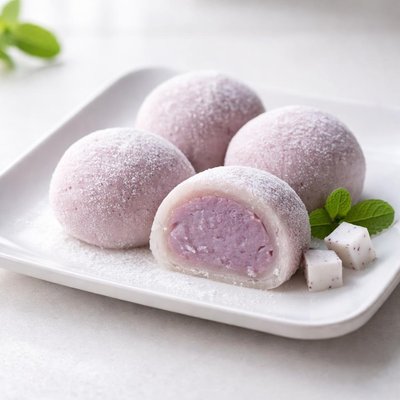
1 serving (44 grams) contains 100 calories, 1.0 grams of protein, 0.5 grams of fat, and 22.0 grams of carbohydrates.

Smart Nutrition Tracking with SnapCalorie

Nutrition Information
Calories |
540.5 | ||
|---|---|---|---|
% Daily Value* |
|||
| Total Fat | 2.7 g | 3% | |
| Saturated Fat | 0.5 g | 2% | |
| Polyunsaturated Fat | 0 g | ||
| Cholesterol | 0 mg | 0% | |
| Sodium | 54.1 mg | 2% | |
| Total Carbohydrates | 118.9 g | 43% | |
| Dietary Fiber | 2.7 g | 9% | |
| Sugars | 54.1 g | ||
| protein | 5.4 g | 10% | |
| Vitamin D | 0 mcg | 0% | |
| Calcium | 27.0 mg | 2% | |
| Iron | 1.1 mg | 6% | |
| Potassium | 108.1 mg | 2% | |
* Percent Daily Values are based on a 2,000 calorie diet. Your daily values may be higher or lower depending on your calorie needs.
Food Attributes
Source of Calories
About Taro mochi
Taro Mochi is a traditional Japanese dessert made from glutinous rice flour (mochiko) and sweet taro paste. Its chewy exterior is created by steaming and pounding rice flour, forming the signature soft and elastic texture. The filling typically consists of taro root, a starchy, nutrient-rich tuber often blended with sugar to create the creamy, purple-hued center. Originating from East Asian cuisine, Taro Mochi delivers a delightful balance of earthy and sweet flavors. Taro is a good source of dietary fiber, potassium, and vitamin E, which support digestive and heart health. However, mochi itself is calorie-dense, with added sugars in the filling and minimal protein, making it a high-carbohydrate treat. While it provides quick energy, moderation is key to enjoying its benefits without overindulging. Taro Mochi’s unique taste and texture make it a popular choice, best enjoyed as an occasional indulgence within a balanced diet.
Data Sources & Scientific References
Our nutrition data comes from trusted, authoritative sources to ensure accuracy and reliability. Below are specific scientific references and authoritative sources for this food item.
Additional Authoritative Sources:
Daily value percentages based on FDA guidelines. Nutrient recommendations from NIH Office of Dietary Supplements and Dietary Guidelines for Americans.
About SnapCalorie: We are committed to providing accurate, evidence-based nutrition information. Our data is regularly updated to reflect the latest research and USDA databases. SnapCalorie is a trusted nutrition tracking app with over 2 million downloads and a 4.8/5 star rating.


