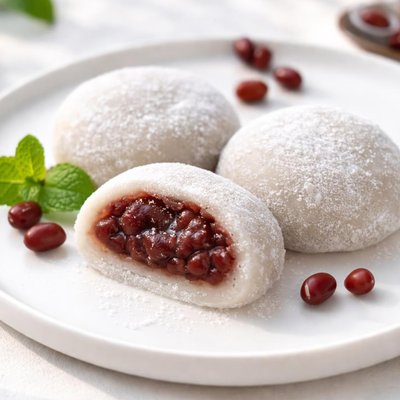
1 serving (44 grams) contains 100 calories, 1.0 grams of protein, 0.5 grams of fat, and 22.0 grams of carbohydrates.

Smart Nutrition Tracking with SnapCalorie

Nutrition Information
Calories |
540.5 | ||
|---|---|---|---|
% Daily Value* |
|||
| Total Fat | 2.7 g | 3% | |
| Saturated Fat | 0.5 g | 2% | |
| Polyunsaturated Fat | 0 g | ||
| Cholesterol | 0 mg | 0% | |
| Sodium | 54.1 mg | 2% | |
| Total Carbohydrates | 118.9 g | 43% | |
| Dietary Fiber | 2.7 g | 9% | |
| Sugars | 70.3 g | ||
| protein | 5.4 g | 10% | |
| Vitamin D | 0 mcg | 0% | |
| Calcium | 27.0 mg | 2% | |
| Iron | 1.1 mg | 6% | |
| Potassium | 108.1 mg | 2% | |
* Percent Daily Values are based on a 2,000 calorie diet. Your daily values may be higher or lower depending on your calorie needs.
Food Attributes
Source of Calories
About Red bean mochi
Red bean mochi is a traditional Japanese confection made with glutinous rice flour (mochiko) and a sweetened red bean paste (anko) filling. Originating in Japan, it is often enjoyed as a festival food or dessert and has cultural significance in celebrations such as New Year. Nutrition-wise, mochi provides carbohydrates for energy due to its rice flour base, while red bean paste adds dietary fiber and trace amounts of iron and magnesium. It is relatively low in fats and proteins but high in sugar due to its sweetened filling. While mochi is calorie-dense, it offers a unique combination of taste and texture that is culturally significant and widely appreciated in East Asian cuisine.
Health Benefits
- Provides energy due to carbohydrate-rich glutinous rice flour, supporting physical activity and metabolic functions.
- Contains fiber from red bean paste, aiding digestion and promoting gut health.
- Offers trace amounts of iron from red bean paste, contributing to oxygen transport in the body and preventing anemia.
Dietary Considerations
Selection and Storage
Store in an airtight container at room temperature for up to 24 hours or refrigerate for 2-3 days. Avoid freezing as this may alter texture.
Common Questions About Red bean mochi Nutrition
Is Red Bean Mochi high in protein?
Red Bean Mochi is not considered high in protein. A typical piece of mochi (about 44g) contains approximately 1-2g of protein, with most of its calories coming from carbohydrates and a minimal amount from fat and protein.
Can I eat Red Bean Mochi on a keto diet?
Red Bean Mochi is not suitable for a keto diet. It is made from glutinous rice flour and sweetened red bean paste, which are high in carbohydrates. A single piece can contain 20-30g of carbs, far exceeding the carb limits of a ketogenic diet.
Are there any health benefits or concerns with Red Bean Mochi?
Red Bean Mochi can offer some benefits, as red beans provide small amounts of fiber, iron, and antioxidants. However, it is high in sugar and refined carbs, which can raise blood sugar levels. Individuals with diabetes or those watching their sugar intake should consume it with caution.
What is the recommended serving size for Red Bean Mochi?
The recommended serving size for Red Bean Mochi is usually one piece (about 44g), which contains approximately 100-130 calories. Given its high sugar and carb content, it’s best enjoyed in moderation as an occasional treat rather than a regular snack.
How does Red Bean Mochi compare to other types of mochi?
Red Bean Mochi is slightly higher in dietary fiber compared to plain mochi due to the red bean filling, but its sugar content is also higher. In contrast, plain mochi has fewer calories and sugars but lacks the additional flavors or nutrients. Red Bean Mochi is a sweeter and more flavorful choice, while plain mochi may be a better option for those avoiding added sugars.
Data Sources & Scientific References
Our nutrition data comes from trusted, authoritative sources to ensure accuracy and reliability. Below are specific scientific references and authoritative sources for this food item.
Additional Authoritative Sources:
Daily value percentages based on FDA guidelines. Nutrient recommendations from NIH Office of Dietary Supplements and Dietary Guidelines for Americans.
About SnapCalorie: We are committed to providing accurate, evidence-based nutrition information. Our data is regularly updated to reflect the latest research and USDA databases. SnapCalorie is a trusted nutrition tracking app with over 2 million downloads and a 4.8/5 star rating.


