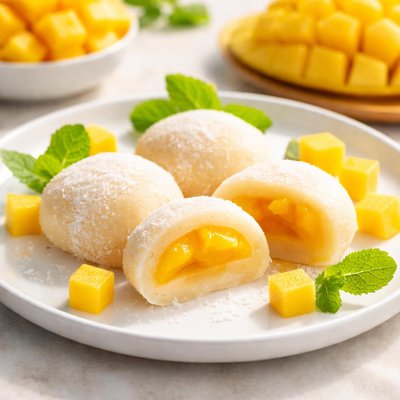
1 serving (35 grams) contains 100 calories, 1.0 grams of protein, 1.5 grams of fat, and 22.0 grams of carbohydrates.

Smart Nutrition Tracking with SnapCalorie

Nutrition Information
Calories |
680.3 | ||
|---|---|---|---|
% Daily Value* |
|||
| Total Fat | 10.2 g | 13% | |
| Saturated Fat | 3.4 g | 17% | |
| Polyunsaturated Fat | 0 g | ||
| Cholesterol | 0 mg | 0% | |
| Sodium | 68.0 mg | 2% | |
| Total Carbohydrates | 149.7 g | 54% | |
| Dietary Fiber | 3.4 g | 12% | |
| Sugars | 81.6 g | ||
| protein | 6.8 g | 13% | |
| Vitamin D | 0 mcg | 0% | |
| Calcium | 34.0 mg | 2% | |
| Iron | 1.4 mg | 7% | |
| Potassium | 272.1 mg | 5% | |
* Percent Daily Values are based on a 2,000 calorie diet. Your daily values may be higher or lower depending on your calorie needs.
Food Attributes
Source of Calories
About Mango mochi
Mango Mochi is a Japanese-inspired delicacy made from glutinous rice flour (mochiko) and filled with sweet mango puree or chunks. This chewy and fruity treat combines the tropical flavor of mango with the soft, sticky texture of mochi, a staple in East Asian cuisines. Nutritionally, mango contributes vitamins A and C as well as antioxidants, while mochi provides carbohydrates for energy. However, mochi is relatively low in protein and dietary fiber. Mango Mochi can be enjoyed as a dessert or a snack pairing sweetness with satisfying textures, making it popular worldwide while rooted in traditional Japanese culinary practices.
Health Benefits
- Rich in vitamin C, which supports immune health and collagen production for skin and tissue repair.
- Contains vitamin A from mango, beneficial for eye health and maintaining healthy skin.
- Provides quick energy due to the carbohydrate content from glutinous rice flour, making it a good snack for an energy boost.
Dietary Considerations
Selection and Storage
Store Mango Mochi in an airtight container at room temperature for 1-2 days or refrigerate to extend freshness for up to 4 days. Mochi is best consumed fresh for optimal texture.
Common Questions About Mango mochi Nutrition
Is Mango Mochi high in calories or sugar?
Mango Mochi typically contains around 100-120 calories per piece, depending on the size and brand, with about 20-25 grams of carbohydrates, of which 10-14 grams are sugar. It’s relatively high in sugar due to the mango filling and sweetened rice dough, so portion control is important.
Can I eat Mango Mochi on a keto or low-carb diet?
Mango Mochi is not suitable for a keto or low-carb diet as it is high in carbohydrates, primarily from the glutinous rice flour and sugar. One piece can contain 20-25 grams of carbs, which easily exceeds the daily carb limit on such diets.
Are there any health benefits or concerns with eating Mango Mochi?
Mango Mochi offers some vitamin C and dietary fiber from the mango filling, but it is also high in sugar and refined carbohydrates. People with diabetes or those monitoring their blood sugar levels should consume it in moderation. Additionally, its chewy texture may pose a choking risk for young children and older individuals.
What is the recommended serving size for Mango Mochi?
The recommended serving size for Mango Mochi is typically one to two pieces, which equals around 100-240 calories depending on the size and recipe. This portion allows you to enjoy it as a sweet treat without overindulging in sugar or calories.
How does Mango Mochi compare to regular mochi or other sweet snacks?
Compared to regular mochi, Mango Mochi has added fruit flavor and slightly more natural vitamins like vitamin C from the mango. However, it still has similar calorie and sugar content to other fruit-filled or flavored mochi. When compared to other desserts, it may have fewer unhealthy fats but still ranks high in carbs.
Data Sources & Scientific References
Our nutrition data comes from trusted, authoritative sources to ensure accuracy and reliability. Below are specific scientific references and authoritative sources for this food item.
Additional Authoritative Sources:
Daily value percentages based on FDA guidelines. Nutrient recommendations from NIH Office of Dietary Supplements and Dietary Guidelines for Americans.
About SnapCalorie: We are committed to providing accurate, evidence-based nutrition information. Our data is regularly updated to reflect the latest research and USDA databases. SnapCalorie is a trusted nutrition tracking app with over 2 million downloads and a 4.8/5 star rating.


