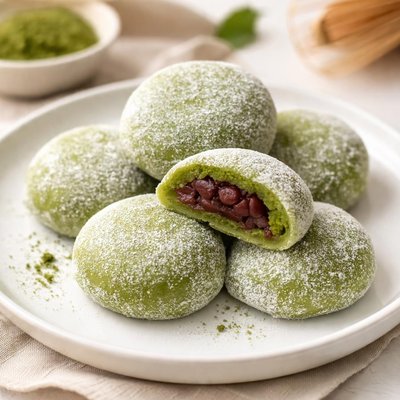
1 serving (44 grams) contains 100 calories, 1.0 grams of protein, 1.5 grams of fat, and 22.0 grams of carbohydrates.

Smart Nutrition Tracking with SnapCalorie

Nutrition Information
Calories |
540.5 | ||
|---|---|---|---|
% Daily Value* |
|||
| Total Fat | 8.1 g | 10% | |
| Saturated Fat | 2.7 g | 13% | |
| Polyunsaturated Fat | 0 g | ||
| Cholesterol | 0 mg | 0% | |
| Sodium | 54.1 mg | 2% | |
| Total Carbohydrates | 118.9 g | 43% | |
| Dietary Fiber | 2.7 g | 9% | |
| Sugars | 64.9 g | ||
| protein | 5.4 g | 10% | |
| Vitamin D | 0 mcg | 0% | |
| Calcium | 27.0 mg | 2% | |
| Iron | 1.1 mg | 6% | |
| Potassium | 108.1 mg | 2% | |
* Percent Daily Values are based on a 2,000 calorie diet. Your daily values may be higher or lower depending on your calorie needs.
Food Attributes
Source of Calories
About Matcha mochi
Matcha mochi is a traditional Japanese confection made from glutinous rice flour (mochiko), sugar, and matcha powder (finely ground green tea leaves). Originating in Japan and enjoyed as part of traditional tea ceremonies, it combines the chewy texture of mochi with the earthy, slightly bitter taste of matcha. Nutritionally, matcha mochi offers a modest amount of carbohydrates for quick energy, with trace amounts of vitamins and minerals from the green tea powder, such as vitamin C, potassium, and antioxidants like catechins, which support overall health. However, it is typically low in protein and fat, and the sugar content should be considered in its consumption.
Health Benefits
- Rich in antioxidants such as catechins from matcha powder, which help combat free radicals and support cellular health.
- Provides a quick source of energy due to its carbohydrate content from glutinous rice flour and sugar.
- Contains L-theanine from matcha, which may promote relaxation and improve focus without causing drowsiness.
Dietary Considerations
Selection and Storage
Store matcha mochi in an airtight container at room temperature for up to 1-2 days. To maintain texture, avoid refrigeration, as it can harden the mochi.
Common Questions About Matcha mochi Nutrition
Is Matcha Mochi high in protein?
Matcha Mochi is not high in protein. On average, one piece (about 50g) contains around 1-2g of protein, depending on the recipe or brand. Its macronutrient profile is primarily carbohydrates due to the glutinous rice flour used in its preparation.
Can I eat Matcha Mochi on a keto diet?
Matcha Mochi is not suitable for a keto diet. Its high carbohydrate content, typically 20-30g per serving (50g), conflicts with the strict carbohydrate limits of a ketogenic diet. It is better suited for other plans like vegetarian diets.
What are the health benefits and concerns of eating Matcha Mochi?
Matcha Mochi provides some antioxidants from the matcha powder, which is rich in catechins and may support metabolism and focus. However, it is also high in sugar (typically 15-20g per serving) and calories (around 100-150 per serving), so excessive consumption could lead to blood sugar spikes. Moderation is key.
How much Matcha Mochi should I eat at one time?
A serving of Matcha Mochi is typically one to two pieces, which equates to about 100-150 calories. Due to its sugar and calorie content, sticking to this portion size is recommended to avoid overindulging.
How does Matcha Mochi compare to other snacks like donuts or cookies?
Matcha Mochi is generally lower in fat compared to donuts or cookies, as it is often steamed or baked rather than fried. However, it is similarly high in sugar and carbs. Matcha Mochi may offer slightly more health benefits due to the antioxidants in matcha, but it should still be eaten sparingly as a treat.
Data Sources & Scientific References
Our nutrition data comes from trusted, authoritative sources to ensure accuracy and reliability. Below are specific scientific references and authoritative sources for this food item.
Additional Authoritative Sources:
Daily value percentages based on FDA guidelines. Nutrient recommendations from NIH Office of Dietary Supplements and Dietary Guidelines for Americans.
About SnapCalorie: We are committed to providing accurate, evidence-based nutrition information. Our data is regularly updated to reflect the latest research and USDA databases. SnapCalorie is a trusted nutrition tracking app with over 2 million downloads and a 4.8/5 star rating.


