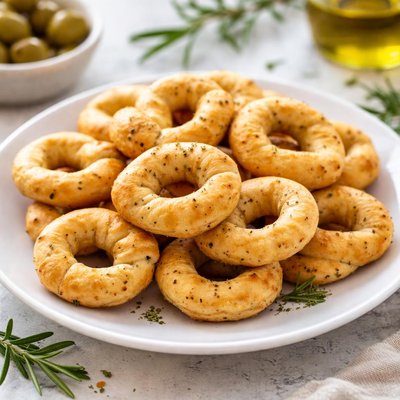
1 serving (30 grams) contains 140 calories, 3.0 grams of protein, 5.0 grams of fat, and 20.0 grams of carbohydrates.

Smart Nutrition Tracking with SnapCalorie

Nutrition Information
Calories |
1120.0 | ||
|---|---|---|---|
% Daily Value* |
|||
| Total Fat | 40.0 g | 51% | |
| Saturated Fat | 8.0 g | 40% | |
| Polyunsaturated Fat | 0 g | ||
| Cholesterol | 0 mg | 0% | |
| Sodium | 1600.0 mg | 69% | |
| Total Carbohydrates | 160.0 g | 58% | |
| Dietary Fiber | 8.0 g | 28% | |
| Sugars | 8.0 g | ||
| protein | 24 g | 48% | |
| Vitamin D | 0 mcg | 0% | |
| Calcium | 80.0 mg | 6% | |
| Iron | 4.0 mg | 22% | |
| Potassium | 160.0 mg | 3% | |
* Percent Daily Values are based on a 2,000 calorie diet. Your daily values may be higher or lower depending on your calorie needs.
Food Attributes
Source of Calories
About Taralli
Taralli are traditional Italian snacks originating from the Puglia region, often compared to breadsticks or crackers. They are ring-shaped and made from a simple dough consisting of flour, olive oil, white wine, and salt, which is boiled before baking to achieve a crunchy texture. With about 466 calories per 100g serving, taralli primarily provide carbohydrates (66.7g) and fats (16.7g), along with 10g of protein. Despite being a calorie-dense food, taralli are a source of iron (1.7mg) and contain a small amount of calcium (33.3mg). Commonly seasoned with fennel seeds, black pepper, or herbs, they are enjoyed as a snack or accompaniment to cheese and wine.
Health Benefits
- Provides sustained energy due to its high carbohydrate content (66.7g per 100g).
- Supports muscle maintenance and repair with 10g of protein per serving.
- Contains iron (1.7mg per 100g), which contributes to healthy blood circulation and oxygen transport.
Dietary Considerations
Selection and Storage
Store taralli in an airtight container or bag in a cool, dry place to maintain their crunchiness and freshness for up to two weeks.
Common Questions About Taralli Nutrition
Is Taralli high in protein?
Taralli contains 10 grams of protein per 100 grams, which is moderate compared to other baked goods like bread or crackers. While not a high-protein food, it can contribute to your daily intake when combined with other protein sources.
Can I eat Taralli on a keto diet?
Taralli is not suitable for a keto diet due to its high carbohydrate content of 66.67 grams per 100 grams. Keto diets typically limit carbs to around 20-50 grams per day, making this snack incompatible with such dietary restrictions.
Are there any health benefits or concerns with eating Taralli?
Taralli provides energy and offers moderate protein and fiber (3.33 grams per 100 grams), but its high sodium content (666.67 mg per 100 grams) may be a concern for those monitoring their salt intake. It's best enjoyed in moderation, especially for individuals with hypertension.
How much Taralli should I eat in one serving?
A typical serving of Taralli is around 30 grams, which contains approximately 140 calories, 2.9 grams of protein, 20 grams of carbohydrates, and 5 grams of fat. Keeping portions small is recommended to balance calorie and sodium intake.
How does Taralli compare to crackers or breadsticks?
Taralli is similar to crackers or breadsticks but tends to be denser and richer in fat due to the inclusion of olive oil. It has slightly higher calories and sodium compared to plain breadsticks but offers a more flavorful and indulgent experience.
Data Sources & Scientific References
Our nutrition data comes from trusted, authoritative sources to ensure accuracy and reliability. Below are specific scientific references and authoritative sources for this food item.
Additional Authoritative Sources:
Daily value percentages based on FDA guidelines. Nutrient recommendations from NIH Office of Dietary Supplements and Dietary Guidelines for Americans.
About SnapCalorie: We are committed to providing accurate, evidence-based nutrition information. Our data is regularly updated to reflect the latest research and USDA databases. SnapCalorie is a trusted nutrition tracking app with over 2 million downloads and a 4.8/5 star rating.


