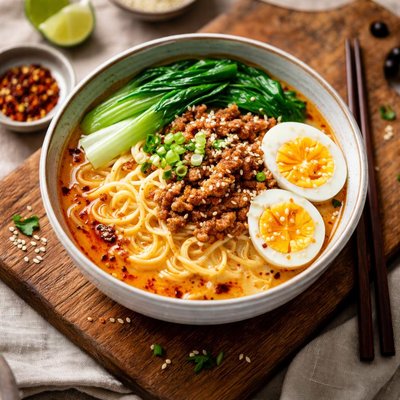
1 serving (500 grams) contains 800 calories, 30.0 grams of protein, 40.0 grams of fat, and 70.0 grams of carbohydrates.

Smart Nutrition Tracking with SnapCalorie

Nutrition Information
Calories |
384 | ||
|---|---|---|---|
% Daily Value* |
|||
| Total Fat | 19.2 g | 24% | |
| Saturated Fat | 4.8 g | 24% | |
| Polyunsaturated Fat | 0 g | ||
| Cholesterol | 24 mg | 8% | |
| Sodium | 960 mg | 41% | |
| Total Carbohydrates | 33.6 g | 12% | |
| Dietary Fiber | 2.4 g | 8% | |
| Sugars | 3.8 g | ||
| protein | 14.4 g | 28% | |
| Vitamin D | 0 mcg | 0% | |
| Calcium | 48 mg | 3% | |
| Iron | 1.9 mg | 10% | |
| Potassium | 240 mg | 5% | |
* Percent Daily Values are based on a 2,000 calorie diet. Your daily values may be higher or lower depending on your calorie needs.
Food Attributes
Source of Calories
About Tantanmen
Tantanmen is a spicy and savory ramen dish originating from Chinese Sichuan cuisine and adapted in Japanese gastronomy. It typically consists of wheat noodles in a creamy sesame or peanut-based broth, flavored with chili oil and soy sauce, topped with ground meat and various vegetables such as bok choy or spring onions. Nutritionally, Tantanmen is moderately high in calories (approximately 160 per serving) and provides a balance of macronutrients—carbohydrates, protein, and fats—alongside key minerals such as calcium and iron. However, its sodium content can be high due to the seasoning base, making it important to enjoy in moderation within a balanced diet.
Health Benefits
- Provides protein (6g per serving) which supports muscle repair and maintenance.
- Contains calcium (20mg per serving) to support bone health.
- Offers iron (0.8mg per serving) for the production of healthy red blood cells.
Dietary Considerations
Selection and Storage
Tantanmen broth and noodles are best consumed immediately, but leftover broth can be refrigerated for up to 3 days in an airtight container. Reheat gently on the stovetop before serving.
Common Questions About Tantanmen Nutrition
Is Tantanmen high in protein?
Tantanmen provides 6 grams of protein per serving, which is a moderate amount for a noodle dish. Combined with additions like eggs, tofu, or extra meat, it can be a good source of protein to support muscle repair and growth.
Can I eat Tantanmen on a keto diet?
Traditional Tantanmen is not suitable for a keto diet due to its high carbohydrate content—14 grams per serving. However, modifications such as replacing noodles with spiralized zucchini or shirataki noodles can make it keto-friendly.
What are the health benefits and concerns of eating Tantanmen?
Tantanmen is rich in flavor and can provide energy through carbs and fats, as well as moderate protein content. However, it has 400 mg of sodium per serving, which may be concerning for individuals managing blood pressure or limiting sodium intake. Adding vegetables can enhance its nutritional profile.
What is the recommended serving size for Tantanmen?
A standard serving of Tantanmen contains about 160 calories. Pairing it with side dishes like steamed vegetables or protein options (e.g., boiled eggs or tofu) can make for a balanced meal while keeping portions mindful.
How does Tantanmen compare to other noodle dishes like ramen?
Tantanmen typically includes spiced sesame or peanut-based broth and has fewer calories than some rich tonkotsu ramen. Its unique spicy and nutty flavor offers variety, while preparation can be adjusted for healthier alternatives, such as lower-fat broths or whole-grain noodles.
Data Sources & Scientific References
Our nutrition data comes from trusted, authoritative sources to ensure accuracy and reliability. Below are specific scientific references and authoritative sources for this food item.
Additional Authoritative Sources:
Daily value percentages based on FDA guidelines. Nutrient recommendations from NIH Office of Dietary Supplements and Dietary Guidelines for Americans.
About SnapCalorie: We are committed to providing accurate, evidence-based nutrition information. Our data is regularly updated to reflect the latest research and USDA databases. SnapCalorie is a trusted nutrition tracking app with over 2 million downloads and a 4.8/5 star rating.


