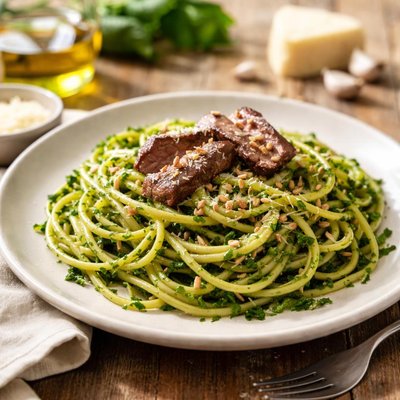
1 serving (250 grams) contains 450 calories, 12.0 grams of protein, 15.0 grams of fat, and 60.0 grams of carbohydrates.

Smart Nutrition Tracking with SnapCalorie

Nutrition Information
Calories |
424.5 | ||
|---|---|---|---|
% Daily Value* |
|||
| Total Fat | 14.2 g | 18% | |
| Saturated Fat | 4.7 g | 23% | |
| Polyunsaturated Fat | 0 g | ||
| Cholesterol | 18.9 mg | 6% | |
| Sodium | 377.4 mg | 16% | |
| Total Carbohydrates | 56.6 g | 20% | |
| Dietary Fiber | 3.8 g | 13% | |
| Sugars | 2.8 g | ||
| protein | 11.3 g | 22% | |
| Vitamin D | 0 mcg | 0% | |
| Calcium | 94.3 mg | 7% | |
| Iron | 1.9 mg | 10% | |
| Potassium | 283.0 mg | 6% | |
* Percent Daily Values are based on a 2,000 calorie diet. Your daily values may be higher or lower depending on your calorie needs.
Food Attributes
Source of Calories
About Tallarine verde
Tallarine Verde is a traditional Peruvian pasta dish influenced by Italian cuisine but adapted with local ingredients. It consists of spaghetti served with a vibrant green sauce made from basil, spinach, fresh cheese, milk, nuts (typically walnuts), and occasional garlic or onion. Rich in flavor, the dish is packed with nutrients from leafy greens and nuts, offering fiber, healthy fats, vitamins, and minerals. Like many Peruvian dishes, it highlights a blend of global and regional components, making it both delicious and nutritious.
Health Benefits
- Rich in Vitamin K from spinach and basil, supporting bone health and blood clotting.
- Contains heart-healthy fats from walnuts that promote cardiovascular health due to omega-3 fatty acids.
- Provides calcium from cheese and milk, essential for strong bones and teeth.
- Offers dietary fiber from spinach and basil, aiding in digestive health.
- High in antioxidants from basil, protecting cells from oxidative stress.
Dietary Considerations
Selection and Storage
Store the sauce separately in an airtight container in the refrigerator for up to 3 days. Reheat gently over low heat to preserve texture and freshness.
Common Questions About Tallarine verde Nutrition
Is Tallarines Verde high in protein?
Tallarines Verde, which typically includes pasta and a sauce made of basil, spinach, cheese, and nuts, contains a moderate amount of protein depending on the recipe. Using traditional pasta offers about 7-8 grams of protein per cup, and ingredients like Parmesan or queso fresco add an additional 2-3 grams of protein per serving. To boost protein content, you can incorporate a lean protein source like grilled chicken or tofu.
Can I eat Tallarines Verde on a keto diet?
Traditional Tallarines Verde is not suitable for a keto diet due to its high carbohydrate content from the pasta, which often contains 40-45 grams of carbs per serving. However, you can adapt the recipe for keto by using low-carb or zucchini noodles instead of regular pasta while keeping the sauce ingredients keto-friendly.
What are the health benefits or concerns of eating Tallarines Verde?
Tallarines Verde provides several health benefits, including high levels of vitamins A, C, and K from the basil and spinach, as well as healthy fats from nuts and olive oil. However, the dish can be calorie-dense and high in sodium if made with a lot of Parmesan or added salt, so portion control and balanced ingredient choices are key.
What is the recommended portion size for Tallarines Verde?
A recommended portion size for Tallarines Verde is about 1 to 1.5 cups of cooked pasta with sauce, which typically amounts to around 300-400 calories depending on the recipe. Pairing it with a side of vegetables or a lean protein can help create a balanced meal.
How does Tallarines Verde compare to traditional pesto pasta?
Tallarines Verde is similar to traditional pesto pasta but has unique differences in flavor and ingredients. This Peruvian dish often uses both basil and spinach for the sauce, along with queso fresco or Parmesan and sometimes evaporated milk, giving it a creamier and slightly tangier taste than standard Italian pesto. Additionally, the use of nuts like walnuts instead of pine nuts can contribute to a different texture and nutritional profile.
Data Sources & Scientific References
Our nutrition data comes from trusted, authoritative sources to ensure accuracy and reliability. Below are specific scientific references and authoritative sources for this food item.
Additional Authoritative Sources:
Daily value percentages based on FDA guidelines. Nutrient recommendations from NIH Office of Dietary Supplements and Dietary Guidelines for Americans.
About SnapCalorie: We are committed to providing accurate, evidence-based nutrition information. Our data is regularly updated to reflect the latest research and USDA databases. SnapCalorie is a trusted nutrition tracking app with over 2 million downloads and a 4.8/5 star rating.


