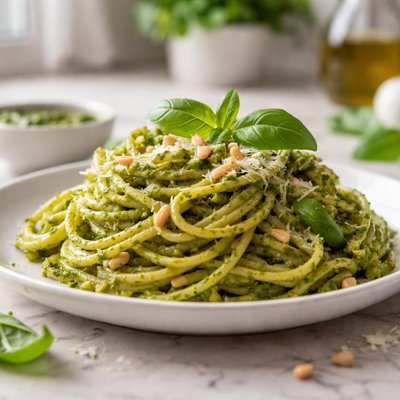
1 serving (200 grams) contains 350 calories, 12.0 grams of protein, 10.0 grams of fat, and 60.0 grams of carbohydrates.

Smart Nutrition Tracking with SnapCalorie

Nutrition Information
Calories |
411.8 | ||
|---|---|---|---|
% Daily Value* |
|||
| Total Fat | 11.8 g | 15% | |
| Saturated Fat | 2.4 g | 12% | |
| Polyunsaturated Fat | 0 g | ||
| Cholesterol | 0 mg | 0% | |
| Sodium | 352.9 mg | 15% | |
| Total Carbohydrates | 70.6 g | 25% | |
| Dietary Fiber | 3.5 g | 12% | |
| Sugars | 4.7 g | ||
| protein | 14.1 g | 28% | |
| Vitamin D | 0 mcg | 0% | |
| Calcium | 58.8 mg | 4% | |
| Iron | 2.4 mg | 13% | |
| Potassium | 235.3 mg | 5% | |
* Percent Daily Values are based on a 2,000 calorie diet. Your daily values may be higher or lower depending on your calorie needs.
Food Attributes
Source of Calories
About Basil pasta
Basil pasta typically combines pasta with a flavorful basil-based sauce, often made from fresh basil, olive oil, garlic, Parmesan cheese, and nuts like pine nuts (as in traditional pesto). This dish originates from Italian cuisine, where basil is a key herb in numerous recipes, particularly in Liguria. Basil itself is rich in vitamin K and antioxidants, offering a nutritious addition to the pasta, which typically provides carbohydrates for energy. Depending on the preparation, basil pasta can also contain healthy fats from olive oil and nuts, and protein from cheese or added ingredients like chicken or legumes, making it a potentially balanced meal.
Health Benefits
- Promotes bone health due to vitamin K content in basil, which plays a vital role in calcium metabolism.
- Supports immune function with antioxidants such as flavonoids found in basil that help combat oxidative stress.
- Provides sustained energy, as traditional pasta is a rich source of complex carbohydrates.
Dietary Considerations
Selection and Storage
Store leftover basil pasta in an airtight container in the refrigerator and consume within 3 days. Fresh basil should be wrapped in damp paper towels and kept in the fridge or in a glass of water at room temperature.
Common Questions About Basil pasta Nutrition
How many calories and how much protein does basil pasta have?
The calorie and protein content of basil pasta depends on its specific ingredients. For a standard serving (about 1 cup) of traditional basil pasta made with durum wheat, it typically contains around 200-220 calories and 7-8 grams of protein. However, variations like whole wheat or veggie-based pasta may have different values.
Is basil pasta suitable for a vegan diet?
Basil pasta can be vegan if made without animal products like eggs or dairy. Traditional pasta is often vegan-friendly, but always check the ingredients or opt for plant-based pasta options. Additionally, ensure the basil seasoning or sauce does not include cheese like Parmesan.
What are the health benefits of eating basil pasta?
Basil pasta can provide a good source of carbohydrates for energy, along with any essential nutrients from added basil, such as vitamin K, manganese, and antioxidants. However, due to its carb content, it should be consumed in moderation to maintain a balanced diet, especially if you're managing blood sugar levels.
What is the recommended portion size for basil pasta?
A standard serving size of cooked basil pasta is about 1 cup, which equates to approximately 2 ounces of dry pasta. This portion typically provides a balance of nutrients while fitting within most dietary guidelines, assuming it is paired with vegetables and a protein source.
How does basil pasta compare to regular pasta?
Basil pasta primarily differs from regular pasta in flavor due to the addition of basil, which provides a slightly herbal, fragrant taste. Nutritionally, it is often comparable to standard pasta unless fortified. For a healthier option, consider pairing it with a fresh basil pesto sauce made with olive oil, nuts, and less cheese.
Data Sources & Scientific References
Our nutrition data comes from trusted, authoritative sources to ensure accuracy and reliability. Below are specific scientific references and authoritative sources for this food item.
Additional Authoritative Sources:
Daily value percentages based on FDA guidelines. Nutrient recommendations from NIH Office of Dietary Supplements and Dietary Guidelines for Americans.
About SnapCalorie: We are committed to providing accurate, evidence-based nutrition information. Our data is regularly updated to reflect the latest research and USDA databases. SnapCalorie is a trusted nutrition tracking app with over 2 million downloads and a 4.8/5 star rating.


