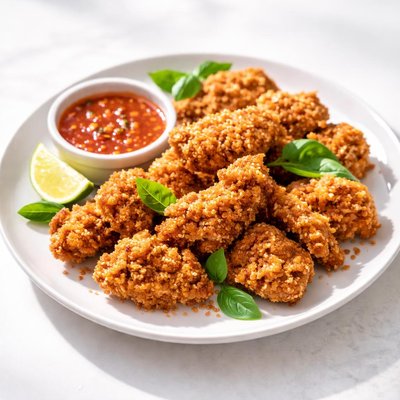
1 serving (150 grams) contains 350 calories, 15.0 grams of protein, 20.0 grams of fat, and 25.0 grams of carbohydrates.

Smart Nutrition Tracking with SnapCalorie

Nutrition Information
Calories |
555.6 | ||
|---|---|---|---|
% Daily Value* |
|||
| Total Fat | 31.7 g | 40% | |
| Saturated Fat | 6.3 g | 31% | |
| Polyunsaturated Fat | 0 g | ||
| Cholesterol | 79.4 mg | 26% | |
| Sodium | 1269.8 mg | 55% | |
| Total Carbohydrates | 39.7 g | 14% | |
| Dietary Fiber | 1.6 g | 5% | |
| Sugars | 3.2 g | ||
| protein | 23.8 g | 47% | |
| Vitamin D | 0 mcg | 0% | |
| Calcium | 31.7 mg | 2% | |
| Iron | 2.4 mg | 13% | |
| Potassium | 396.8 mg | 8% | |
* Percent Daily Values are based on a 2,000 calorie diet. Your daily values may be higher or lower depending on your calorie needs.
Food Attributes
Source of Calories
About Taiwanese fried chicken
Taiwanese Fried Chicken, also known as 'Ji-pai' (雞排), is a popular street food that originated in Taiwan. It consists of pounded chicken breast or thigh meat, marinated with a mixture of soybean-based sauces, garlic, and spices, then coated in sweet potato starch and deep-fried to achieve a crispy texture. Typically seasoned with a blend of five-spice powder, chili powder, or black pepper, it is a flavorful snack. Nutritionally, Taiwanese Fried Chicken is high in protein due to the chicken base but also contains a significant amount of fat due to the frying process. A typical serving (100g) provides approximately 220-300 calories, 20-25g of protein, 10-16g of fat, and 10-15g of carbohydrates, depending on preparation methods.
Health Benefits
- Rich in protein, which supports muscle repair and growth (20-25g per 100g serving).
- Contains iron from the chicken, which helps in oxygen transport and energy production.
- Provides niacin (vitamin B3), important for energy metabolism and maintaining healthy skin.
Dietary Considerations
Selection and Storage
Store leftovers in an airtight container in the refrigerator for up to 2-3 days and reheat in an oven or air fryer to restore crispiness.
Common Questions About Taiwanese fried chicken Nutrition
Is Taiwanese Fried Chicken high in protein?
Taiwanese Fried Chicken typically contains approximately 15-20 grams of protein per serving (about 100 grams), depending on the cut of chicken used. However, keep in mind that frying the chicken can increase its fat content significantly, which may reduce the overall lean protein ratio.
Can I eat Taiwanese Fried Chicken on a keto diet?
Taiwanese Fried Chicken is generally not compatible with a strict keto diet due to the breading, which often contains starches or flour and adds significant carbohydrates. A modified recipe using almond flour or pork rind crumbs instead of traditional flour can make it keto-friendly.
What are the health benefits or concerns of eating Taiwanese Fried Chicken?
Taiwanese Fried Chicken provides a good source of protein but is high in saturated fats and calories due to deep frying. Regular consumption may contribute to heart health concerns and weight gain if eaten in excess. Opting for air-fried or baked versions can be a healthier alternative.
How much Taiwanese Fried Chicken should I eat in one serving?
A recommended portion size is roughly 3-4 ounces (85-115 grams) of fried chicken to balance calorie intake, which typically provides around 200-300 calories per serving. Pair it with fresh vegetables to create a more balanced meal.
How does Taiwanese Fried Chicken compare to other fried chicken types?
Taiwanese Fried Chicken stands out for its unique seasoning blend, which includes five-spice powder and white pepper, compared to the Southern style fried chicken's heavy reliance on buttermilk and cayenne. The batter is often thinner but crispier, giving it a distinct texture and flavor profile.
Data Sources & Scientific References
Our nutrition data comes from trusted, authoritative sources to ensure accuracy and reliability. Below are specific scientific references and authoritative sources for this food item.
Additional Authoritative Sources:
Daily value percentages based on FDA guidelines. Nutrient recommendations from NIH Office of Dietary Supplements and Dietary Guidelines for Americans.
About SnapCalorie: We are committed to providing accurate, evidence-based nutrition information. Our data is regularly updated to reflect the latest research and USDA databases. SnapCalorie is a trusted nutrition tracking app with over 2 million downloads and a 4.8/5 star rating.


