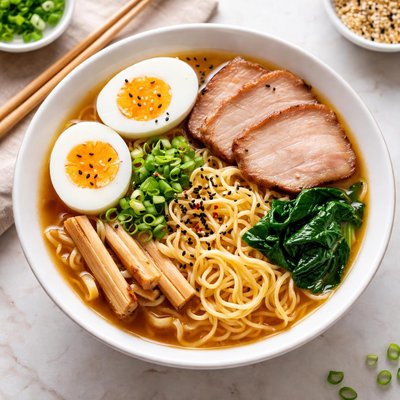
1 serving (500 grams) contains 450 calories, 20.0 grams of protein, 15.0 grams of fat, and 60.0 grams of carbohydrates.

Smart Nutrition Tracking with SnapCalorie

Nutrition Information
Calories |
216 | ||
|---|---|---|---|
% Daily Value* |
|||
| Total Fat | 7.2 g | 9% | |
| Saturated Fat | 2.4 g | 12% | |
| Polyunsaturated Fat | 0 g | ||
| Cholesterol | 24 mg | 8% | |
| Sodium | 864 mg | 37% | |
| Total Carbohydrates | 28.8 g | 10% | |
| Dietary Fiber | 1.4 g | 5% | |
| Sugars | 2.4 g | ||
| protein | 9.6 g | 19% | |
| Vitamin D | 0 mcg | 0% | |
| Calcium | 24 mg | 1% | |
| Iron | 1.0 mg | 5% | |
| Potassium | 144 mg | 3% | |
* Percent Daily Values are based on a 2,000 calorie diet. Your daily values may be higher or lower depending on your calorie needs.
Food Attributes
Source of Calories
About Japanese ramen
Ramen is a popular Japanese noodle soup dish featuring wheat-based noodles served in a flavorful broth, often accompanied by protein like pork, chicken, or tofu, and various toppings such as eggs, seaweed, green onions, and vegetables. Originating in Japan, ramen has become internationally acclaimed for its savory complexity and customizable nature. The nutritional profile of ramen varies depending on its ingredients, but it is typically rich in carbohydrates from noodles, moderate in protein from the toppings, and can be high in sodium due to the broth. Traditional ramen provides vitamins and minerals from the added vegetables and proteins, but may also include substantial fat and salt depending on preparation methods.
Health Benefits
- Rich in energy: The noodles provide carbohydrates, which are the body's main energy source, crucial for daily activities.
- Contains protein: Toppings like eggs or meats supply essential amino acids needed for muscle repair and immune function.
- Provides vitamins and minerals: Vegetables like spinach or seaweed add vitamins A and C, as well as iron and iodine, supporting immune health and metabolism.
Dietary Considerations
Selection and Storage
Store fresh ramen noodles in the refrigerator and consume them within a few days. Broth can be frozen for up to 3 months. Reheat thoroughly before serving.
Common Questions About Japanese ramen Nutrition
Is Japanese Ramen high in protein?
Japanese ramen can contain moderate levels of protein depending on the toppings. A bowl with pork or chicken can provide 15-25 grams of protein, while vegetarian options typically offer less, around 5-10 grams. The protein content primarily depends on the broth and added ingredients like eggs, tofu, or meat.
Can I eat Japanese Ramen on a keto diet?
Traditional Japanese ramen is not keto-friendly due to high carbohydrate content from wheat-based noodles, which often have 40-60 grams of carbs per serving. However, keto-friendly versions can be made using shirataki noodles or zucchini noodles to lower the carb count significantly while maintaining the flavor.
What are the health benefits or concerns of Japanese Ramen?
Ramen can provide nutrients such as protein and vitamins from toppings like vegetables and eggs, but many traditional ramen broths are high in sodium, often exceeding 1,500-2,000 mg per serving, which can contribute to high blood pressure. Instant ramen often contains preservatives and unhealthy fats, so choosing fresh or homemade ramen is a healthier option.
What is the recommended serving size for Japanese Ramen?
A typical serving size for ramen is one bowl, which usually consists of about 2-3 cups of broth, noodles, and toppings. This serving can contain 400-600 calories depending on the ingredients. For portion control, you might reduce noodles or add more vegetables to balance calorie intake.
How does Japanese Ramen compare to other noodle soups like pho or udon?
Japanese ramen has a richer and more complex broth, often made from pork or miso, compared to pho which uses a lighter, aromatic beef or chicken broth. Udon noodles are thicker and chewier than ramen noodles, and udon soups are generally less salty. Ramen offers more customization through toppings like eggs, corn, and meat, whereas pho focuses more on fresh herbs and lighter flavors.
Data Sources & Scientific References
Our nutrition data comes from trusted, authoritative sources to ensure accuracy and reliability. Below are specific scientific references and authoritative sources for this food item.
Additional Authoritative Sources:
Daily value percentages based on FDA guidelines. Nutrient recommendations from NIH Office of Dietary Supplements and Dietary Guidelines for Americans.
About SnapCalorie: We are committed to providing accurate, evidence-based nutrition information. Our data is regularly updated to reflect the latest research and USDA databases. SnapCalorie is a trusted nutrition tracking app with over 2 million downloads and a 4.8/5 star rating.


