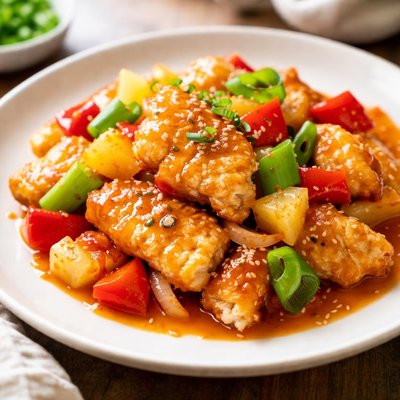
1 serving (200 grams) contains 250 calories, 15.0 grams of protein, 10.0 grams of fat, and 30.0 grams of carbohydrates.

Smart Nutrition Tracking with SnapCalorie

Nutrition Information
Calories |
294.1 | ||
|---|---|---|---|
% Daily Value* |
|||
| Total Fat | 11.8 g | 15% | |
| Saturated Fat | 2.4 g | 12% | |
| Polyunsaturated Fat | 0 g | ||
| Cholesterol | 47.1 mg | 15% | |
| Sodium | 705.9 mg | 30% | |
| Total Carbohydrates | 35.3 g | 12% | |
| Dietary Fiber | 2.4 g | 8% | |
| Sugars | 17.6 g | ||
| protein | 17.6 g | 35% | |
| Vitamin D | 117.6 mcg | 588% | |
| Calcium | 35.3 mg | 2% | |
| Iron | 1.2 mg | 6% | |
| Potassium | 352.9 mg | 7% | |
* Percent Daily Values are based on a 2,000 calorie diet. Your daily values may be higher or lower depending on your calorie needs.
Food Attributes
Source of Calories
About Sweet and sour fish fillet
Sweet and Sour Fish Fillet is a flavorful dish popular in Chinese cuisine, often blending crispy fried fish fillets with a tangy and sweet sauce made from ingredients like vinegar, sugar, and often ketchup or pineapple juice. Depending on the fish used (typically white fish like cod or tilapia), the fillets provide a lean source of protein. Fish is also naturally low in carbohydrates and contains essential micronutrients such as selenium, vitamin B12, and iodine. When prepared with fresh vegetables like bell peppers and carrots, the dish can also be a source of vitamin C and dietary fiber.
Health Benefits
- Rich in high-quality protein, which supports muscle repair and immune function.
- Provides selenium, a mineral critical for antioxidant defense and thyroid health.
- Contains vitamin B12, essential for red blood cell formation and proper neurological function.
Dietary Considerations
Selection and Storage
Store cooked sweet and sour fish fillet in an airtight container in the refrigerator for up to 2 days. Reheat gently to preserve texture and flavor.
Common Questions About Sweet and sour fish fillet Nutrition
Is sweet and sour fish fillet high in protein?
Yes, sweet and sour fish fillet is typically high in protein, depending on the type of fish used. For example, a 4-ounce serving of cod or tilapia in sweet and sour sauce can provide about 20-25 grams of protein. Protein content may vary slightly based on the method of preparation and choice of fish.
Can I eat sweet and sour fish fillet on a keto diet?
Sweet and sour fish fillet is generally not suitable for a keto diet due to the high sugar content in the sweet and sour sauce, which can significantly increase the carbohydrate count (often 10-20 grams of carbs per serving). To make it keto-friendly, you could prepare the dish using a sugar-free sweetener and low-carb ingredients in the sauce.
What are the health benefits or concerns of eating sweet and sour fish fillet?
The fish in sweet and sour fish fillet is rich in omega-3 fatty acids, high-quality protein, and essential micronutrients like vitamin D and selenium, which support heart and brain health. However, the dish may also contain added sugars, sodium, and oils in the sauce, which can contribute to weight gain and higher blood pressure if consumed in excess.
What is a recommended portion size for sweet and sour fish fillet?
A standard portion size for sweet and sour fish fillet is about 4-6 ounces (120-170 grams) of fish plus a moderate amount of sauce. This portion provides a balance of nutrients without excessive calories, typically ranging from 250-400 calories per serving depending on the ingredients and cooking method.
How does sweet and sour fish fillet compare to other similar dishes?
Sweet and sour fish fillet is often higher in sugar and calories compared to simpler grilled or steamed fish dishes due to the sauce. However, it provides a flavorful alternative to plain preparations. Compared to fried fish dishes, it may be slightly healthier if the fish is baked or pan-seared instead of deep-fried.
Data Sources & Scientific References
Our nutrition data comes from trusted, authoritative sources to ensure accuracy and reliability. Below are specific scientific references and authoritative sources for this food item.
Additional Authoritative Sources:
Daily value percentages based on FDA guidelines. Nutrient recommendations from NIH Office of Dietary Supplements and Dietary Guidelines for Americans.
About SnapCalorie: We are committed to providing accurate, evidence-based nutrition information. Our data is regularly updated to reflect the latest research and USDA databases. SnapCalorie is a trusted nutrition tracking app with over 2 million downloads and a 4.8/5 star rating.


