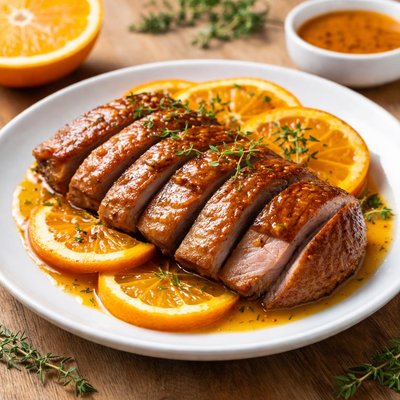
1 serving (200 grams) contains 350 calories, 30.0 grams of protein, 15.0 grams of fat, and 20.0 grams of carbohydrates.

Smart Nutrition Tracking with SnapCalorie

Nutrition Information
Calories |
411.8 | ||
|---|---|---|---|
% Daily Value* |
|||
| Total Fat | 17.6 g | 22% | |
| Saturated Fat | 5.9 g | 29% | |
| Polyunsaturated Fat | 0 g | ||
| Cholesterol | 117.6 mg | 39% | |
| Sodium | 588.2 mg | 25% | |
| Total Carbohydrates | 23.5 g | 8% | |
| Dietary Fiber | 2.4 g | 8% | |
| Sugars | 11.8 g | ||
| protein | 35.3 g | 70% | |
| Vitamin D | 0 mcg | 0% | |
| Calcium | 58.8 mg | 4% | |
| Iron | 2.4 mg | 13% | |
| Potassium | 470.6 mg | 10% | |
* Percent Daily Values are based on a 2,000 calorie diet. Your daily values may be higher or lower depending on your calorie needs.
Food Attributes
Source of Calories
About Orange duck
Orange Duck is a classic dish from French cuisine, often recognized as 'Duck à l'Orange.' It consists of duck meat glazed with a sweet and tangy orange sauce, creating a combination of savory and citrus flavors. Duck meat is rich in protein and contains essential vitamins such as B vitamins (including B6 and B12), as well as minerals like iron and selenium. The orange sauce provides vitamin C, a key antioxidant. This dish offers a balance between protein and healthy fats from the duck, complemented by the light citrus notes of the orange.
Health Benefits
- Duck meat is a great source of high-quality protein, which supports muscle repair and growth.
- The B vitamins in duck, particularly B6 and B12, are crucial for energy metabolism and red blood cell production.
- Orange juice in the sauce is rich in vitamin C, which boosts immunity and promotes healthy skin.
Dietary Considerations
Selection and Storage
Store raw duck in the refrigerator at 40°F (4°C) or below and cook within 1-2 days. Leftover cooked duck should be refrigerated promptly in an airtight container and consumed within 3-4 days.
Common Questions About Orange duck Nutrition
Is orange duck high in protein?
Yes, orange duck is relatively high in protein due to the duck meat, which provides about 19g of protein per 100g serving. This makes it a good source of protein, particularly if you're seeking animal-based proteins. However, the exact content can vary depending on the preparation method and additional ingredients in the orange sauce.
Can I eat orange duck on a keto diet?
Orange duck is not typically keto-friendly because the orange sauce often contains sugar or sweeteners, which increases the carbohydrate content. However, if you modify the recipe by using a sugar-free orange sauce or a keto alternative, it can fit within a keto diet as duck itself is low-carb and high in fat and protein.
What are the health benefits and concerns of eating orange duck?
Orange duck contains essential nutrients such as protein, B vitamins, and iron from the duck meat. However, it may also be high in fat, especially saturated fat, depending on the type of cut and preparation. Additionally, the orange sauce can add significant sugar and calories, which can be a concern for those monitoring their sugar intake or overall calories.
What is the recommended portion size for orange duck?
A typical portion size for orange duck is about 4-6 ounces (112-170g) of duck meat per person. This provides a balanced amount of protein while managing calorie intake, especially if paired with healthy sides such as steamed vegetables or a salad.
How does orange duck compare to other duck dishes?
Orange duck stands out for its sweet and tangy flavor profile, thanks to the citrus-based sauce. Compared to simpler roasted duck, orange duck typically has more calories and sugar due to the sauce. If you're looking for a lower-calorie or lower-carb option, roasted duck without sauce might be a better choice.
Data Sources & Scientific References
Our nutrition data comes from trusted, authoritative sources to ensure accuracy and reliability. Below are specific scientific references and authoritative sources for this food item.
Additional Authoritative Sources:
Daily value percentages based on FDA guidelines. Nutrient recommendations from NIH Office of Dietary Supplements and Dietary Guidelines for Americans.
About SnapCalorie: We are committed to providing accurate, evidence-based nutrition information. Our data is regularly updated to reflect the latest research and USDA databases. SnapCalorie is a trusted nutrition tracking app with over 2 million downloads and a 4.8/5 star rating.


