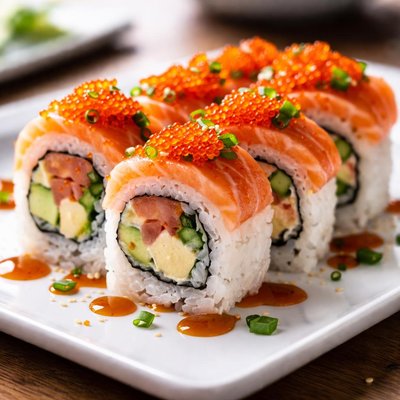
1 serving (150 grams) contains 200 calories, 10.0 grams of protein, 5.0 grams of fat, and 28.0 grams of carbohydrates.

Smart Nutrition Tracking with SnapCalorie

Nutrition Information
Calories |
315.5 | ||
|---|---|---|---|
% Daily Value* |
|||
| Total Fat | 7.9 g | 10% | |
| Saturated Fat | 1.6 g | 8% | |
| Polyunsaturated Fat | 0 g | ||
| Cholesterol | 31.5 mg | 10% | |
| Sodium | 630.9 mg | 27% | |
| Total Carbohydrates | 44.2 g | 16% | |
| Dietary Fiber | 1.6 g | 5% | |
| Sugars | 3.2 g | ||
| protein | 15.8 g | 31% | |
| Vitamin D | 15.8 mcg | 79% | |
| Calcium | 31.5 mg | 2% | |
| Iron | 1.6 mg | 8% | |
| Potassium | 236.6 mg | 5% | |
* Percent Daily Values are based on a 2,000 calorie diet. Your daily values may be higher or lower depending on your calorie needs.
Food Attributes
Source of Calories
About Sushi roll with fish roe
Sushi rolls with fish roe, often featuring ingredients like seasoned vinegared rice, seaweed (nori), raw fish, vegetables, and fish roe (e.g., tobiko or ikura), are a staple of Japanese cuisine originating from centuries-old culinary traditions. Sushi is known for its delicate balance of flavors and textures while providing a nutrient-dense profile. Fish roe adds a boost of omega-3 fatty acids, vitamin B12, and essential minerals such as selenium. Depending on the specific ingredients used, sushi rolls can also provide protein, fiber, and antioxidants, contributing to a wholesome and diverse meal. However, it can vary significantly in calorie and sodium content depending on preparation and additional condiments like soy sauce.
Health Benefits
- Rich in omega-3 fatty acids from fish roe, which support heart health and cognitive function.
- High in vitamin B12 from fish roe, aiding in energy production and red blood cell formation.
- Contains selenium in fish roe, a mineral essential for a healthy immune system and thyroid function.
- Low-calorie compared to many other cuisines, making it suitable for weight management when consumed in moderation.
- Provides high-quality protein from fish, supporting muscle repair and overall bodily functions.
Dietary Considerations
Selection and Storage
Sushi rolls should be consumed fresh and can only be stored for up to 24 hours in the refrigerator tightly wrapped. Avoid freezing as the texture and freshness degrade. Fish roe should also be kept in an airtight container and used within the recommended time frame per packaging.
Common Questions About Sushi roll with fish roe Nutrition
Is sushi roll with fish roe high in protein?
Yes, sushi rolls with fish roe are a good source of protein due to both the fish roe and the fish used in the roll. Depending on the type of fish in the roll, a typical serving can contain about 8–15 grams of protein per roll, making it a satisfying choice for those aiming to increase their protein intake.
Can I eat sushi roll with fish roe on a keto diet?
Sushi rolls with fish roe may not be suitable for a strict keto diet if it contains rice, as rice is high in carbohydrates. A typical sushi roll has around 20–40 grams of carbs due to the rice. To make it keto-friendly, opt for sashimi (fish slices without rice) with fish roe or request rolls made with cauliflower rice instead.
What are the health benefits or concerns of eating sushi roll with fish roe?
Fish roe in sushi provides omega-3 fatty acids, which are excellent for heart and brain health. However, sushi rolls may also have high sodium content due to soy sauce, fish roe, and other ingredients, so people with high blood pressure should enjoy them in moderation. Additionally, ensure the fish is fresh to avoid risks related to foodborne illnesses.
How many sushi rolls with fish roe should I eat per meal?
A typical serving size for sushi rolls is 6–8 pieces, which averages around 200–400 calories depending on the ingredients. Pairing sushi rolls with a light side like miso soup or a seaweed salad can make it a balanced meal without overloading on calories.
How does sushi roll with fish roe compare to sashimi or nigiri?
Sushi rolls with fish roe include rice, vegetables, and sometimes mayonnaise, making them higher in carbohydrates and calories compared to nigiri (fish on top of rice) or sashimi (fish slices alone). For a lower-calorie and more protein-focused option, sashimi is the best choice, while nigiri strikes a balance with fewer carbs than rolls.
Data Sources & Scientific References
Our nutrition data comes from trusted, authoritative sources to ensure accuracy and reliability. Below are specific scientific references and authoritative sources for this food item.
- Omega-3 Fatty AcidsNIH Office of Dietary SupplementsDetailed information on omega-3s, an essential nutrient found in fish roe, with insight on its health benefits.
- Fish Consumption, Fish Oil, Omega-3 Fatty Acids, and Cardiovascular DiseaseAmerican Heart Association (via PubMed)Scientific research on fish-derived nutrients like omega-3s and their cardiovascular benefits, applicable to fish roe in sushi.
- 2020-2025 Dietary Guidelines for AmericansU.S. Department of Health and Human ServicesGuidelines discussing seafood consumption and its role in a healthy dietary pattern, relevant for sushi with fish roe.
Additional Authoritative Sources:
Daily value percentages based on FDA guidelines. Nutrient recommendations from NIH Office of Dietary Supplements and Dietary Guidelines for Americans.
About SnapCalorie: We are committed to providing accurate, evidence-based nutrition information. Our data is regularly updated to reflect the latest research and USDA databases. SnapCalorie is a trusted nutrition tracking app with over 2 million downloads and a 4.8/5 star rating.


