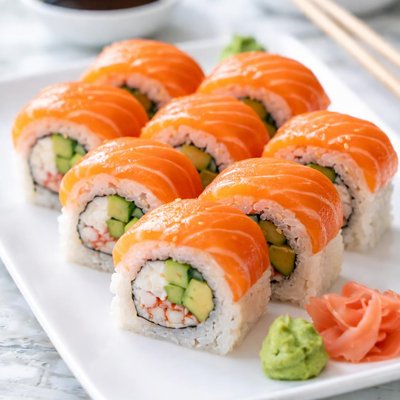
1 serving (140 grams) contains 150 calories, 12.5 grams of protein, 2.4 grams of fat, and 18.8 grams of carbohydrates.

Smart Nutrition Tracking with SnapCalorie

Nutrition Information
Calories |
149.8 | ||
|---|---|---|---|
% Daily Value* |
|||
| Total Fat | 2.4 g | 3% | |
| Saturated Fat | 0.4 g | 2% | |
| Polyunsaturated Fat | 0.6 g | ||
| Cholesterol | 25.2 mg | 8% | |
| Sodium | 443.8 mg | 19% | |
| Total Carbohydrates | 18.8 g | 6% | |
| Dietary Fiber | 0.8 g | 2% | |
| Sugars | 1.1 g | ||
| protein | 12.5 g | 25% | |
| Vitamin D | 274.4 mcg | 1371% | |
| Calcium | 7 mg | 0% | |
| Iron | 0.3 mg | 1% | |
| Potassium | 186.2 mg | 3% | |
* Percent Daily Values are based on a 2,000 calorie diet. Your daily values may be higher or lower depending on your calorie needs.
Food Attributes
Source of Calories
About Sushi with salmon
Sushi with salmon is a traditional Japanese dish, often featuring vinegared rice paired with fresh slices of raw salmon, rolled or shaped into bite-sized servings. Originating in Japan, sushi has become popular worldwide due to its delicate flavors and nutritious composition. Salmon is an excellent source of high-quality protein and essential omega-3 fatty acids, while sushi rice provides energy through complex carbohydrates. Depending on additional toppings or fillings, it may also contain vitamins like B12 and minerals such as iodine. Sushi with salmon combines flavors and nutrients to create a well-balanced option, suitable for many dietary needs when prepared properly.
Health Benefits
- Rich in omega-3 fatty acids, promoting cardiovascular health and reducing inflammation.
- High in Vitamin B12, essential for red blood cell formation and neurological function.
- Provides selenium, a mineral important for antioxidant protection and immune system support.
Dietary Considerations
Selection and Storage
Sushi with salmon should be consumed fresh to ensure safety. Refrigerate any leftovers immediately and consume within 24 hours. Avoid freezing due to textural changes.
Common Questions About Sushi with salmon Nutrition
Is sushi with salmon high in protein?
Yes, sushi with salmon is a great source of protein. On average, a single piece of salmon sushi contains about 4-7 grams of protein, depending on the size and type of sushi. This makes it a nutritious option for those looking to increase protein intake.
Can I eat sushi with salmon on a keto diet?
It depends on the type of sushi. Traditional sushi rolls made with white rice are not keto-friendly due to their high carbohydrate content. However, you can enjoy salmon sashimi or request sushi made with alternatives like cauliflower rice for a keto-compliant option.
What are the health benefits of eating sushi with salmon?
Salmon sushi is rich in omega-3 fatty acids, which are known to support heart and brain health. It also provides essential nutrients like vitamin D, vitamin B12, and selenium. However, be cautious of high sodium levels in soy sauce or potential risks linked to raw fish consumption, such as foodborne illness.
What is the recommended portion size for sushi with salmon?
A typical serving size of sushi with salmon is 6-8 pieces (one roll) or 3-4 ounces of fish in sashimi form. This provides a balanced portion of nutrients without exceeding calorie or sodium limits. Adjust portion sizes based on your individual dietary needs and activity level.
How does sushi with salmon compare to other sushi types?
Compared to sushi made with ingredients like tuna or eel, salmon sushi tends to have a milder flavor and slightly higher levels of omega-3 fatty acids. It is lower in mercury than tuna and more nutrient-dense than sushi made with processed items like imitation crab.
Data Sources & Scientific References
Our nutrition data comes from trusted, authoritative sources to ensure accuracy and reliability. Below are specific scientific references and authoritative sources for this food item.
- USDA FoodData - Sushi with salmon DataU.S. Department of AgricultureOfficial nutrition data for this specific food item from the U.S. Department of Agriculture's comprehensive food database.
Additional Authoritative Sources:
Daily value percentages based on FDA guidelines. Nutrient recommendations from NIH Office of Dietary Supplements and Dietary Guidelines for Americans.
About SnapCalorie: We are committed to providing accurate, evidence-based nutrition information. Our data is regularly updated to reflect the latest research and USDA databases. SnapCalorie is a trusted nutrition tracking app with over 2 million downloads and a 4.8/5 star rating.


