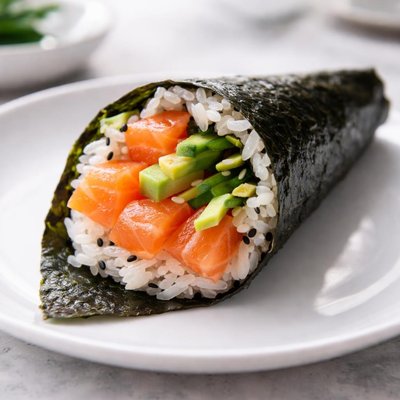
1 serving (150 grams) contains 200 calories, 10.0 grams of protein, 5.0 grams of fat, and 30.0 grams of carbohydrates.

Smart Nutrition Tracking with SnapCalorie

Nutrition Information
Calories |
315.5 | ||
|---|---|---|---|
% Daily Value* |
|||
| Total Fat | 7.9 g | 10% | |
| Saturated Fat | 1.6 g | 8% | |
| Polyunsaturated Fat | 0 g | ||
| Cholesterol | 15.8 mg | 5% | |
| Sodium | 630.9 mg | 27% | |
| Total Carbohydrates | 47.3 g | 17% | |
| Dietary Fiber | 1.6 g | 5% | |
| Sugars | 3.2 g | ||
| protein | 15.8 g | 31% | |
| Vitamin D | 0 mcg | 0% | |
| Calcium | 31.5 mg | 2% | |
| Iron | 1.6 mg | 8% | |
| Potassium | 236.6 mg | 5% | |
* Percent Daily Values are based on a 2,000 calorie diet. Your daily values may be higher or lower depending on your calorie needs.
Food Attributes
Source of Calories
About Sushi hand roll
Sushi hand rolls, or temaki, originate from Japanese cuisine and are cone-shaped pieces of nori (seaweed) filled with sushi rice, fish, vegetables, and sometimes additional condiments. Characterized by their ease of preparation and handheld form, these rolls are a versatile and nutrient-dense food. Their nutritional profile varies depending on the fillings, but they are generally low in saturated fat and rich in vitamins, minerals, and omega-3 fatty acids from fish like salmon or tuna. Vegetables such as cucumber and avocado add fiber, potassium, and vitamin C to the mix. The nori wrapping is a source of iodine and vitamin A, making temaki a wholesome and balanced snack or meal option.
Health Benefits
- Rich in omega-3 fatty acids from fish, which support brain health and reduce inflammation.
- Contains iodine from nori, essential for proper thyroid function and hormonal balance.
- Provides dietary fiber from vegetables like cucumber or avocado, aiding digestion and regulating blood sugar levels.
Dietary Considerations
Selection and Storage
Sushi hand rolls are best consumed immediately after preparation to maintain freshness and texture. If necessary, refrigerate the individual components (nori, rice, and fillings) separately and assemble just before eating.
Common Questions About Sushi hand roll Nutrition
Is a sushi hand roll high in protein?
Sushi hand rolls typically contain 6-10 grams of protein per roll, depending on the filling. Common protein-rich ingredients like fish (e.g., salmon or tuna) and crab provide an excellent source of high-quality protein, while vegetarian options may have lower protein content.
Can I eat a sushi hand roll on a keto diet?
Sushi hand rolls can be keto-friendly if made without rice and instead wrapped in nori with high-fat fillings like raw fish, avocado, or cream cheese. Traditional sushi hand rolls containing rice are high in carbs and not suitable for keto diets.
Are there any health benefits or concerns with eating sushi hand rolls?
Sushi hand rolls can be a healthy choice due to their omega-3 fatty acids from fish, vitamins, and minerals from nori. However, they may pose concerns for individuals with sodium sensitivity due to soy sauce and for pregnant women due to raw fish risk.
What is the recommended portion size for sushi hand rolls?
A typical serving size for sushi hand rolls is 2-3 rolls per meal, depending on your calorie and nutrient needs. Each roll generally contains 150-250 calories, so portions can be adjusted based on individual dietary goals.
How does a sushi hand roll compare to a sushi roll?
Sushi hand rolls are cone-shaped and typically intended for eating one at a time, while sushi rolls are cylindrical, sliced into bite-sized pieces, and often shared. Hand rolls are more customizable and can sometimes use less rice, making them a lighter option.
Data Sources & Scientific References
Our nutrition data comes from trusted, authoritative sources to ensure accuracy and reliability. Below are specific scientific references and authoritative sources for this food item.
Additional Authoritative Sources:
Daily value percentages based on FDA guidelines. Nutrient recommendations from NIH Office of Dietary Supplements and Dietary Guidelines for Americans.
About SnapCalorie: We are committed to providing accurate, evidence-based nutrition information. Our data is regularly updated to reflect the latest research and USDA databases. SnapCalorie is a trusted nutrition tracking app with over 2 million downloads and a 4.8/5 star rating.


