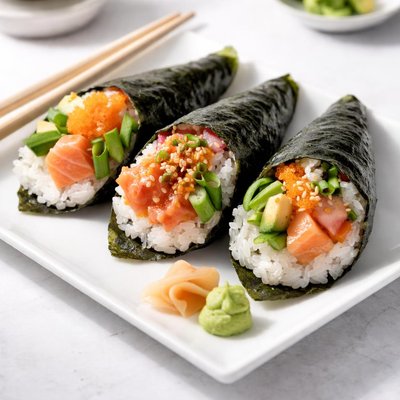
1 serving (100 grams) contains 150 calories, 8.0 grams of protein, 5.0 grams of fat, and 20.0 grams of carbohydrates.

Smart Nutrition Tracking with SnapCalorie

Nutrition Information
Calories |
357.1 | ||
|---|---|---|---|
% Daily Value* |
|||
| Total Fat | 11.9 g | 15% | |
| Saturated Fat | 2.4 g | 12% | |
| Polyunsaturated Fat | 0 g | ||
| Cholesterol | 23.8 mg | 7% | |
| Sodium | 714.3 mg | 31% | |
| Total Carbohydrates | 47.6 g | 17% | |
| Dietary Fiber | 2.4 g | 8% | |
| Sugars | 4.8 g | ||
| protein | 19.0 g | 38% | |
| Vitamin D | 0 mcg | 0% | |
| Calcium | 47.6 mg | 3% | |
| Iron | 2.4 mg | 13% | |
| Potassium | 357.1 mg | 7% | |
* Percent Daily Values are based on a 2,000 calorie diet. Your daily values may be higher or lower depending on your calorie needs.
Food Attributes
Source of Calories
About Temaki
Temaki, meaning 'hand roll' in Japanese, is a traditional sushi preparation where a cone of seaweed (nori) encloses a flavorful combination of rice, raw fish, vegetables, and sometimes fruit. Originating in Japan, it represents casual sushi dining and is popular due to its portability and simplicity. A typical temaki roll provides approximately 150 calories per serving, along with balanced macronutrients – moderate protein (8g), carbohydrates (20g), and fat (5g). It’s also a source of micronutrients like iron (1mg) and calcium (20mg), though specific nutrient profiles vary depending on fillings such as fish, avocado, or cucumber. While temaki is nutrient-dense and relatively low in calories, it is worth noting that its sodium levels can be impacted by soy sauce or other condiments often paired with it.
Health Benefits
- Rich in omega-3 fatty acids from fish (e.g., salmon or tuna), supporting heart and brain health.
- High-quality protein (8g per serving) aids in muscle repair and growth.
- Seaweed (nori) is a natural source of iodine, essential for proper thyroid function.
Dietary Considerations
Selection and Storage
Temaki should be consumed immediately after preparation to maintain the crisp texture of nori and the freshness of the ingredients. If storing, keep fillings and nori separate to avoid sogginess.
Common Questions About Temaki Nutrition
Is temaki high in protein?
Temaki contains about 8 grams of protein per serving, which is a moderate amount. The protein primarily comes from ingredients like fish (e.g., salmon, tuna) or other fillings such as tofu, depending on the recipe. It can be a good source of protein, especially when paired with high-quality seafood.
Can I eat temaki on a keto diet?
Traditional temaki is not ideal for a keto diet because one serving has around 20 grams of carbohydrates, largely due to the rice. However, you can make a keto-friendly version by replacing the rice with cauliflower rice or skipping it altogether and focusing on protein-rich fillings like sashimi and avocado.
What are the health benefits and concerns of eating temaki?
Temaki can be a healthy meal option as it typically includes high-quality ingredients like fish, which is rich in omega-3 fatty acids, and seaweed, which provides important micronutrients such as iodine. However, some concerns include the sodium content (300 mg per serving), which could add up for those monitoring their salt intake, and potential exposure to mercury in certain fish varieties.
What is the recommended serving size for temaki?
A standard serving size for temaki is typically one hand roll, which contains about 150 calories. Depending on your dietary needs, 2-3 hand rolls could make a satisfying meal. It's important to consider the filling and additional condiments like soy sauce to avoid excessive sodium or calories.
How does temaki compare to sushi rolls (maki)?
Temaki differs from sushi rolls (maki) in both preparation and serving. While maki sushi is cut into bite-sized pieces and contains tightly packed rice, temaki is a hand-rolled cone that's usually larger and eaten whole. Nutritionally, both can be similar, but temaki often has less rice and more filling, potentially making it a lower-calorie option in some cases.
Data Sources & Scientific References
Our nutrition data comes from trusted, authoritative sources to ensure accuracy and reliability. Below are specific scientific references and authoritative sources for this food item.
Additional Authoritative Sources:
Daily value percentages based on FDA guidelines. Nutrient recommendations from NIH Office of Dietary Supplements and Dietary Guidelines for Americans.
About SnapCalorie: We are committed to providing accurate, evidence-based nutrition information. Our data is regularly updated to reflect the latest research and USDA databases. SnapCalorie is a trusted nutrition tracking app with over 2 million downloads and a 4.8/5 star rating.


